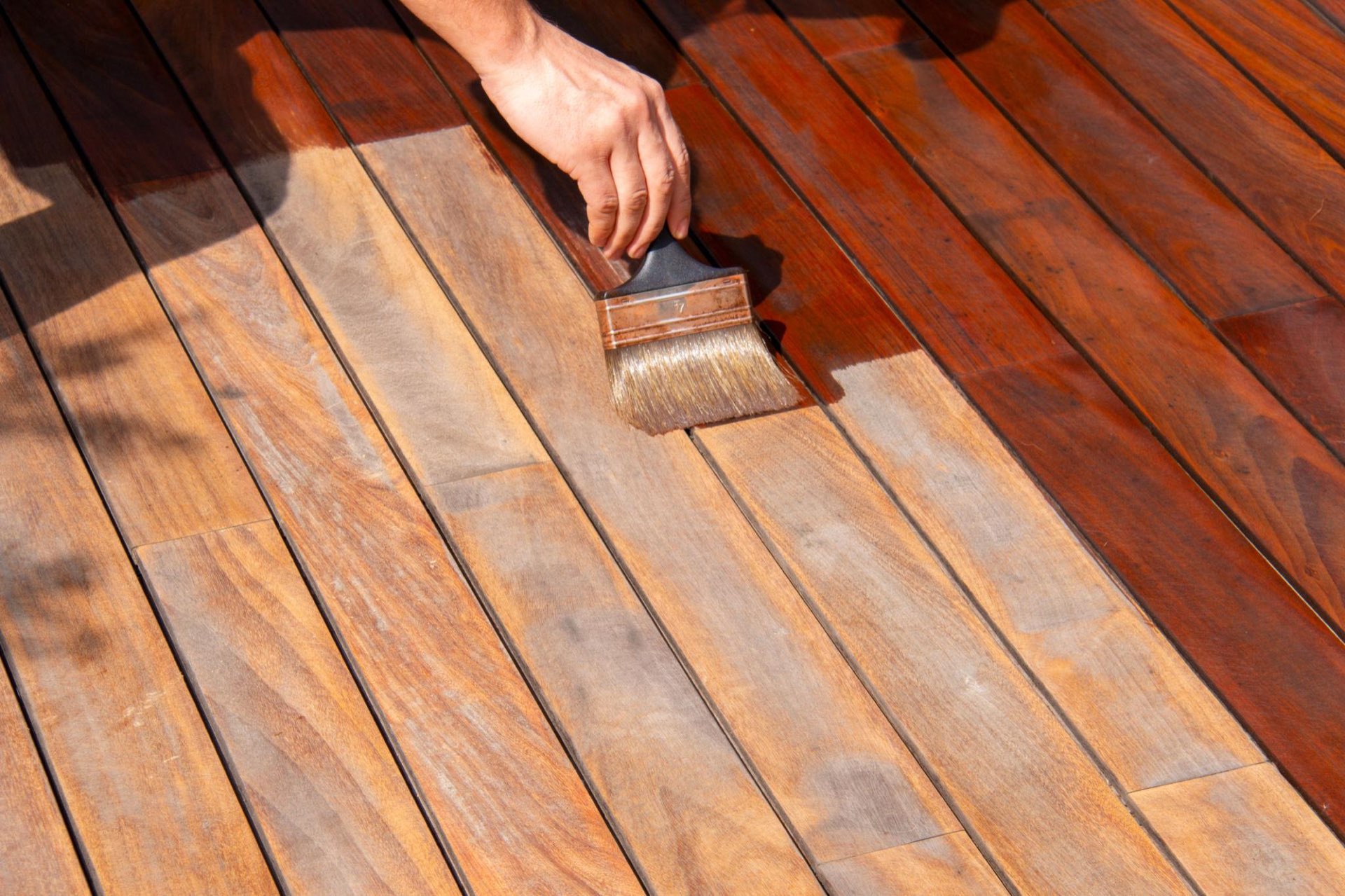
Ipe Deck Restoration in Orange, California
From Old Towne's historic bungalows to the hillside homes of Orange Park Acres, inland heat pushes local Ipe decking to gray ahead of schedule.
The premier Ipe refinishing crew in Orange, Orange County.
The City of Orange spans everything from the dense, historic grid around the Old Towne Orange Plaza to the sprawling hillside lots of Orange Park Acres, and Ipe decking shows up in both settings for very different reasons. In Old Towne, small backyard decks attached to century-old homes see intense afternoon sun with little tree cover left after decades of urban infill; in Orange Park Acres, larger equestrian properties feature expansive decks fully exposed on open hillsides. My Teak Pro restores both, tailoring the process to the deck's age and exposure.
Homes within the Old Towne Orange Historic District are often subject to design review for exterior changes, so restoring existing Ipe decking rather than replacing it typically keeps a property's original materials intact and consistent with district guidelines.
We're the same veteran-owned crew behind Orange teak restoration and outdoor furniture refinishing. Browse recent projects in our project gallery or request a free estimate for your Orange Ipe deck.
Serving Orange landmarks & communities
- Old Towne Orange Plaza
- Chapman University
- Orange Park Acres
- Irvine Regional Park
- Santiago Oaks Regional Park
- Old Towne Orange
- Orange Park Acres
- Mabury Ranch
- Belmont
- Panorama Heights
- Serrano Heights
What sets the maintenance interval inland
Two Orange decks the same age can be in very different shape. These are the factors that account for most of the difference.
Hours of direct sun
The dominant variable inland. Cover changes the schedule more than any product does.
Pool proximity
Chlorine and constant wetting shorten the interval on the surround specifically.
Dust and grit
Inland dust acts as an abrasive underfoot. Regular sweeping genuinely extends finish life.
Barbecue and fire pit zones
Grease and heat damage are localised and worth protecting with a mat.
Tree cover
Shade helps, but tannin-heavy leaf litter left to sit will stain Ipe within days.
Why Orange's Inland Heat Grays Ipe Decking
Orange sits fully inland, away from any coastal marine layer, and its summer temperatures regularly run well above nearby beach cities. Combined with seasonal Santa Ana winds moving through the surrounding hills, this dry heat pulls moisture and natural oils out of Ipe boards quickly, often turning a rich brown deck silvery gray within the first year if it isn't maintained.
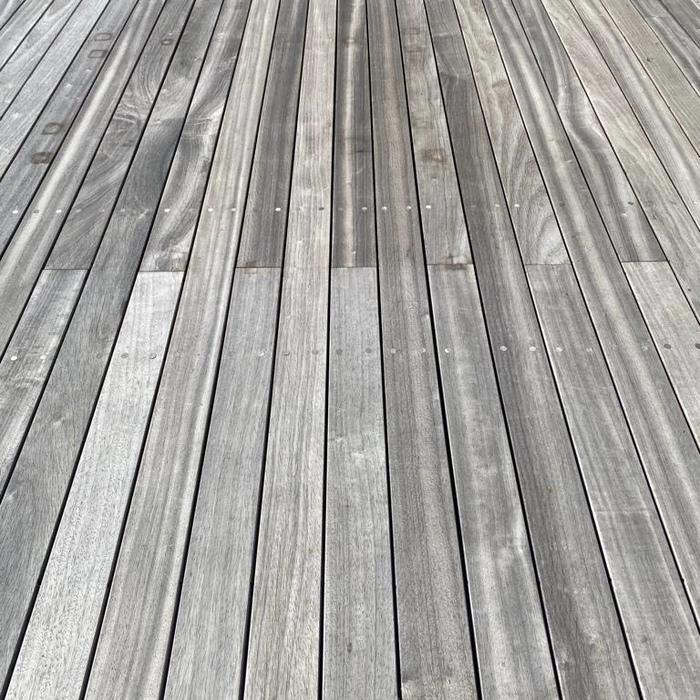
The Ipe surfaces we are asked about most
The craft is the same across all of them; access and detailing are what change the day.
Main deck field
Machine work, straightforward, and where most of the square footage sits.
Stairs and treads
Hand work, safety-critical, and the highest-wear element on any deck.
Fascia and skirting
Vertical, highly visible, and usually more weathered at the bottom than the top.
Rail caps and posts
Constant hand contact, so the finish choice here is about feel as much as looks.
Docks and gangways
Permanently damp and slip-critical. Product selection is driven by traction, not colour.
Preparation is ninety percent of an Ipe finish.
Read the deck
Ipe is dense enough that finish failure is almost always a preparation story. We find out what was on it before and why it let go.
Remove the biology
Mildew, algae and the black spotting under planters are living, not cosmetic. They get treated before any abrasive touches the wood.
Open the grain
Ipe's tight pores close up under weathering. Correct grit sequencing opens them just enough to accept oil without leaving scratch marks.
Balance the tone
Brightener resets the pH and pulls the iron staining out from around screws so the whole deck reads one color, not a patchwork.
Feed the wood
Penetrating oil chosen for your exposure, applied in thin coats. Ipe takes far less product than pine — over-applying is the classic mistake.
Document the finish
We record the exact product and grit sequence used, so the next maintenance coat matches rather than fights what is already there.
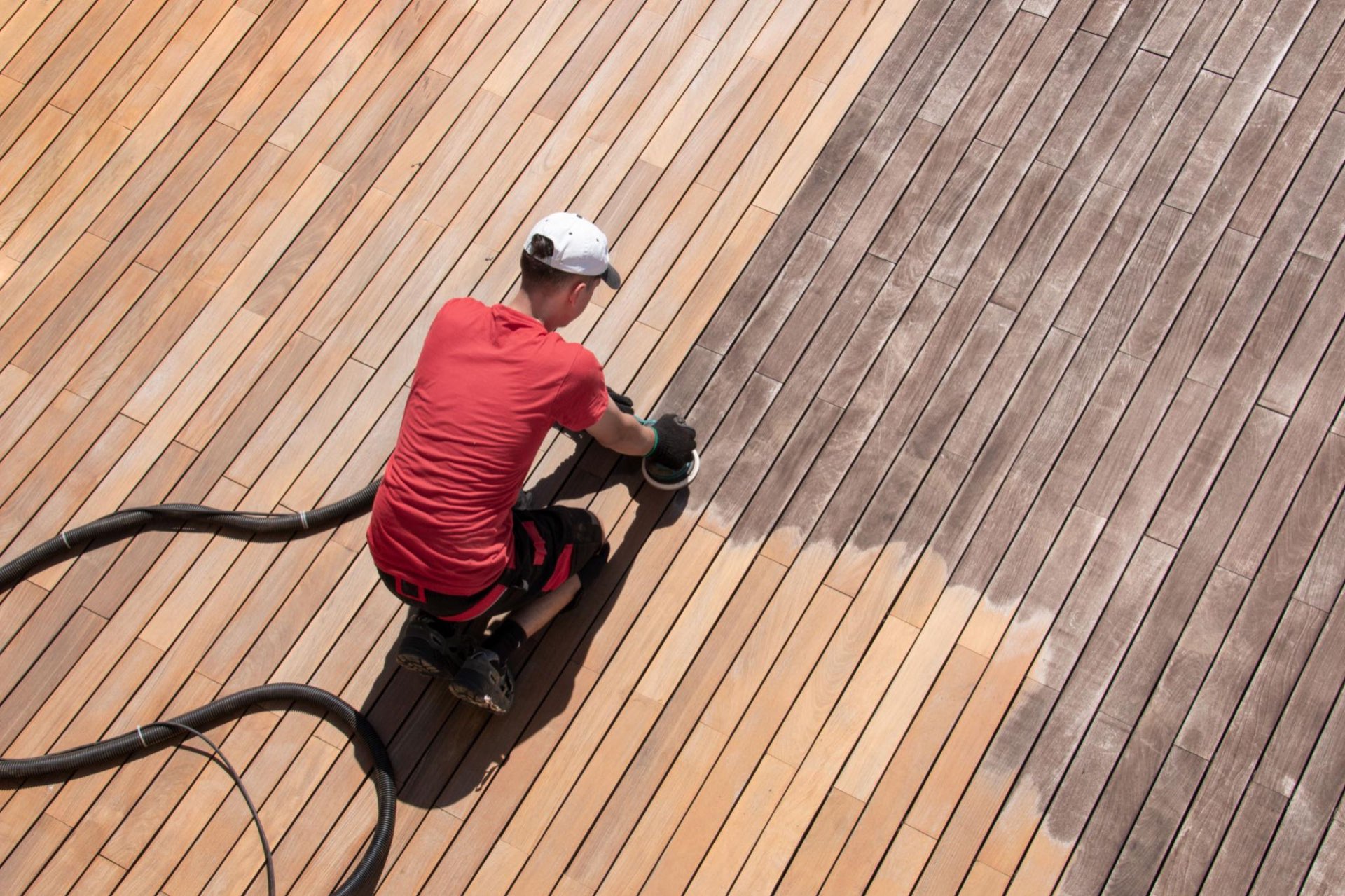
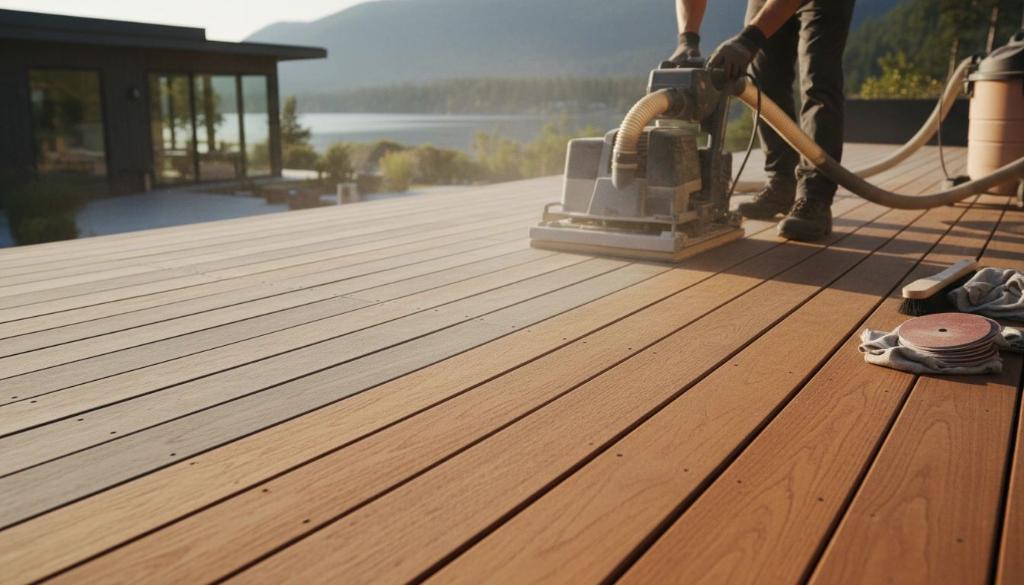
What tone your deck will actually come back to
Ipe is not one colour. Depending on the log it can run from a warm reddish brown through chocolate to a distinctly olive-green cast, and a single deck usually has all of it.
Sanding reveals whatever is there — we cannot add colour that the boards do not have, and we will not use a stain to fake uniformity that would then peel. Brightening evens the tone as far as chemistry honestly allows.
Oil deepens what is revealed by roughly one shade and brings the figure up. The first week after finishing is the darkest the deck will look; it settles slightly as the oil cures.
What working with us is actually like.
A fixed written price
The number on the estimate is the number on the invoice unless you change the scope. No day-rate creep.
One crew, start to finish
The people who quote the job are the people who sand it. Nothing gets handed to a subcontractor mid-week.
We say no to bad jobs
If a deck is past finishing we will tell you, in writing, rather than sell you a coat of oil that fails in a season.
Neighbours in mind
Dust containment, contained wash water, tidy staging and no early-morning machine noise.
Product transparency
You are told exactly what goes on your wood and why, and you keep the spec for future maintenance.
We come back
Maintenance reminders on your schedule, not sales calls. Most of our work is repeat clients.
Ipe decks restored to their original glow.
A look at recent Ipe refinishing projects — every deck hand-sanded and hand-oiled by our master craftsmen. See more on our full project gallery.
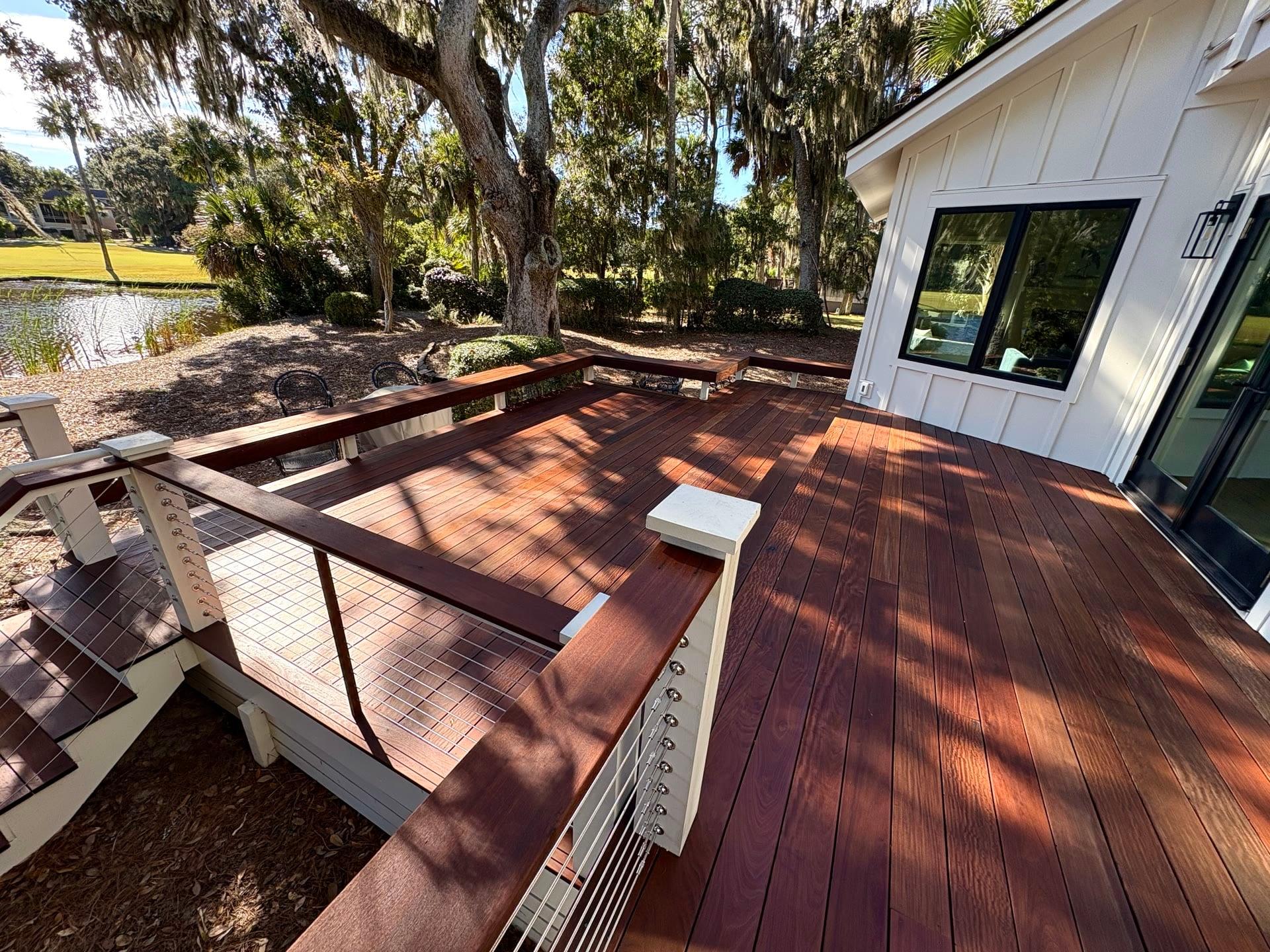
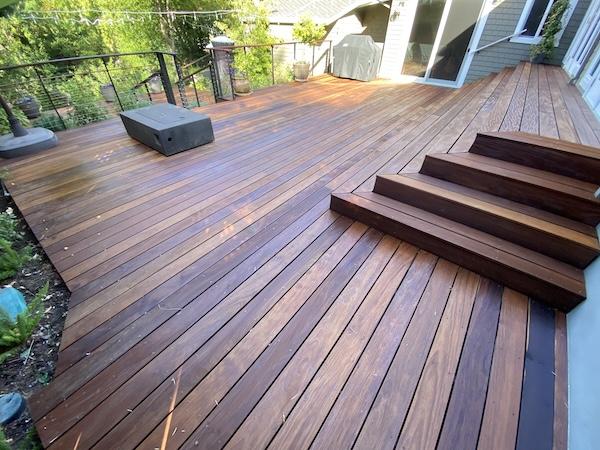
Ipe deck refinishing in Orange.
Ipe deck refinishing near Orange
Ipe behaves differently a few miles apart along this coast. These nearby pages cover the conditions specific to each community.
Worth reading before you book
How Often Should Teak Furniture Be Refinished?
There is no universal interval. There is a simple test that answers it for your specific furniture in about ten seconds.
Read guideSanding vs. Stripping Exterior Wood
Both are preparation methods with different jobs. Choosing wrong either wastes wood or leaves contamination behind.
Read guideTeak Oil vs. Teak Sealer
Oils look richer and want more attention. Sealers hold longer and read more uniform. The right answer depends on exposure and on how often you want to think about it.
Read guideBook your Orange Ipe deck before the season turns.
Spring and early autumn book out first. A short call now usually means a better slot.
Book your Orange estimate.
Pick a time that suits, and the restorer who would run the job will walk the deck with you. There is no charge and no sales pitch.