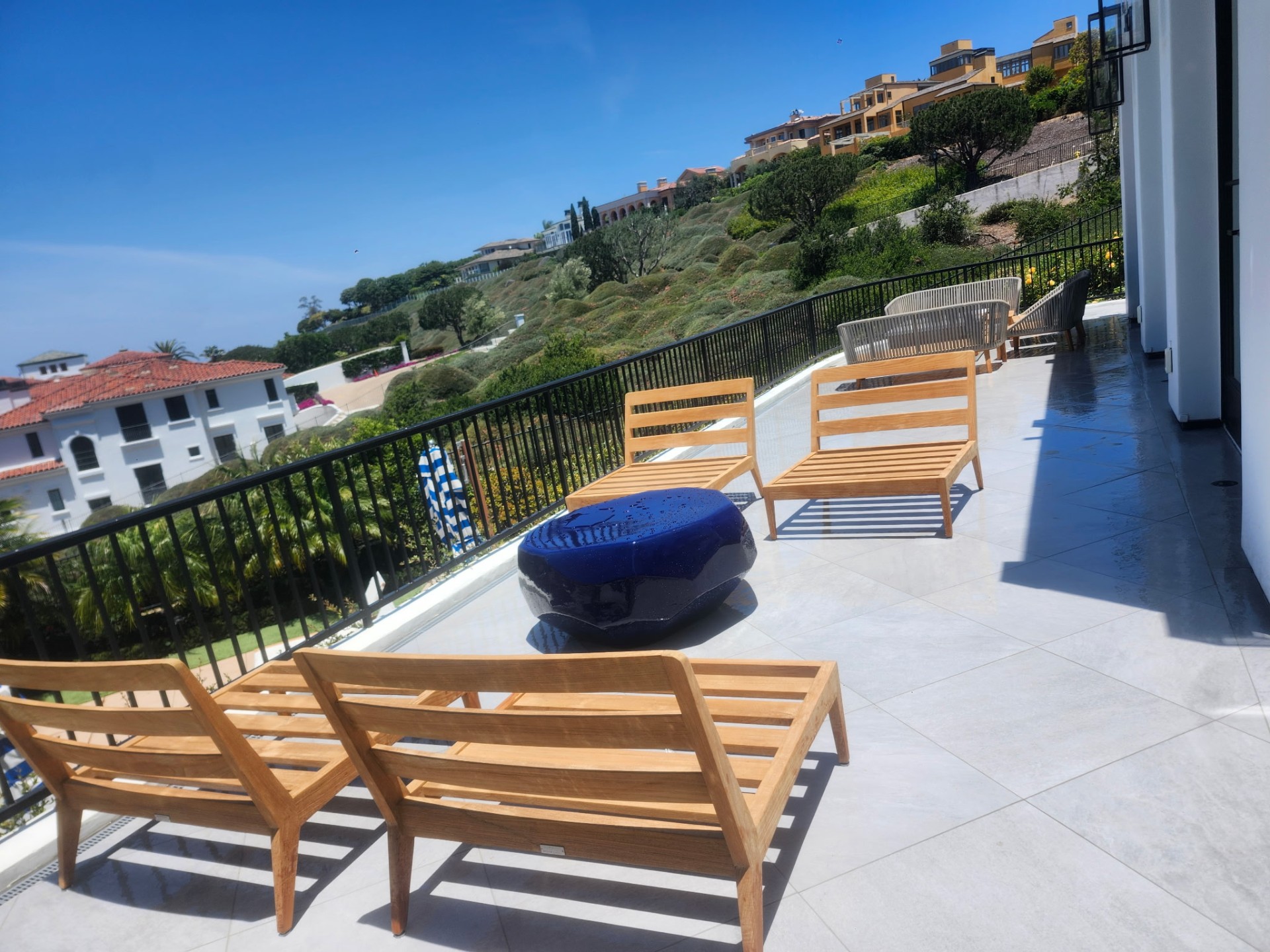
Exterior wood restoration: doors, gates, decking and trim
The wood on a building takes the same weather as the furniture in front of it, and shows it sooner. Restoration keeps it serviceable instead of replacing it.
Exterior joinery fails predictably. A front door goes first at the top rail where sun sits longest and at the sill where water collects. Handrails wear at the grip. Fascia and trim on the sun side chalk and lift while the shaded elevation still looks fine.
Because these are permanent, high-visibility surfaces, the standard for preparation is higher than on furniture. Runs, patchy absorption and a mismatched sheen are all obvious at eye level and at arm's length.
We restore these surfaces in place, with glass, hardware, hardscape and planting masked before anything starts, and we work to keep openings usable through the job wherever it is practical.
Scope
Surfaces covered by this service
Anything structural or architectural in wood that lives outdoors.
Entry doors and side lights
The highest-visibility surface on most properties, and the one where finish failure is noticed first.
Gates and garden joinery
Fully exposed on both faces, often with hardware that needs removing and re-seating.
Decking and stairs
Traffic surfaces where levelling, grip and drainage matter as much as colour.
Railings and balustrades
Handled surfaces that pick up skin oils and sunscreen alongside weather.
Pergolas, fascia and trim
Large elevated surfaces where access planning is most of the job.
Preparation
Strip, sand, or both
Where a film finish such as varnish or paint has failed, stripping removes it without abrading the wood underneath, which matters on mouldings and carved detail a sander cannot reach cleanly.
Where the wood is bare and weathered, sanding is what levels the eroded surface and takes out grey and shallow staining. Most exterior door projects need both, in that order.
The judgement is about how much material a surface can afford to lose. Components already thinned by previous work are stripped rather than sanded aggressively.
Protection
Building a finish that survives the exposure
South and west-facing surfaces need the strongest UV protection available in a finish suited to that substrate, applied in thin, even coats and built up rather than laid on heavily.
Detailing matters as much as the product. Sealing end grain, the underside of a sill and the top edge of a door is what stops water finding a way in, and it is the part most commonly skipped.
Exterior wood restoration near you
Local pages cover the sun and moisture conditions that decide how often exterior woodwork needs attention in each area.
Guides on this subject
Sanding vs. Stripping Exterior Wood
Both are preparation methods with different jobs. Choosing wrong either wastes wood or leaves contamination behind.
How UV Exposure Damages Outdoor Wood
Sun does not just fade colour. It breaks down the material that holds wood fibres together, and it degrades the finish protecting them.
Restoration vs. Replacement of Outdoor Wood Furniture
The decision is structural first and financial second. Appearance should not drive it at all.
Common questions
Can a faded front door be restored in place?
In most cases yes. Doors are usually refinished on site, with hardware masked or removed and the opening protected while the work is carried out.
Do you strip or sand?
Both, depending on what is on the wood. Failing varnish and paint need stripping; bare weathered wood needs sanding. Carved detail is stripped to protect the profile.
How long does an exterior finish last?
It depends almost entirely on sun exposure. South and west-facing surfaces fail years earlier than sheltered ones, which is why we quote intervals per surface rather than per property.
Can you match existing woodwork?
We aim to blend with adjacent finished surfaces, though exact matching of a weathered original is not always achievable. We are upfront about that before starting.
Do you handle railings and gates?
Yes, along with pergolas, fascia, trim and other architectural woodwork that sits in the weather.
Ask about your exterior woodwork
Send a photo of the door, gate or deck and we will tell you whether it needs full preparation or just a maintenance coat.
Browse every service area
On-site teak restoration and Ipe deck refinishing across Orange County, Los Angeles County and San Diego County. Every city we serve has its own page.