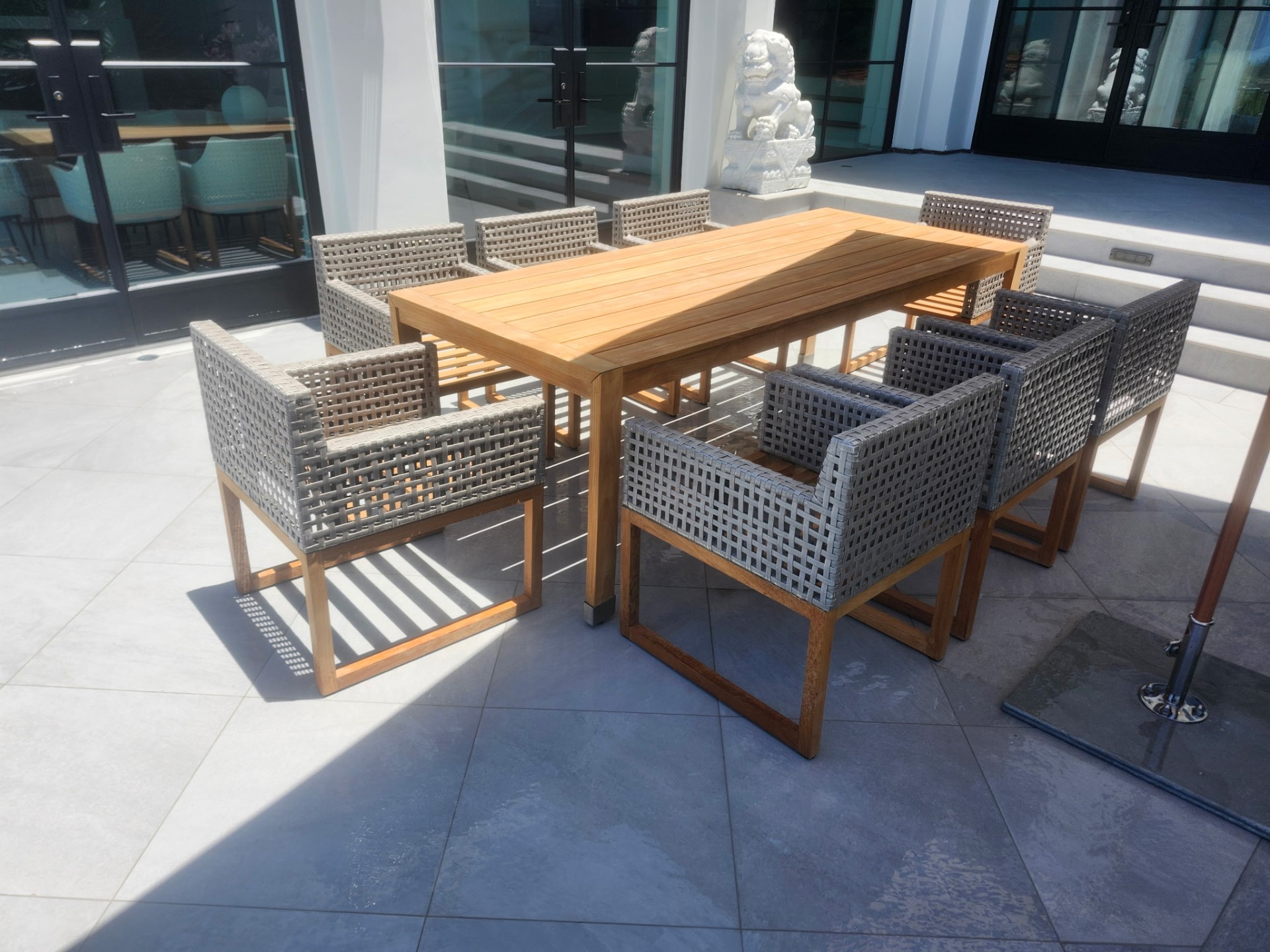
Newport Beach Teak Restoration for Harbor Homes and Ipe Decks
On-site teak refinishing for Newport Harbor waterfronts, Balboa Island patios, Lido Isle decks, and the boats tied up along the way — one crew that handles both furniture and marine teak.
Trusted across Newport Beach by
A Harbor Town Built Around Teak
Newport Beach is unusual among the cities we serve because teak here isn't limited to patio furniture — it's baked into the identity of the harbor itself. Walk the docks off Bayside Drive or through the Balboa Island ferry landing and you'll see teak swim steps, cockpit soles, and cap rails on boats moored a few feet from teak dining tables on the very same waterfront patios. We're one of the few local outfits that services both the furniture on the dock and the decking on the boat tied to it.
Balboa Island's tightly packed bungalows and Little Island's Grand Canal-facing patios put teak furniture within a few feet of brackish bay water, which behaves differently than open ocean spray — more still, more humid, and prone to algae bloom on nearby seawalls that eventually reaches nearby wood. Furniture crammed onto narrow front patios along Marine Avenue also takes constant foot traffic and bike parking bumps that regular coastal furniture never sees.
Across the channel, Balboa Peninsula runs the full range from the packed cottages near the Fun Zone to the quieter beachfront homes toward the Wedge, and teak loungers there face direct, unfiltered ocean wind off the sand — a harsher exposure than the calmer harbor side just blocks away. Lido Isle and the Port Streets add another layer: newer construction, tidier HOA standards, and teak furniture chosen to match a more curated coastal-modern look.
Back Bay and the Eastbluff area sit further from salt spray but catch reflected heat off the estuary's open water, aging teak more through UV and dryness than through corrosion. Meanwhile, members at the Newport Beach Yacht Club and Balboa Yacht Club bring us both boat brightwork and the teak furniture on their patios and clubhouse decks, since the two often need attention on the same schedule.
Fashion Island and the Corona del Mar-adjacent Newport Center area round out the city with newer commercial and residential teak installations — built-in benches, planters, and outdoor dining features — that need a different maintenance rhythm than a decades-old dining set on Lido Isle.
We work directly with Newport Harbor slip owners and marina staff, plus HOAs on Lido Isle and Balboa Island, to coordinate dock access and narrow-street parking for both furniture and boat teak work.
Neighborhoods we regularly service in Newport Beach
- Balboa Peninsula
- Balboa Island
- Newport Heights
- Big Canyon
- Lido Isle
How the finish specification is decided
Exposure comes first. Unshaded, west-facing pieces need stronger UV protection; sheltered pieces hold a softer, more natural oil far longer.
Then use. Dining tables meet hot dishes, sunscreen and wine; loungers meet body oils and constant contact; decking takes traffic and furniture drag. Each favours a different balance.
Finally, honesty about maintenance. A finish that looks spectacular and wants refreshing twice a year is the wrong recommendation for someone who would rather not think about it, and we say so before quoting it.
The marine layer and why Newport Beach teak stays damp
Morning fog is the single most underrated influence on outdoor wood here. Overnight condensation wets every horizontal surface in Newport Beach, and afternoon sun then drives that moisture back out. The wood swells and shrinks slightly each day.
That daily cycle is what raises grain and eventually opens the hairline checks people notice along tabletops. It also keeps shaded joints damp long enough for mildew to establish, which is why the black spotting we treat is usually on north-facing faces and slat undersides rather than in the sun.
Finishes that flex and breathe handle this better than hard films. A penetrating oil moves with the wood; a brittle surface film cracks and lets water underneath, which is the failure mode we see most often on coastal properties.
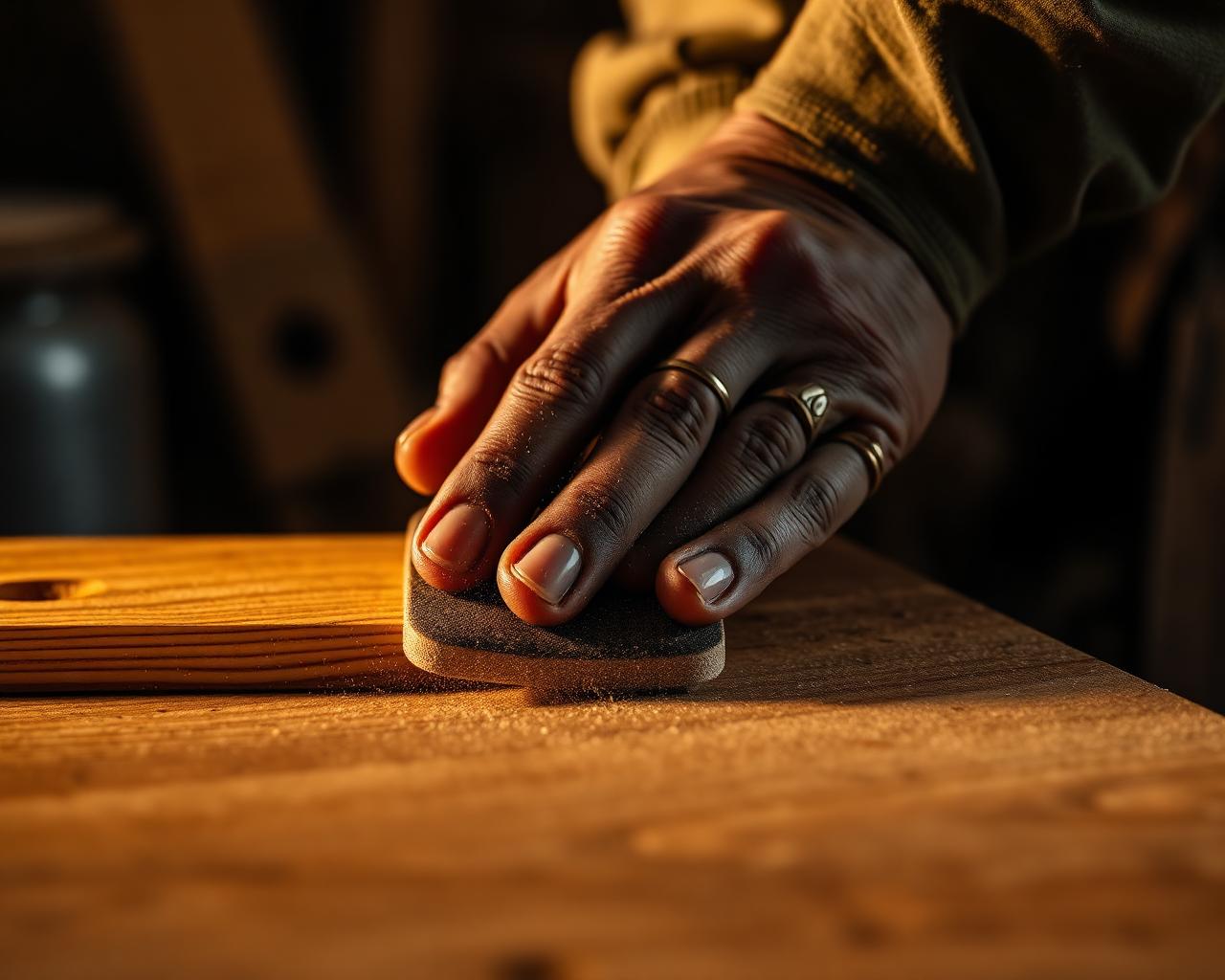
Hand-finished
Every grain inspected, sanded and sealed by a master craftsman.
What actually happens across the two days.
- 01
Scope and photograph
We record the condition of each piece before work starts, so the before-and-after is documented rather than described.
- 02
Mask and contain
Stone, glass, pool coping and planting are covered. Teak dust is fine and travels, so containment is set up before any abrasive runs.
- 03
Strip what is failing
Old varnish and film finishes come off chemically. Sanding through a failed film only drives it deeper into the grain.
- 04
Level and refine
Coarse work flattens eroded early-wood, then finer passes close the grain without burnishing it shut.
- 05
Feed the wood
Oil goes on until the wood stops taking it, then the excess is wiped off within the working window.
- 06
Cure and return
We leave the pieces to cure, then come back to buff any raised grain and reset your furniture layout.
Ipe decks need a different hand — we do those too.
Ipe is a dense tropical hardwood, not teak — it takes harsher cleaning chemistry, slower sanding and a penetrating marine-grade oil to bring back its rich chocolate-brown color. The same crew that restores your teak furniture can deep-clean, sand and re-oil your ipe (or mahogany) decking in the same visit, so the whole outdoor space comes back to life at once.
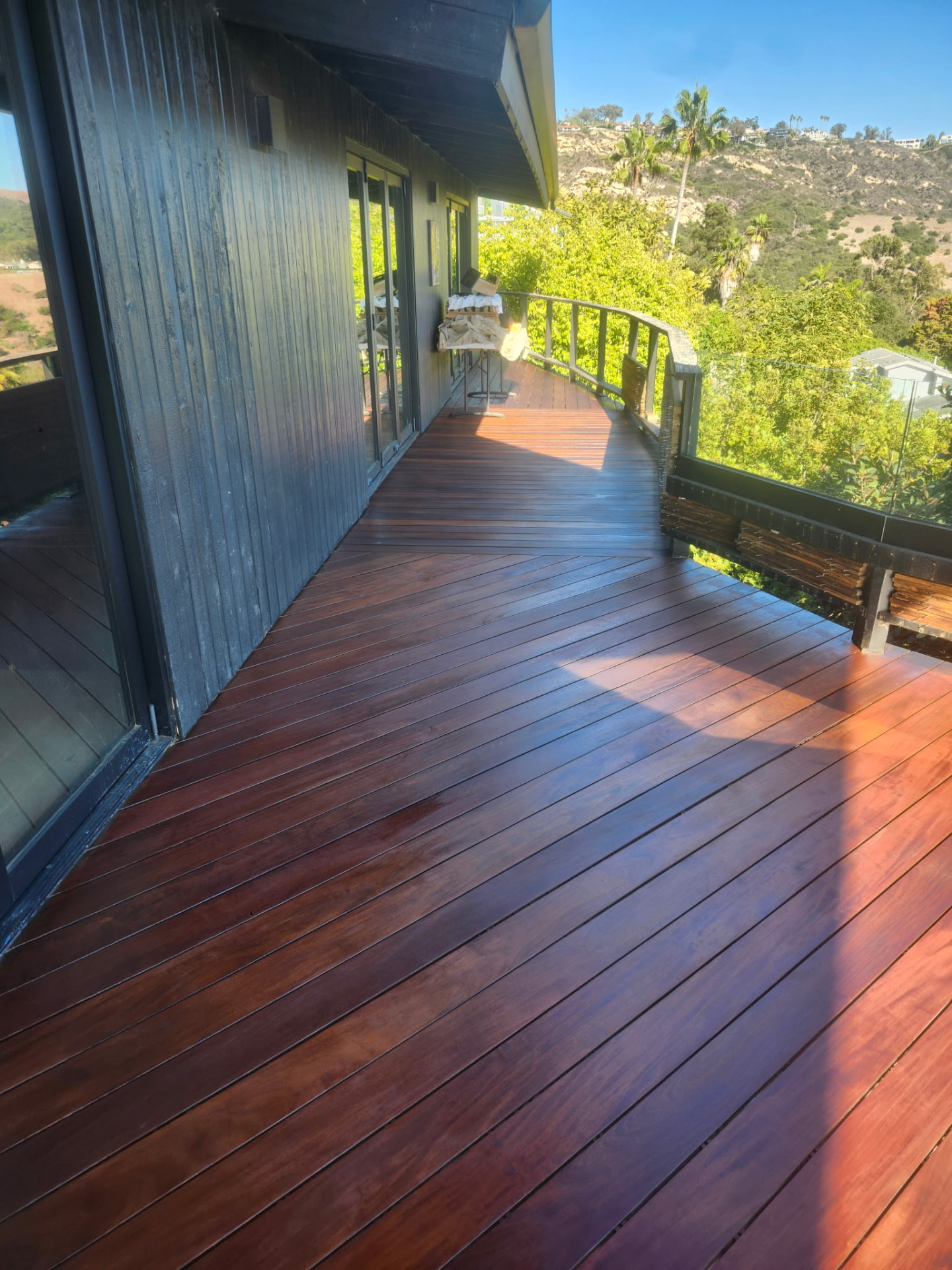
Ipe Deck · After
Hillside ipe deck, sanded and oiled back to its original brown.
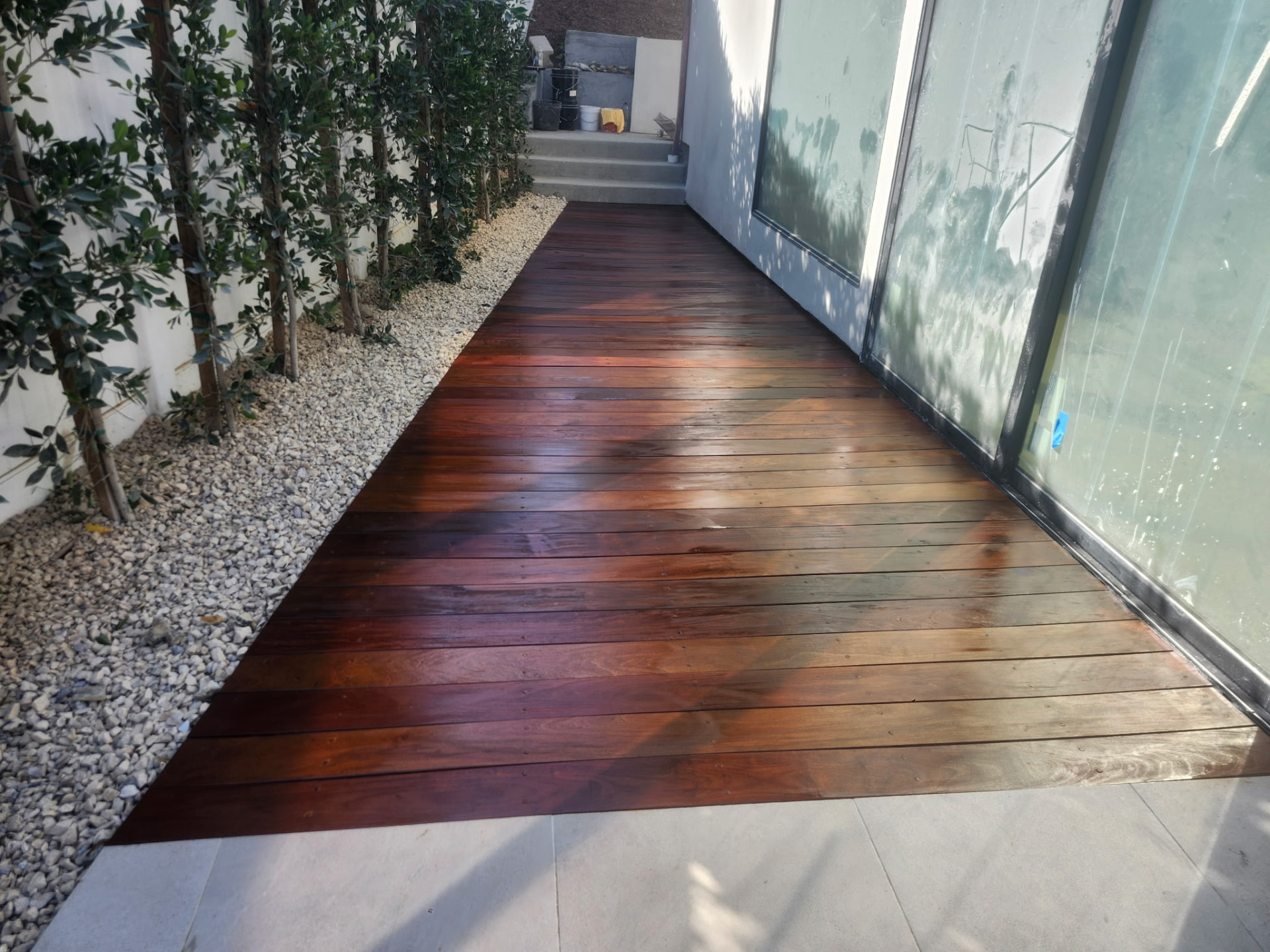
Ipe Walkway · After
Deep-cleaned and re-oiled walkway with a fresh marine finish.
Free on-site assessment — (949) 793-7613
Why Newport Beach homeowners search for teak restoration near me
Searching locally is the right instinct. A restorer who works in Orange County every week already knows what your exposure does to wood and how long a finish realistically lasts here.
Mobile service
Work happens at your Newport Beach address. Nothing is crated, transported or held in a shop for weeks.
Free on-site estimates
In-person assessment, usually within a couple of days, with a written price before you commit to anything.
Climate knowledge
We know what salt air, marine layer and UV do to Newport Beach teak, because we correct it constantly.
Veteran-owned
Founded and run by a US military veteran. Kept appointments, finished days, straight answers.
Regional coverage
Orange County, Los Angeles County and San Diego County, with the same crew and the same standard.
Local references
Homeowners, HOAs and hospitality clients across Orange County we can point you to.
Recent Teak Projects in Newport Beach
Bayfront Yacht Swim Step and Cockpit Sole
A private boat docked off Bayside Drive had a swim step and cockpit sole gone gray and slick from standing water; we sanded, re-caulked worn seams, and applied a marine-grade finish suited to constant wet-dry cycling.
Balboa Island Front Patio Dining Set
A compact teak dining set on a Marine Avenue-adjacent front patio had mildew staining from humid bay air and nearby seawall spray; we treated the surface, sanded back, and refinished for a more even, mildew-resistant result.
Lido Isle Waterfront Lounge Collection
A full lounge and dining grouping on a Lido Isle waterfront patio needed refinishing to match the home's coastal-modern renovation; we restored the set to a consistent tone across pieces bought in different years.
Yacht Club Clubhouse Deck Benches
Built-in teak benches along a yacht club deck saw heavy member traffic and salt exposure; we refinished the run of benches in sections to keep the deck usable throughout the project.
Keeping restored teak looking right
Restoration resets the clock; maintenance decides how slowly it runs down. The routine takes minutes.
Rinse regularly
Plain water removes grit before it abrades the surface. No pressure washers, ever.
Mild soap only
Diluted dish soap and a soft brush along the grain handles almost everything.
Lift standing water
Move cushions, planters and trays occasionally so the surface underneath can dry.
Shade the worst piece
A cover over the hardest-hit item measurably extends the interval for the whole set.
Refresh, do not rescue
A maintenance coat on a sound surface costs a fraction of a full restoration later.
Teak restoration in Newport Beach — answers to the questions we hear most.
Teak restoration near Newport Beach
We work throughout the communities surrounding Newport Beach, often on the same trip.
More ways we serve Newport Beach
Background reading on teak care
How Often Should Teak Furniture Be Refinished?
There is no universal interval. There is a simple test that answers it for your specific furniture in about ten seconds.
Read guideSanding vs. Stripping Exterior Wood
Both are preparation methods with different jobs. Choosing wrong either wastes wood or leaves contamination behind.
Read guideHow UV Exposure Damages Outdoor Wood
Sun does not just fade colour. It breaks down the material that holds wood fibres together, and it degrades the finish protecting them.
Read guideGet your Newport Beach wood assessed at no cost
Send a few photos or book a visit. Either way you get a fixed price and an honest scope.
Tell us about your Newport Beach teak project.
We reply to every enquiry personally, usually the same day, and will tell you honestly if the work can wait a season.
More from My Teak Pro near Newport Beach
Teak Restoration nearby
Every city we serve
On-site teak restoration and Ipe deck refinishing across Orange County, Los Angeles County and San Diego County. Every city we serve has its own page.