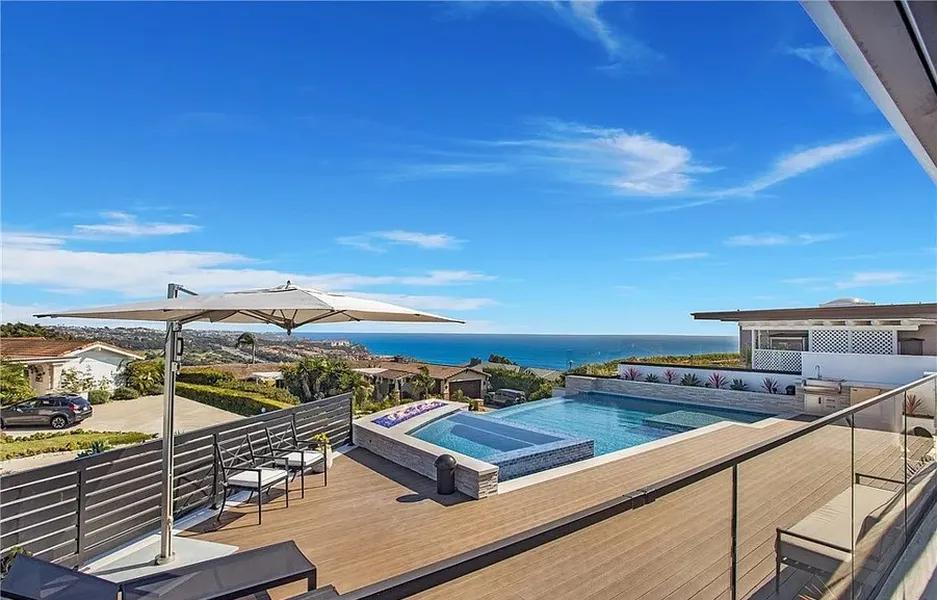
Ipe Deck Restoration for Pacific Beach's Boardwalk Properties
Along the PB boardwalk and the streets stacked tightly toward Crystal Pier, salt spray and constant foot traffic wear Ipe decking down fast.
The premier Ipe refinishing crew in Pacific Beach, San Diego County.
Pacific Beach is one of San Diego's densest beach communities, with rooftop decks, front patios, and rental units packed tightly between the boardwalk and Mission Boulevard. Ipe decking here does double duty as both a design feature and a heavily used gathering space, whether it's a rooftop deck catching sunset views near Crystal Pier or a front patio just steps from the sand. My Teak Pro restores these decks to handle both the constant salt air and the wear that comes with PB's high volume of foot traffic.
Many Pacific Beach properties operate as short-term or vacation rentals, meaning decks see turnover-level cleaning schedules and heavier guest traffic than a typical single-family home, which accelerates wear on stair treads and railings especially.
We're the same veteran-owned crew behind Pacific Beach teak restoration and outdoor furniture refinishing. Browse recent projects in our project gallery or request a free estimate for your Pacific Beach Ipe deck.
Serving Pacific Beach landmarks & communities
- Crystal Pier
- Pacific Beach Boardwalk
- Kate Sessions Park
- Mission Bay
- Tourmaline Surfing Park
- North Pacific Beach
- Crown Point
- Kate Sessions
- Bird Rock-adjacent
- Bayside
- Beach Boardwalk
Salt air and the Pacific Beach deck surface
Airborne salt is the variable that separates a Pacific Beach deck from an identical one a few miles inland. Salt is hygroscopic: it pulls water out of the air and holds it against the boards long after the morning marine layer has cleared. The top of each board stays damp for hours, and that slow wet-dry cycling is what tears a finish apart from underneath.
Ipe survives it better than almost any other decking because of its density — around 1,100 kg per cubic metre, tight enough that water struggles to get in at all. What fails is the oil sitting in the outer fibres, not the timber. That distinction matters, because it means a Pacific Beach deck that looks ruined is usually a refinishing job rather than a replacement.
Practically, oceanfront decks here want a maintenance coat roughly twice as often as sheltered ones. Rinsing salt off with fresh water once a week does more for the finish than any product upgrade.
Why Pacific Beach Ipe Grays and Wears So Fast
Ocean-driven salt spray rolls directly off the boardwalk and Mission Bay channel into PB's tightly packed lots, settling into Ipe grain and pulling out natural oils through repeated wet-dry cycles. Add in near-constant foot traffic from renters, beachgoers, and rooftop entertaining, and boards here show both graying and physical wear — scuffed high-traffic paths and worn stair edges — faster than in quieter inland neighborhoods.
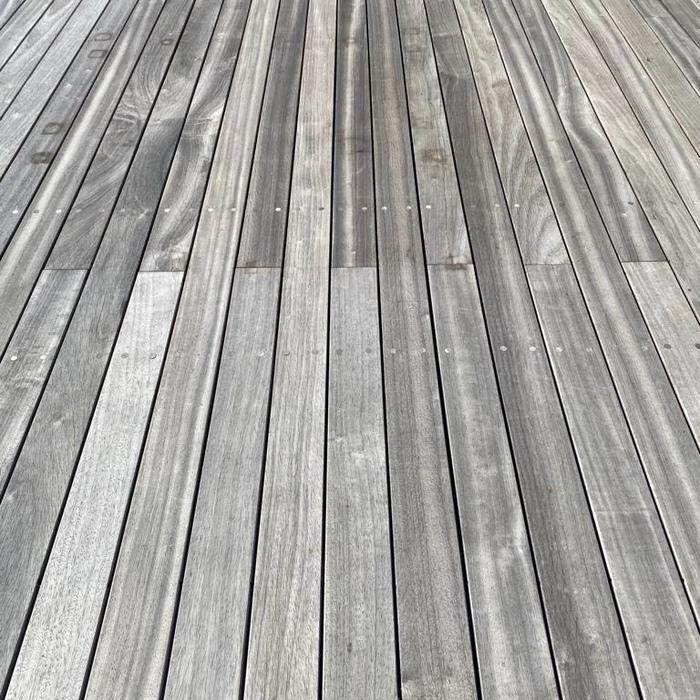
The Ipe surfaces we are asked about most
The craft is the same across all of them; access and detailing are what change the day.
Main deck field
Machine work, straightforward, and where most of the square footage sits.
Stairs and treads
Hand work, safety-critical, and the highest-wear element on any deck.
Fascia and skirting
Vertical, highly visible, and usually more weathered at the bottom than the top.
Rail caps and posts
Constant hand contact, so the finish choice here is about feel as much as looks.
Docks and gangways
Permanently damp and slip-critical. Product selection is driven by traction, not colour.
Preparation is ninety percent of an Ipe finish.
Read the deck
Ipe is dense enough that finish failure is almost always a preparation story. We find out what was on it before and why it let go.
Remove the biology
Mildew, algae and the black spotting under planters are living, not cosmetic. They get treated before any abrasive touches the wood.
Open the grain
Ipe's tight pores close up under weathering. Correct grit sequencing opens them just enough to accept oil without leaving scratch marks.
Balance the tone
Brightener resets the pH and pulls the iron staining out from around screws so the whole deck reads one color, not a patchwork.
Feed the wood
Penetrating oil chosen for your exposure, applied in thin coats. Ipe takes far less product than pine — over-applying is the classic mistake.
Document the finish
We record the exact product and grit sequence used, so the next maintenance coat matches rather than fights what is already there.
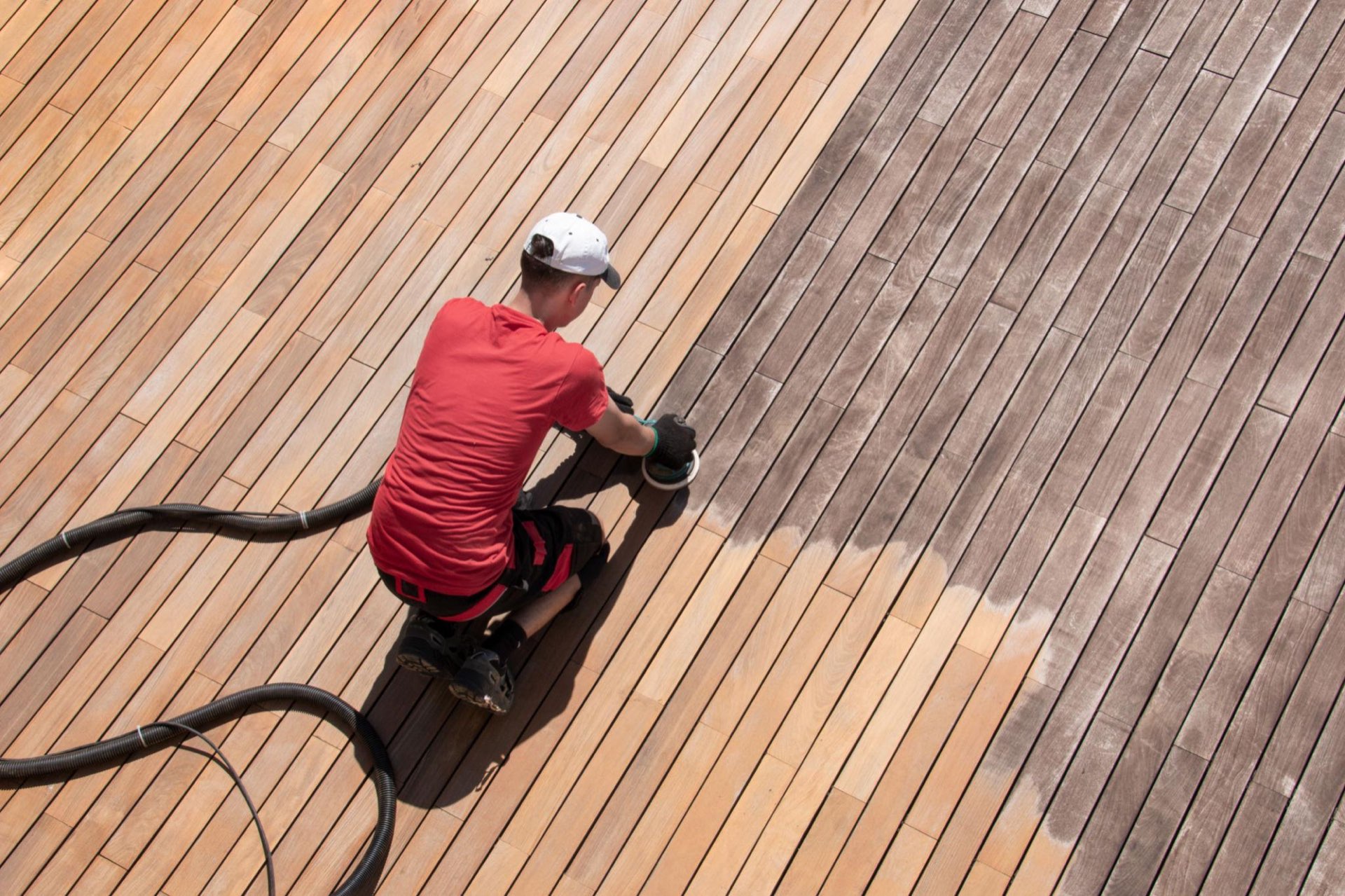
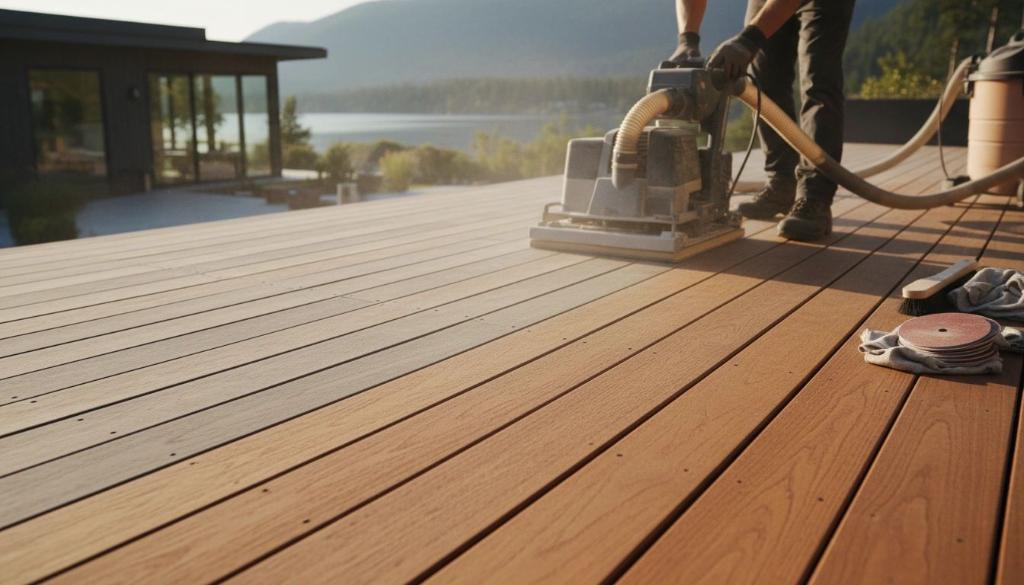
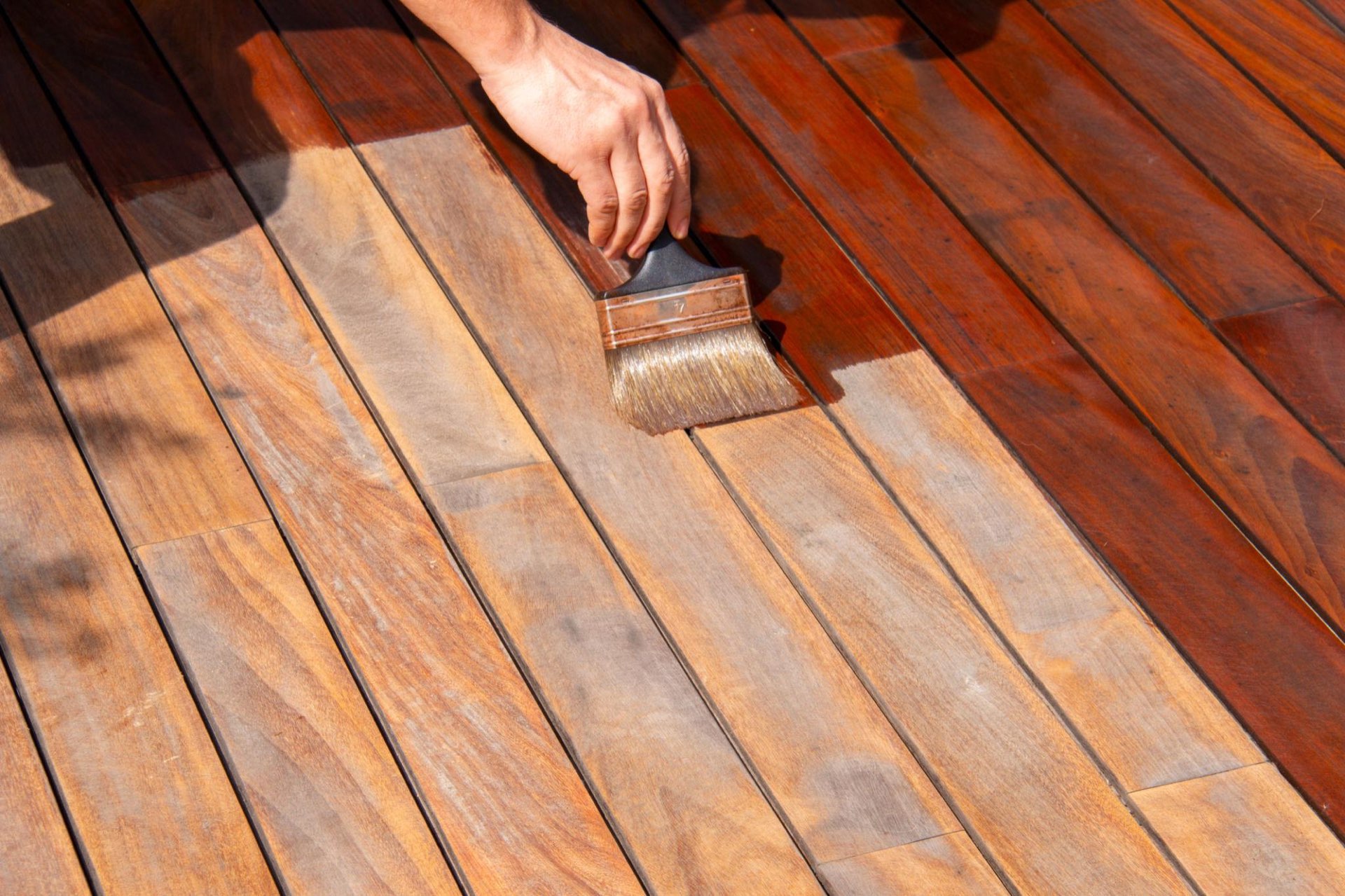
What tone your deck will actually come back to
Ipe is not one colour. Depending on the log it can run from a warm reddish brown through chocolate to a distinctly olive-green cast, and a single deck usually has all of it.
Sanding reveals whatever is there — we cannot add colour that the boards do not have, and we will not use a stain to fake uniformity that would then peel. Brightening evens the tone as far as chemistry honestly allows.
Oil deepens what is revealed by roughly one shade and brings the figure up. The first week after finishing is the darkest the deck will look; it settles slightly as the oil cures.
What working with us is actually like.
A fixed written price
The number on the estimate is the number on the invoice unless you change the scope. No day-rate creep.
One crew, start to finish
The people who quote the job are the people who sand it. Nothing gets handed to a subcontractor mid-week.
We say no to bad jobs
If a deck is past finishing we will tell you, in writing, rather than sell you a coat of oil that fails in a season.
Neighbours in mind
Dust containment, contained wash water, tidy staging and no early-morning machine noise.
Product transparency
You are told exactly what goes on your wood and why, and you keep the spec for future maintenance.
We come back
Maintenance reminders on your schedule, not sales calls. Most of our work is repeat clients.
Ipe decks restored to their original glow.
A look at recent Ipe refinishing projects — every deck hand-sanded and hand-oiled by our master craftsmen. See more on our full project gallery.
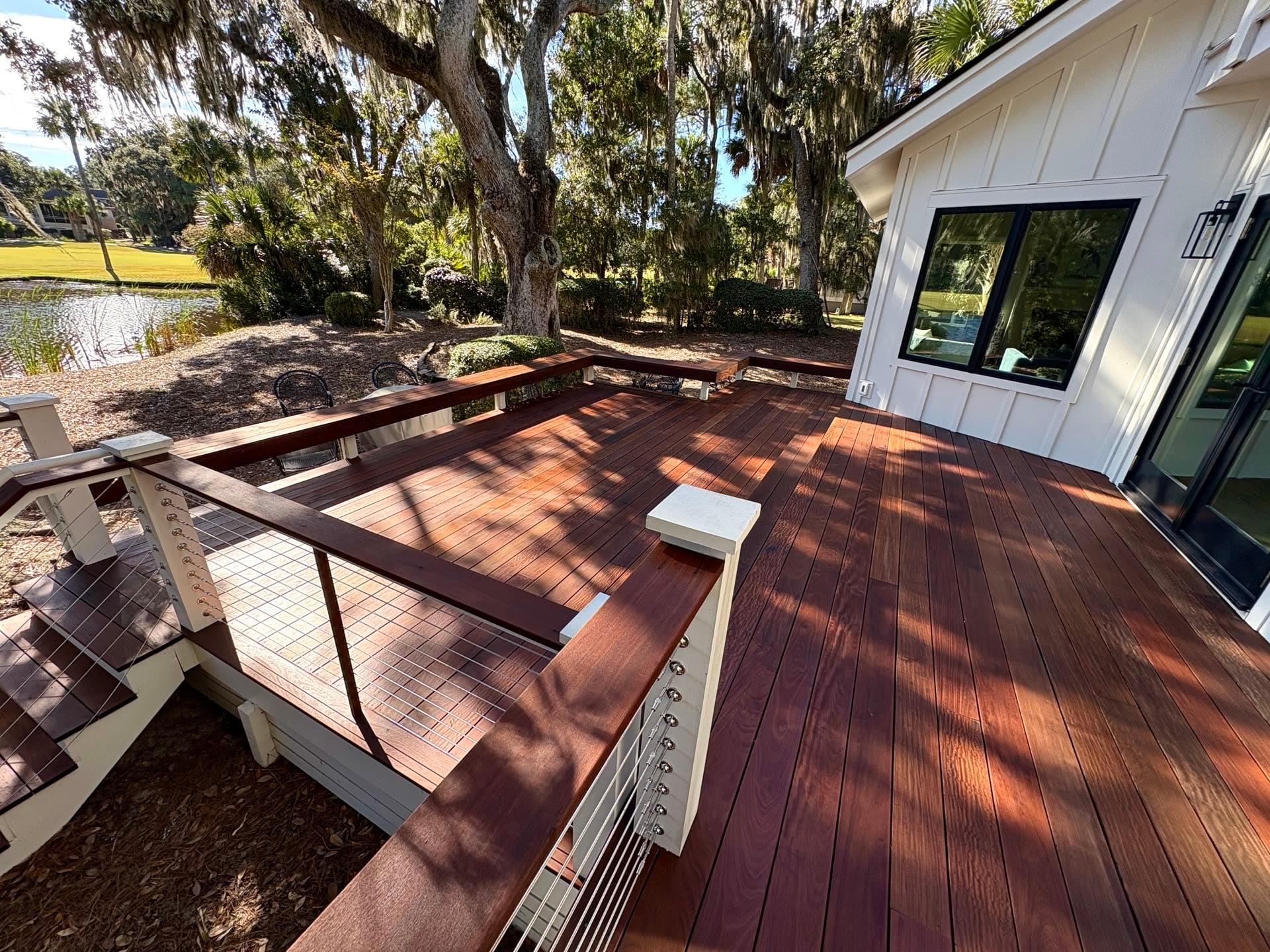
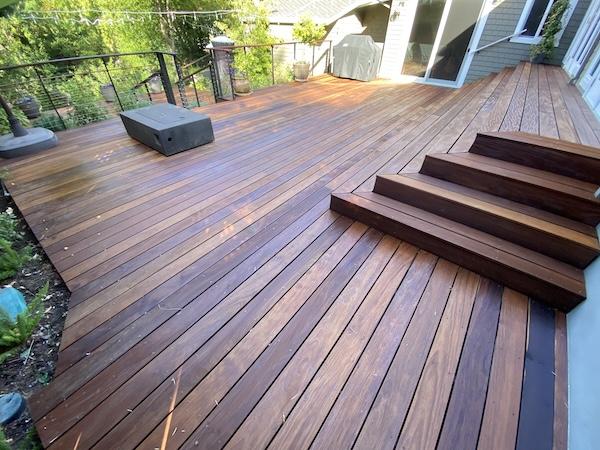
Ipe deck refinishing in Pacific Beach.
Ipe deck refinishing near Pacific Beach
Ipe behaves differently a few miles apart along this coast. These nearby pages cover the conditions specific to each community.
Worth reading before you book
Why Outdoor Teak Turns Gray
Silvering is a UV reaction at the surface of the wood. It is not rot, and it is not permanent.
Read guideSanding vs. Stripping Exterior Wood
Both are preparation methods with different jobs. Choosing wrong either wastes wood or leaves contamination behind.
Read guideHow to Restore Weathered Teak Furniture
Grey teak is almost always surface oxidation, not damage. Here is the full sequence used to bring it back, and the points where the job usually goes wrong.
Read guideBook your Pacific Beach Ipe deck before the season turns.
Spring and early autumn book out first. A short call now usually means a better slot.
Book your Pacific Beach estimate.
Pick a time that suits, and the restorer who would run the job will walk the deck with you. There is no charge and no sales pitch.