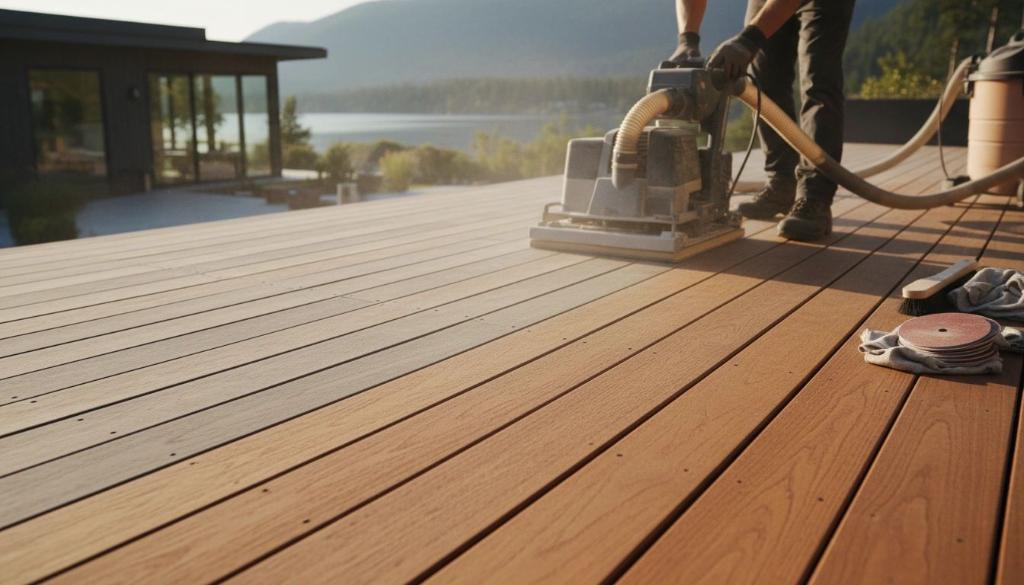
Ipe Deck Restoration for Sierra Madre's Foothill Homes
Tucked against the San Gabriel foothills, Sierra Madre's Ipe decks battle oak-shade humidity swings and dry canyon heat in the same season.
The premier Ipe refinishing crew in Sierra Madre, Los Angeles County.
Sierra Madre sits closer to the mountains than almost any other town in the San Gabriel Valley, and its narrow, tree-lined streets around Sierra Madre Boulevard and the canyon roads leading up toward Bailey Canyon create a patchwork of deep oak shade and open, sun-blasted yards. Ipe decking here rarely fades uniformly — a deck shaded most of the day by a mature oak canopy can look worlds different from a neighbor's sun-exposed patio just up the block. My Teak Pro sands and re-oils these decks to bring back a consistent, rich color regardless of how much shade a property gets.
Many Sierra Madre homes back up to wildland interface areas near the Angeles National Forest boundary, where the local fire department enforces defensible-space and vegetation clearance rules that also affect how decks are cleaned and maintained near dry brush.
We're the same veteran-owned crew behind Sierra Madre teak restoration and outdoor furniture refinishing. Browse recent projects in our project gallery or request a free estimate for your Sierra Madre Ipe deck.
Serving Sierra Madre landmarks & communities
- Sierra Madre Playhouse
- Kersting Court
- Bailey Canyon Wilderness Park
- Mount Wilson Trail
- Memorial Park
- Canyon
- Skyland
- Alta Vista
- Grove
- Hastings Ranch-adjacent
- Downtown Sierra Madre
How Sierra Madre temperature swings work on the boards
Inland Sierra Madre sees a much wider daily temperature range than the coast — hot afternoons and genuinely cool nights. Wood expands and contracts through that cycle, and fasteners work against it every day.
Over years that shows up as raised screw heads, slightly cupped boards and gaps that open in late summer and close in winter. None of it is failure; all of it is worth correcting while the deck is being refinished anyway.
We set proud fasteners, re-fix anything loose and flatten cupping during the sanding stage, which is why an inland refinish often includes more carpentry than a coastal one.
Why Sierra Madre's Canyon Climate Dries Out Ipe Fast
The combination of low humidity, Santa Ana wind events funneling down through the foothill canyons, and intense midday sun on unshaded lots pulls moisture and natural oils out of Ipe decking quickly. Meanwhile, decks under Sierra Madre's abundant oak and sycamore canopy stay damp longer after irrigation or rare rain, which invites mildew rather than graying — two very different problems within the same small town.
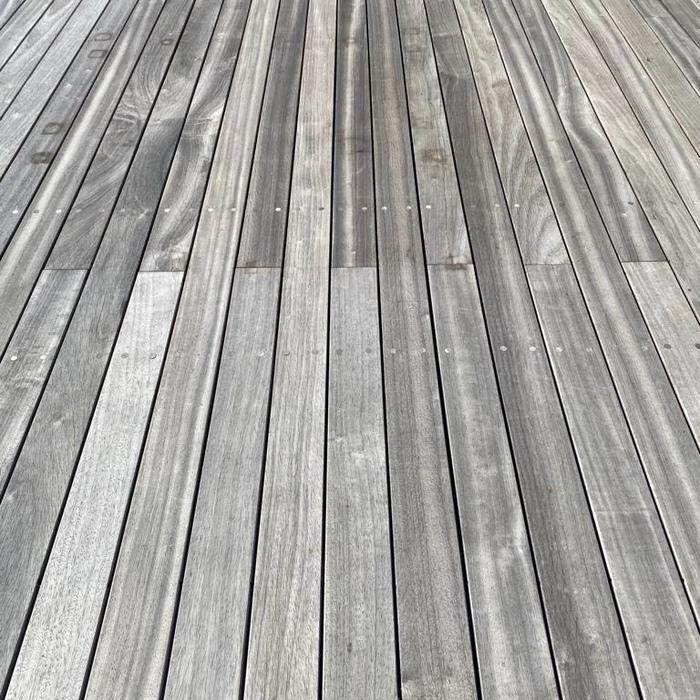
The Ipe surfaces we are asked about most
The craft is the same across all of them; access and detailing are what change the day.
Main deck field
Machine work, straightforward, and where most of the square footage sits.
Stairs and treads
Hand work, safety-critical, and the highest-wear element on any deck.
Fascia and skirting
Vertical, highly visible, and usually more weathered at the bottom than the top.
Rail caps and posts
Constant hand contact, so the finish choice here is about feel as much as looks.
Docks and gangways
Permanently damp and slip-critical. Product selection is driven by traction, not colour.
Preparation is ninety percent of an Ipe finish.
Read the deck
Ipe is dense enough that finish failure is almost always a preparation story. We find out what was on it before and why it let go.
Remove the biology
Mildew, algae and the black spotting under planters are living, not cosmetic. They get treated before any abrasive touches the wood.
Open the grain
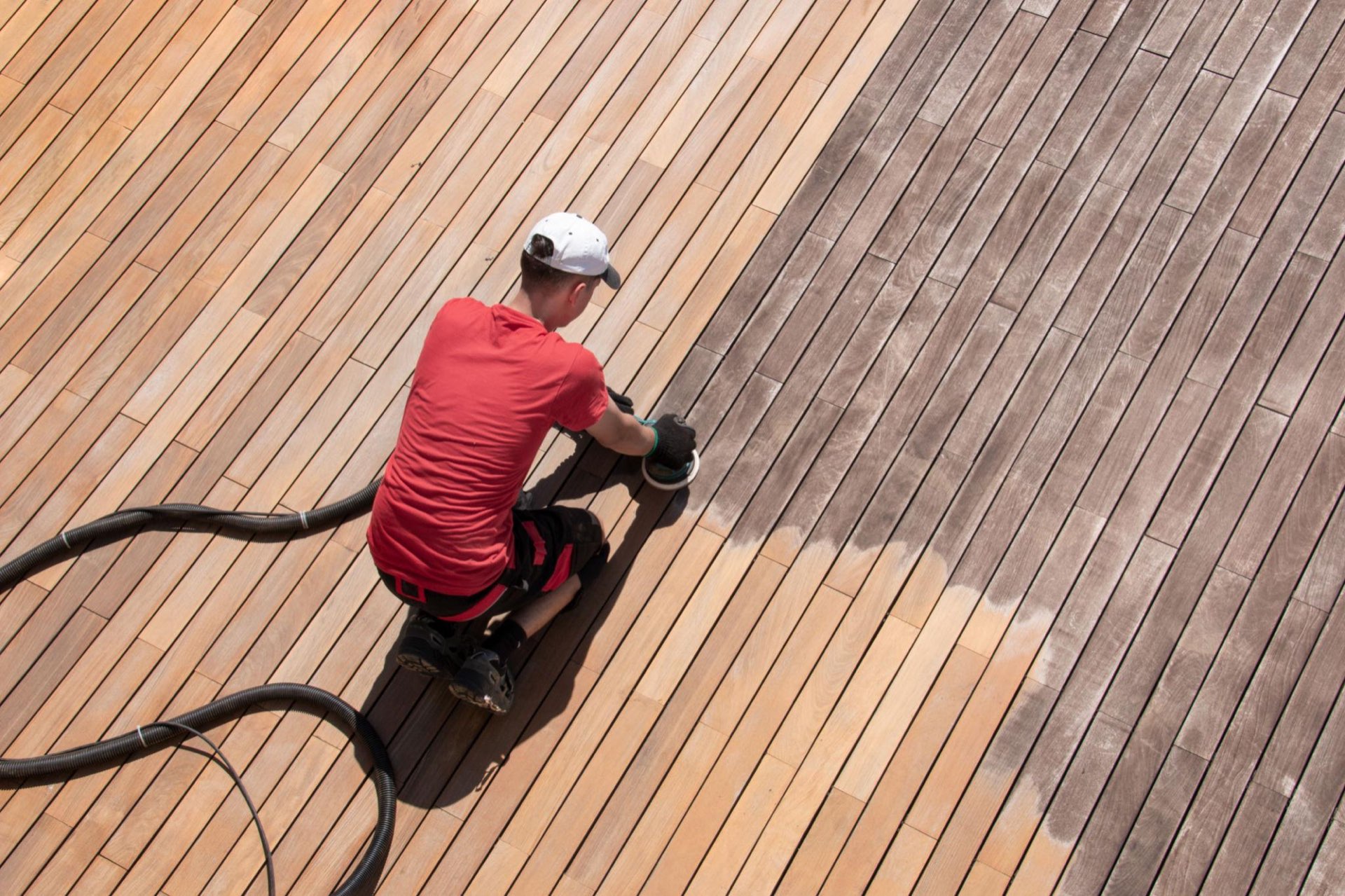
Ipe's tight pores close up under weathering. Correct grit sequencing opens them just enough to accept oil without leaving scratch marks.
Balance the tone
Brightener resets the pH and pulls the iron staining out from around screws so the whole deck reads one color, not a patchwork.
Feed the wood
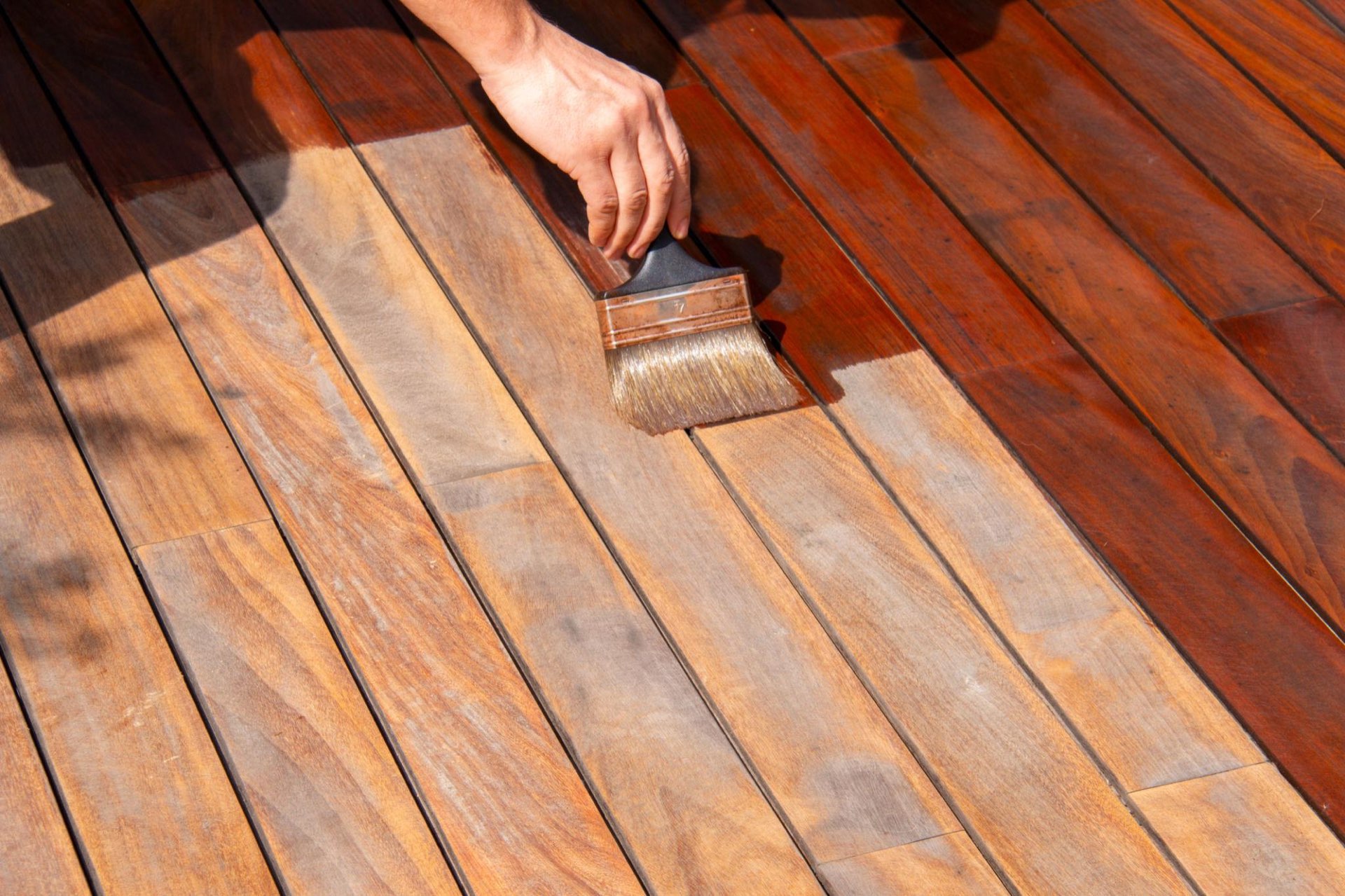
Penetrating oil chosen for your exposure, applied in thin coats. Ipe takes far less product than pine — over-applying is the classic mistake.
Document the finish
We record the exact product and grit sequence used, so the next maintenance coat matches rather than fights what is already there.
Choosing a finish for dense hardwood
Ipe is too dense for most coatings to key into, which rules out a lot of what is sold for decking. In practice there are three honest options.
Penetrating hardwood oil
The default. It feeds the outer fibres, keeps the grain visible and can never peel because there is no film to fail.
UV-fortified oil
The same chemistry with added pigment and inhibitors. Holds colour noticeably longer on unshaded and ocean-facing decks.
Clean and let it silver
Sanded smooth, sealed lightly or not at all, and allowed to weather evenly. Lowest maintenance and a deliberate architectural look.
What working with us is actually like.
A fixed written price
The number on the estimate is the number on the invoice unless you change the scope. No day-rate creep.
One crew, start to finish
The people who quote the job are the people who sand it. Nothing gets handed to a subcontractor mid-week.
We say no to bad jobs
If a deck is past finishing we will tell you, in writing, rather than sell you a coat of oil that fails in a season.
Neighbours in mind
Dust containment, contained wash water, tidy staging and no early-morning machine noise.
Product transparency
You are told exactly what goes on your wood and why, and you keep the spec for future maintenance.
We come back
Maintenance reminders on your schedule, not sales calls. Most of our work is repeat clients.
What the finish looks like in daylight.
Photographed outdoors rather than under studio lighting, so what you see is the tone you can expect on your own deck. See more on our full project gallery.
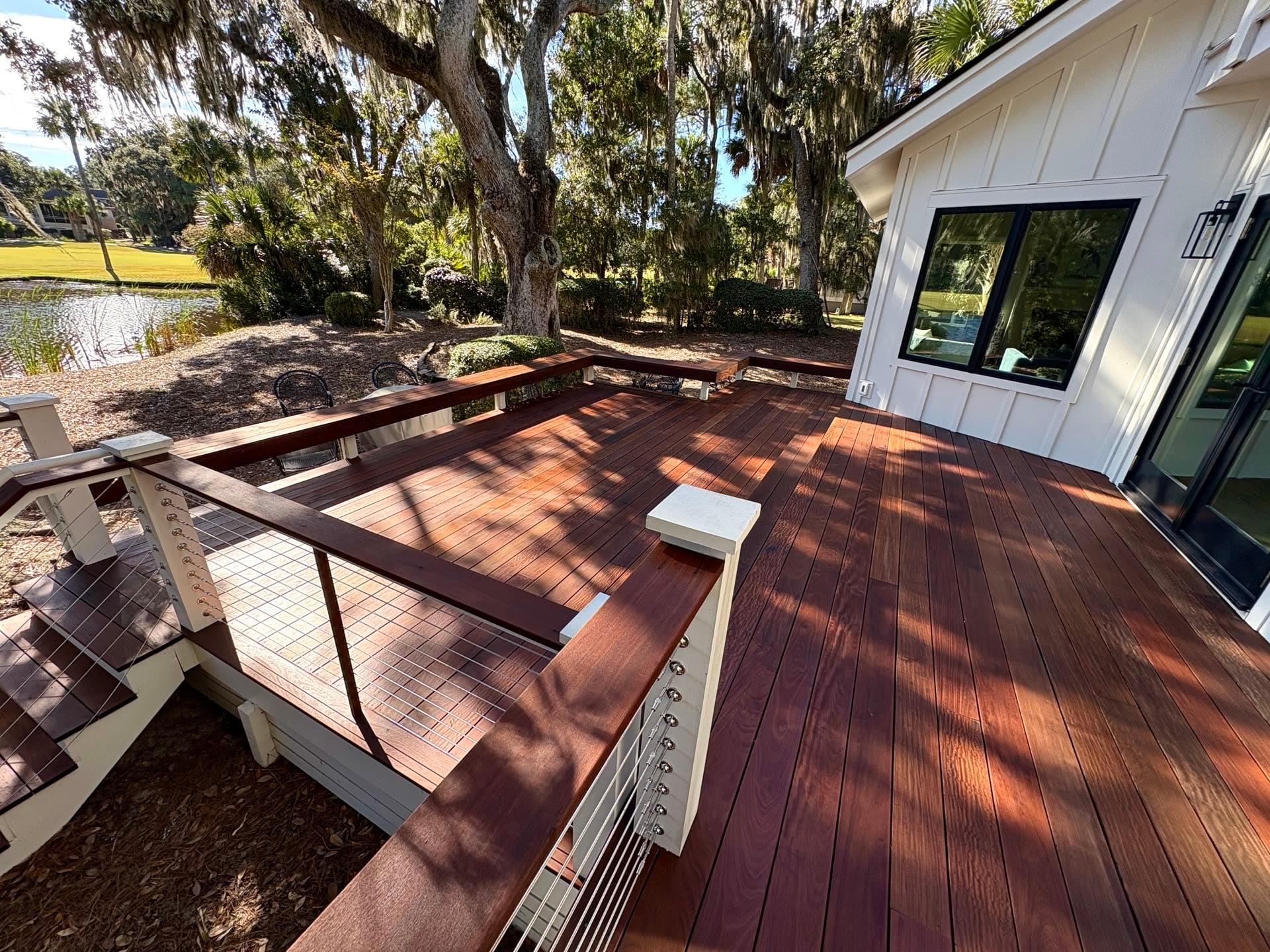
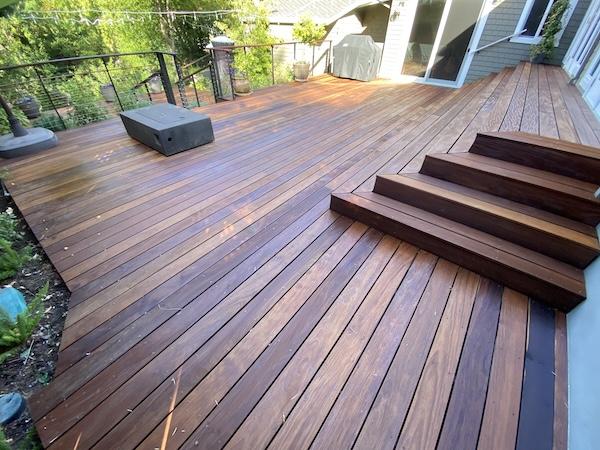
Ipe deck refinishing in Sierra Madre.
Ipe deck refinishing near Sierra Madre
Ipe behaves differently a few miles apart along this coast. These nearby pages cover the conditions specific to each community.
Worth reading before you book
How Coastal Weather Affects Teak Furniture
Near the ocean, three separate forces act on outdoor wood at once. Understanding which one is doing the damage changes how you maintain it.
Read guideHow Often Should Teak Furniture Be Refinished?
There is no universal interval. There is a simple test that answers it for your specific furniture in about ten seconds.
Read guideHow to Maintain Teak After Restoration
Freshly restored teak needs very little. What it needs, it needs consistently.
Read guideTalk to the crew who will actually do the work in Sierra Madre.
No call centre and no sales visit — you speak to the restorer who will be on your deck.
Tell us about your Sierra Madre Ipe deck.
Share a few details and we'll respond within one business day with next steps and a tailored quote.