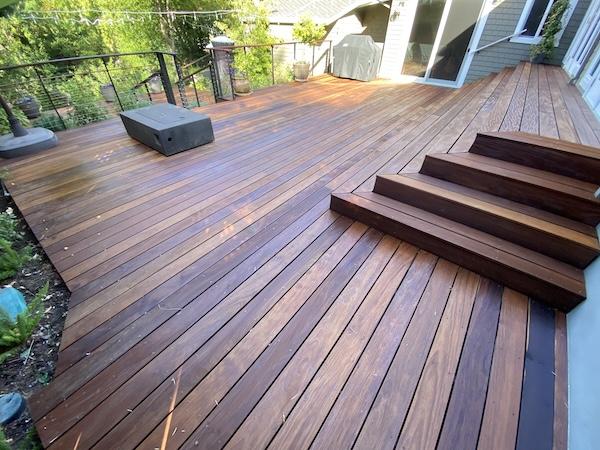
Ipe Deck Restoration for Pasadena's Historic Homes
From Craftsman bungalows near the Arroyo Seco to hillside estates in San Rafael, Pasadena's inland heat bakes Ipe decking hard.
The premier Ipe refinishing crew in Pasadena, Los Angeles County.
Pasadena sits in a sun-trapped basin at the base of the San Gabriel Mountains, and its Ipe decking takes the brunt of that geography. With no ocean breeze to moderate temperatures, summer heat radiates off stucco walls and hardscape onto adjacent decking, drying out the wood's natural oils in a fraction of the time coastal properties experience. My Teak Pro restores that sun-baked, graying Ipe back to a rich, even brown, whether it surrounds a Craftsman-era addition or a newer hillside build.
Many Pasadena properties near Prospect Park and the Historic Highlands are subject to landmark district review, so restoring existing Ipe rather than replacing it often keeps a deck consistent with a home's protected architectural character.
We're the same veteran-owned crew behind Pasadena teak restoration and outdoor furniture refinishing. Browse recent projects in our project gallery or request a free estimate for your Pasadena Ipe deck.
Serving Pasadena landmarks & communities
- Rose Bowl
- Old Town Pasadena
- Huntington Library
- Norton Simon Museum
- Colorado Street Bridge
- Oak Knoll
- Madison Heights
- San Rafael Hills
- Linda Vista
- Bungalow Heaven
- South Arroyo
Why Pasadena's Basin Heat Grays Ipe Quickly
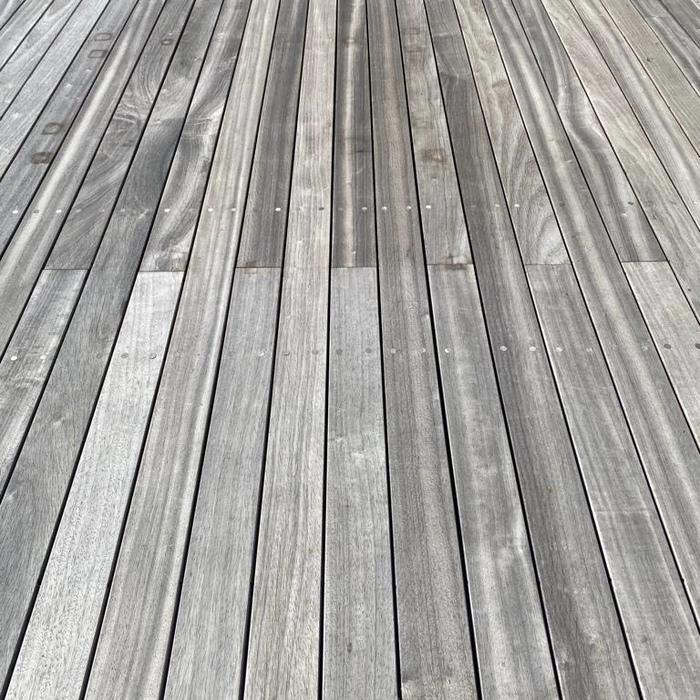
Pasadena's location at the foot of the San Gabriels traps heat and blocks the coastal marine layer that softens UV exposure elsewhere in the region. Add in seasonal Santa Ana wind events that blow hot, dry air through the Arroyo Seco corridor, and Ipe decks here can lose their surface oils within a year, turning silvery gray well before a homeowner expects it.
What Restoration Brings to Pasadena Properties
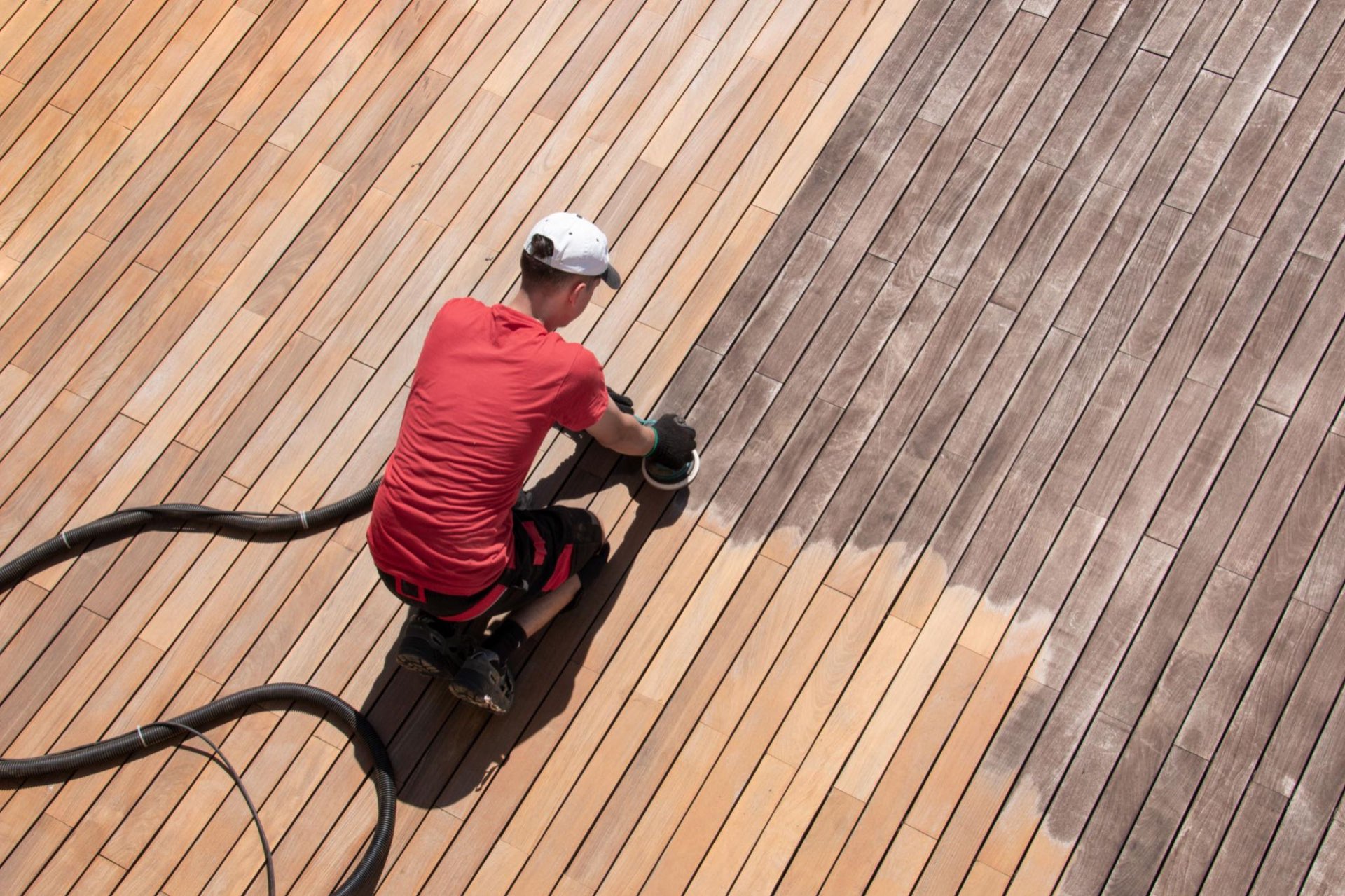
Sanding away the UV-damaged gray layer and reapplying oil restores both the look and function of a Pasadena deck, tightening the grain against the area's dry-heat cracking and giving hillside outdoor spaces the polished appearance that matches the neighborhood's architectural pedigree.
It reads as intentional
Silvered Ipe looks neglected next to modern glass and stone. A finished deck ties the whole elevation together.
It photographs
Listing and rental photography in Pasadena lives or dies on the outdoor space. A refinished deck changes the first frame.
It protects the substructure
Water that stops at the surface never reaches joists, hangers and fasteners underneath.
It is safer underfoot
Splintering, raised grain and lifted fasteners all get resolved as part of the same visit.
The Ipe surfaces we are asked about most
The craft is the same across all of them; access and detailing are what change the day.
Main deck field
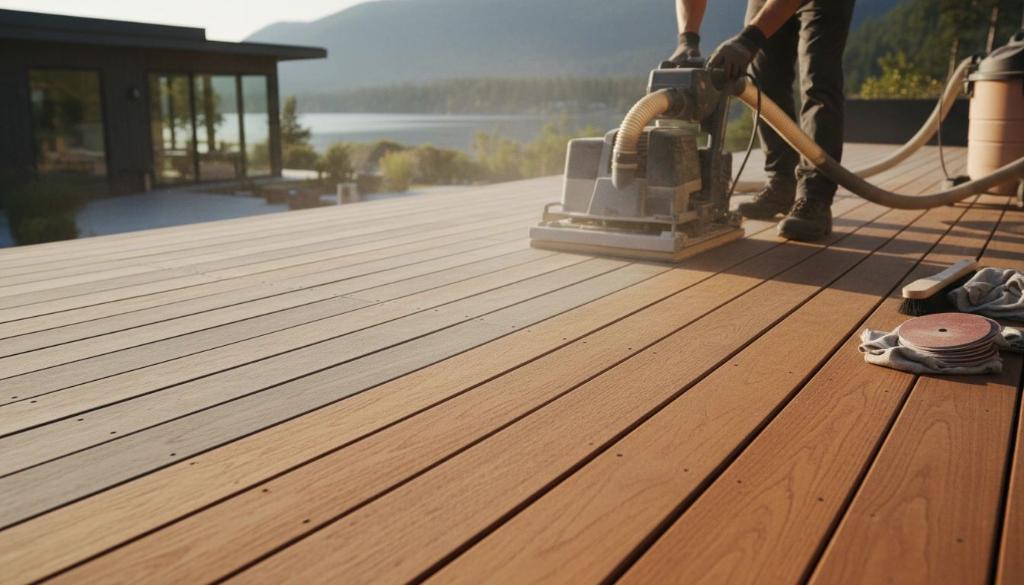
Machine work, straightforward, and where most of the square footage sits.
Stairs and treads
Hand work, safety-critical, and the highest-wear element on any deck.
Fascia and skirting
Vertical, highly visible, and usually more weathered at the bottom than the top.
Rail caps and posts
Constant hand contact, so the finish choice here is about feel as much as looks.
Docks and gangways
Permanently damp and slip-critical. Product selection is driven by traction, not colour.
From gray boards to a finished deck.
Estimate visit
Free, on-site, usually thirty minutes. You get square footage, condition notes and a fixed written price — no surprises later.
Protect the site
Glass, stone, planting, pool coping and cable rail all get masked. Dust containment matters as much on a deck as it does indoors.
Wash and dwell
A dedicated hardwood cleaner is left to work rather than blasted off. Pressure washing shreds Ipe's soft early wood and we do not use it.
Sand flat and true
We chase out the fuzz, the checking and the traffic lanes until the surface is uniform under raking light.
Finish and detail
Oil on the field boards, hand-worked into fascia, stair risers and rail caps where the eye lands first.
Walk it with you
We hand the deck back in daylight, point out anything worth watching, and book the maintenance coat if you want one.
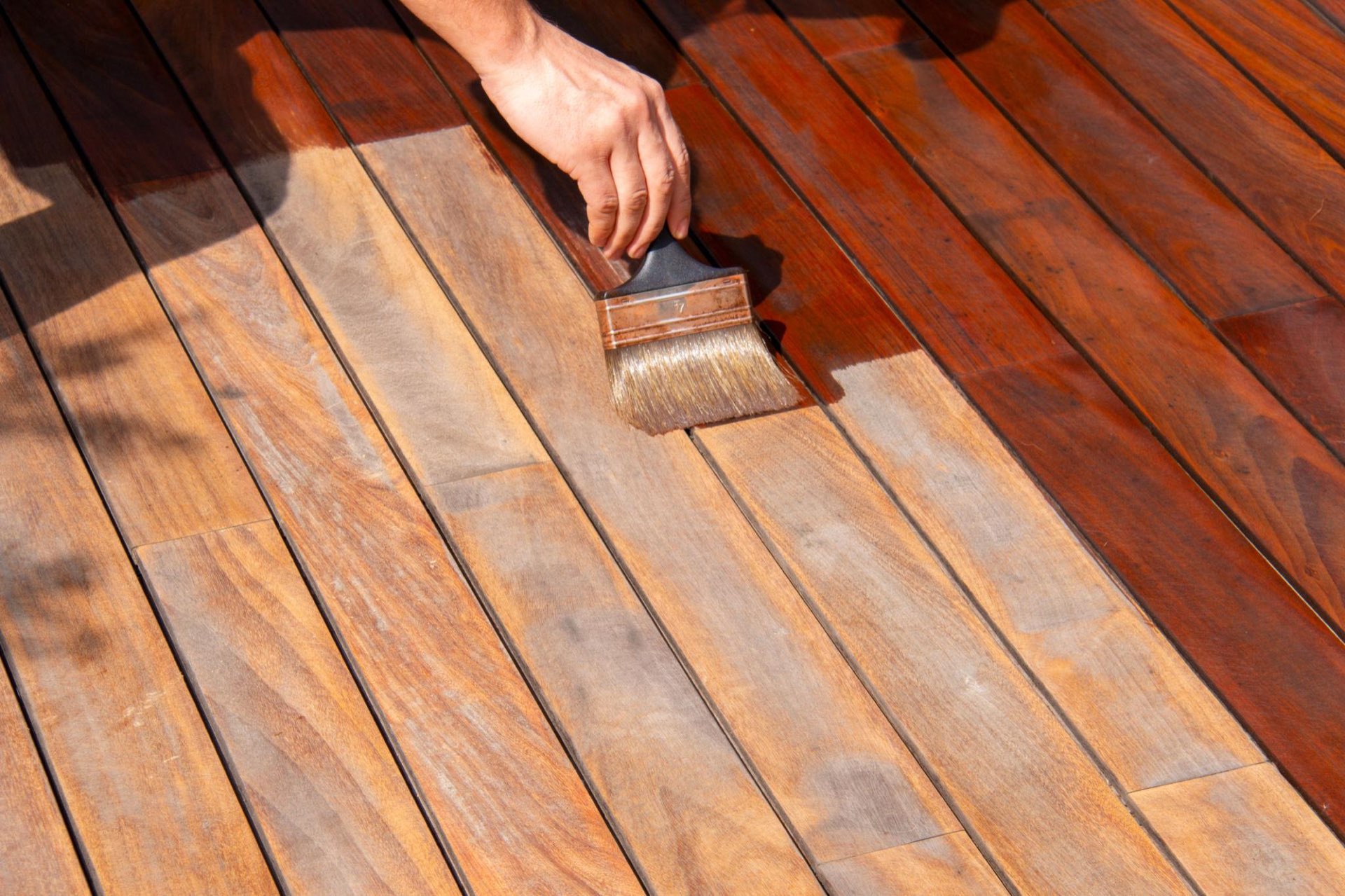
Caring for Ipe Decks in Pasadena's Inland Heat
During Santa Ana wind events, dust and ash from surrounding foothills can settle into open grain; a gentle rinse after these episodes keeps particulate from grinding into the wood underfoot.
Hillside decks in areas like San Rafael and Linda Vista often sit in full afternoon sun with little shade cover, so we recommend re-oiling on a shorter cycle than shadier flatland properties.
Older decking attached to Craftsman and Spanish-style homes near the Arroyo may have layers of prior coatings that need careful stripping before a fresh oil application will absorb evenly.
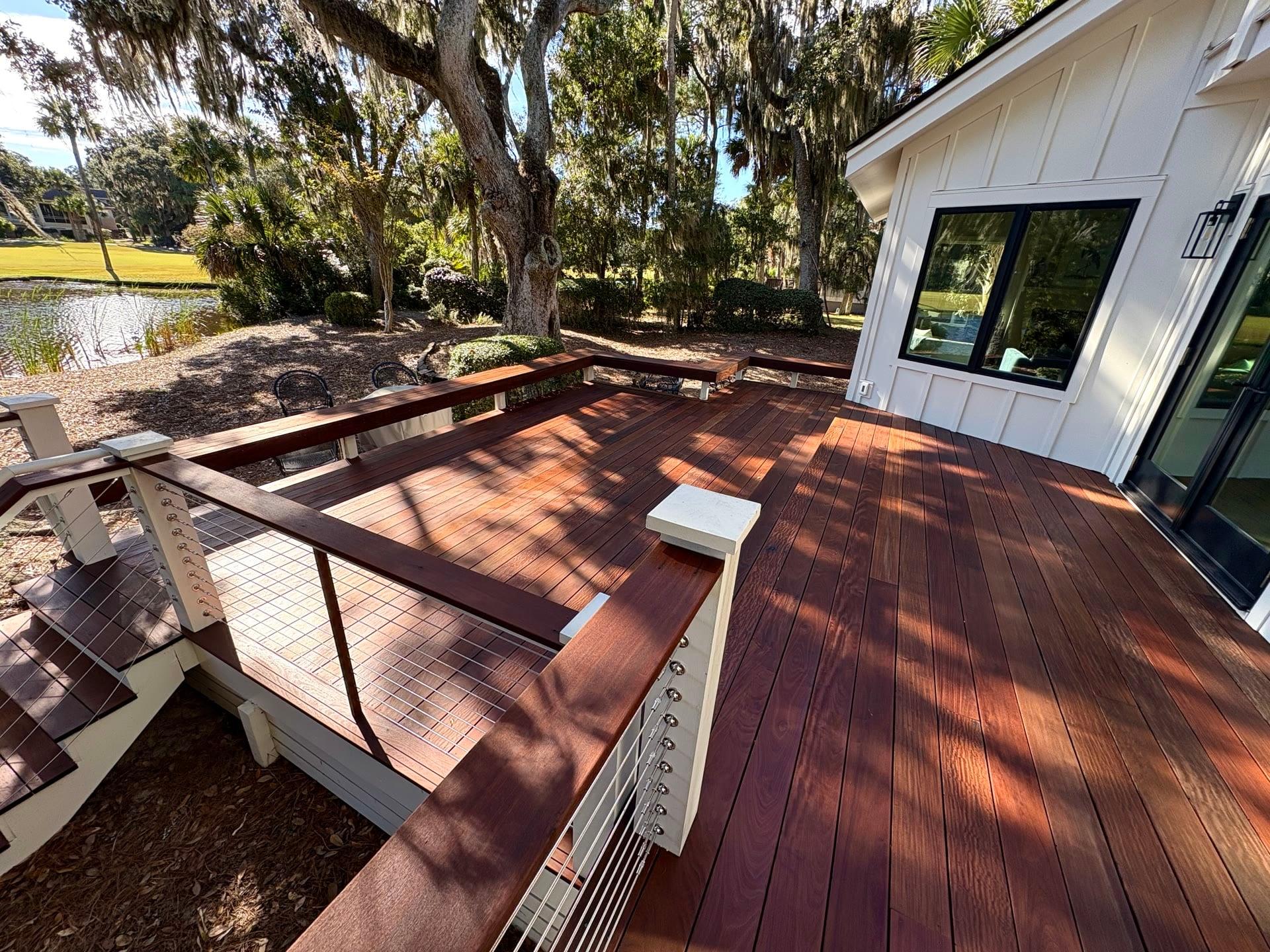
Decks we have brought back this season.
Coastal terraces, pool surrounds, roof decks and stairs — different exposures, the same preparation-first method. See more on our full project gallery.
The five-minute monthly deck check
Walk the deck once a month and look for five things. Anything you catch here is cheap to fix; anything you miss gets expensive.
Beading
Flick water at three spots: the sunniest board, a traffic lane and a sheltered corner. Note where it stops beading first.
Fasteners
Any screw head standing proud of the surface is a splinter and a stain waiting to happen.
Edges and end grain
Board ends drink water. They are always the first place a finish gives up.
Under things
Lift a planter and a lounger. Damp, dark patches mean the deck is not drying underneath.
Colour drift
Compare an exposed board with a sheltered one. The gap tells you how far the finish has moved.
Ipe deck refinishing in Pasadena.
Ipe deck refinishing near Pasadena
If you are comparing quotes across the area, these nearby Pasadena service pages cover the same work in neighbouring towns.
Worth reading before you book
How to Restore Weathered Teak Furniture
Grey teak is almost always surface oxidation, not damage. Here is the full sequence used to bring it back, and the points where the job usually goes wrong.
Read guideWhen Does an Ipe Deck Need Refinishing?
Colour loss alone is not a reason to refinish. These are the signals that are.
Read guideIpe Deck Maintenance Guide
Ipe is dense enough to survive almost anything. Keeping it brown rather than silver is the part that takes a routine.
Read guideSee what is under the grey on your Pasadena deck.
We can sand a test patch during the estimate so you can see the color before committing to anything.
Tell us about your Pasadena Ipe deck.
Share a few details and we'll respond within one business day with next steps and a tailored quote.