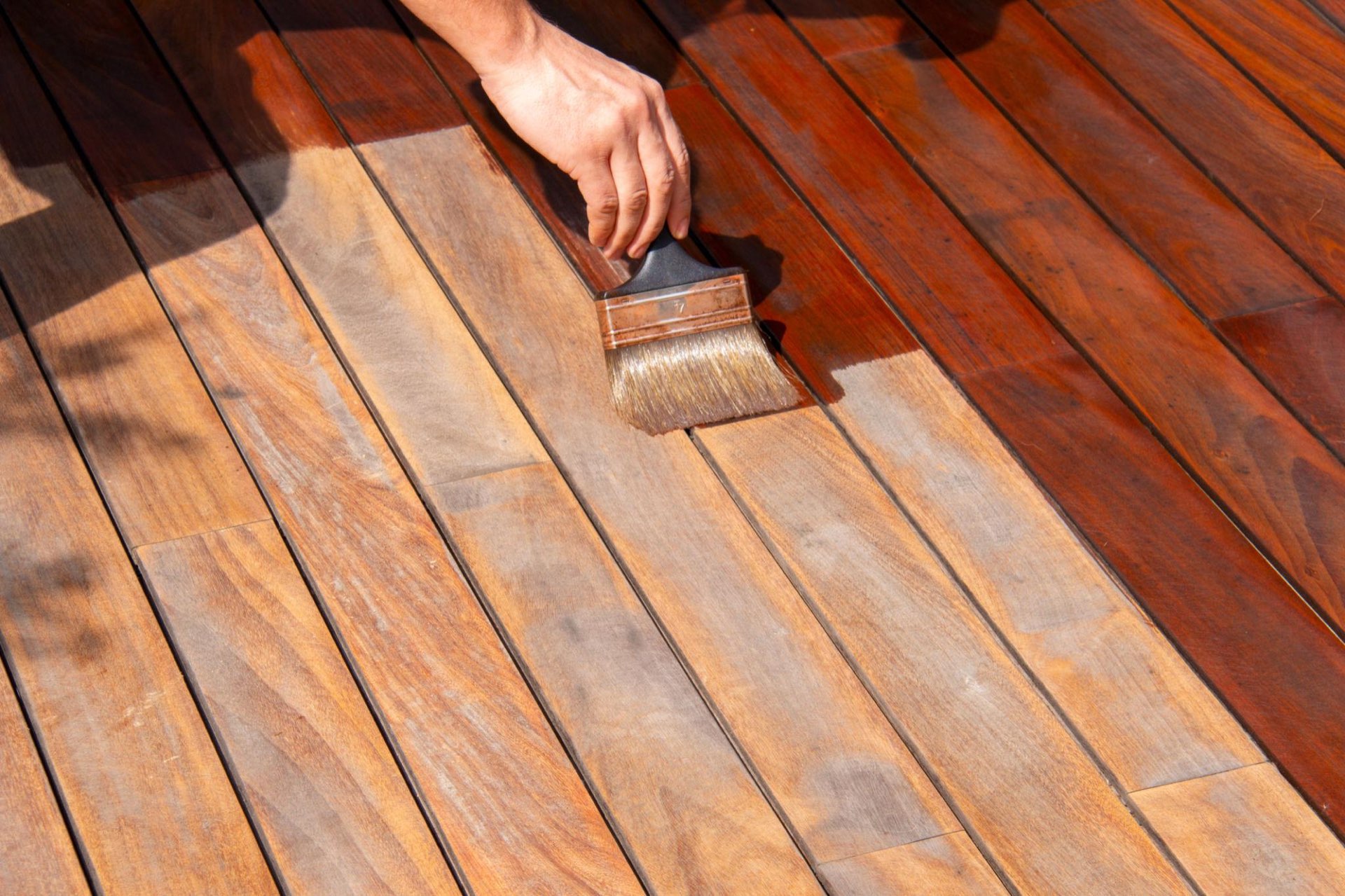
Ipe Deck Restoration Serving Encinitas
From Moonlight Beach to the bluffs of Leucadia, Encinitas Ipe decks face steady salt air that fades wood faster than homeowners expect.
The premier Ipe refinishing crew in Encinitas, San Diego County.
Encinitas runs along a stretch of coastline where surf culture and bluff-top homes sit just a short walk apart, and Ipe decking shows up on everything from beach-cottage patios near Moonlight Beach to larger bluff-view decks in Leucadia and Old Encinitas. The area's consistent onshore breeze and morning marine layer keep the air salty and slightly damp for much of the year, which steadily draws the natural oils out of exposed Ipe surfaces. My Teak Pro's sanding and oiling process is built to counter exactly that kind of steady coastal wear.
Because many Encinitas properties sit on or near the coastal bluffs between Swami's and Beacon's Beach, decks here often face direct onshore wind with little windbreak from neighboring structures, unlike more sheltered inland lots further from the coast highway.
We're the same veteran-owned crew behind Encinitas teak restoration and outdoor furniture refinishing. Browse recent projects in our project gallery or request a free estimate for your Encinitas Ipe deck.
Serving Encinitas landmarks & communities
- Moonlight Beach
- Swami's Beach
- Self-Realization Fellowship
- Encinitas Ranch
- Cardiff State Beach
- Leucadia
- Cardiff-by-the-Sea
- Olivenhain
- Encinitas Ranch
- Old Encinitas
- New Encinitas
Why the same Encinitas deck weathers unevenly
Almost every Encinitas deck we assess has three distinct zones. The ocean-facing edge takes salt spray and full UV and goes first. The middle field weathers at an average rate. The strip in the lee of the house, under an overhang or behind a glass rail, can still look nearly new when the rest is grey.
Refinishing the failed strip alone is tempting and almost always wrong: you end up with a two-tone deck that reads worse than the uniform grey did. The whole surface has to come to a common baseline before oil goes on.
Shade patterns are worth mapping before you commit to a schedule. If eighty percent of your deck is sheltered, you may only need spot maintenance on the exposed twenty percent between full refinishes.
Windward edge
Salt, spray and UV together. Shortest interval on the deck, sometimes half the rest.
Open field
UV-driven greying, even and predictable. This is what sets the overall schedule.
Sheltered lee
Slow to weather but slow to dry, so mildew rather than fading is the risk here.
Under furniture
Masked from UV and from rinse water. Salt concentrates underneath and stains.
What Restoration Brings Back for Encinitas Decks
Restoring Ipe here removes the salt-dulled surface and reopens the grain so new oil can properly penetrate, giving the deck back its rich color and improving resistance to the area's near-daily salt exposure. For homes near Moonlight Beach or along Neptune Avenue, a refinished deck also holds up better underfoot for barefoot beach traffic tracked in from the sand.
A deck you can walk barefoot on
Eroded early wood leaves a fibrous surface that catches skin. Abrading it flat is the single biggest comfort change.
Surface water that runs off
A saturated finish keeps Encinitas rain and irrigation spray sitting on top of the boards instead of soaking into end grain.
Even color across every board
Brightening pulls the tannin and iron staining out so replacement boards and originals read as one deck.
A shorter next job
Once the surface is sound, staying ahead of it is a maintenance coat rather than a full restoration.
What a restoration week actually looks like.
Day zero — walkthrough
We measure the deck, photograph problem areas, test moisture in a few boards and agree the scope in writing before anyone starts.
Board triage and carpentry
Cupped, split or fastener-damaged boards get flipped, re-fixed or swapped first. Sanding a deck with loose boards only hides the issue.
Strip and neutralize
Old film finishes and mill glaze come off chemically where sanding alone would gouge the surface, then the wood is neutralized and rinsed.
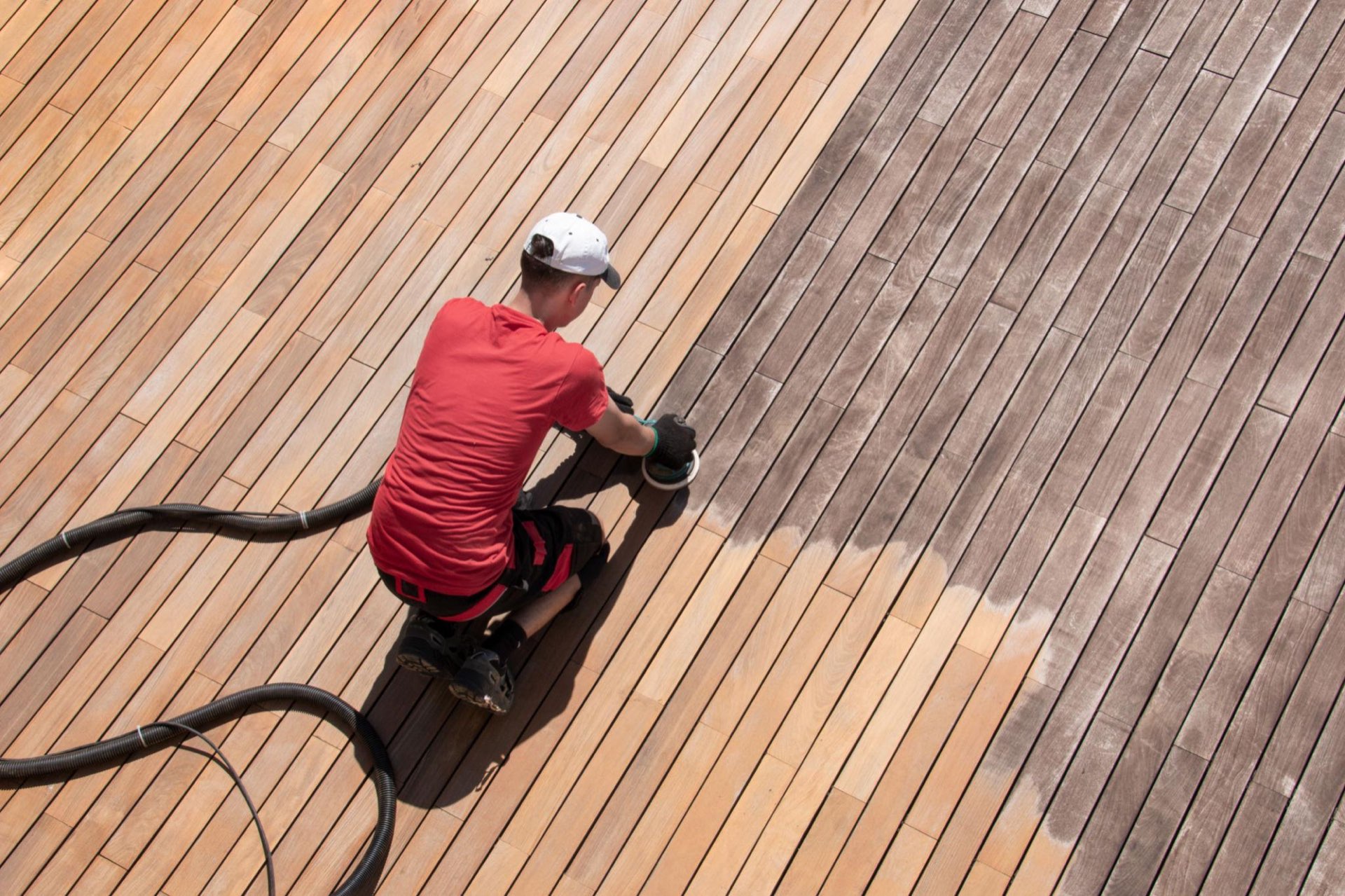
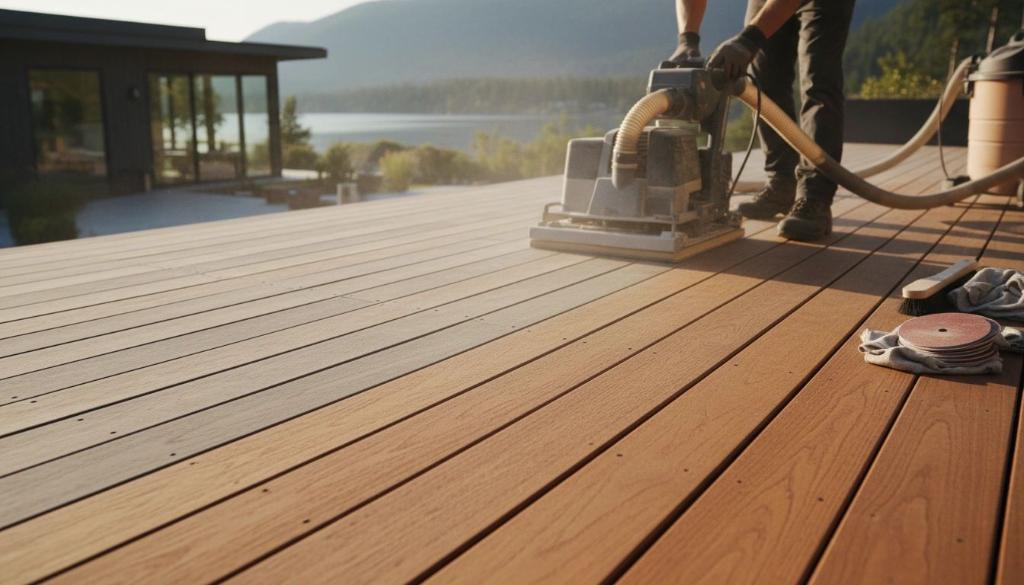
Progressive abrasion
Coarse to fine in stages, with hand work along railings, stair noses and anywhere a machine cannot reach flat.
Saturation coats
Oil goes on wet-on-wet until the boards stop drinking, then the excess is wiped back so nothing sits on the surface to go sticky.
Cure and handover
We stay off the deck through the cure window, return to buff any raised spots, and leave you a written care schedule.
How we specify oil for your deck
Exposure decides the product. An ocean-facing terrace and a shaded courtyard on the same street get different specifications, and we would rather explain why than hand you a one-size answer.
Use decides the build. Pool surrounds need slip resistance and tolerance of chlorinated water; dining terraces need something that cleans up after spills; low-traffic upper decks can take the softest, most natural finish.
Your appetite for maintenance decides the rest. A finish that looks spectacular and wants attention every nine months is the wrong answer for someone who would rather think about it once every three years.
Ipe surfaces we restore.
Ocean-facing decks
Constant salt load and no shade. These need the shortest interval and the toughest finish spec.
Courtyards & side yards
Shaded, slow to dry, and where mildew rather than UV is the main problem to solve.
Docks, gangways and steps
Wet, high-traffic and safety-critical. Slip resistance drives the finish choice here.
Siding, screens and gates
Vertical Ipe weathers unevenly top to bottom and needs blending rather than a straight recoat.
Outdoor kitchens & bars
Heat, grease and food spills, so we specify a finish that cleans up rather than one that only looks good day one.
Furniture and built-ins
Benches, planters and built-in seating restored alongside the deck so the whole space matches.
Decks we have brought back this season.
Coastal terraces, pool surrounds, roof decks and stairs — different exposures, the same preparation-first method. See more on our full project gallery.
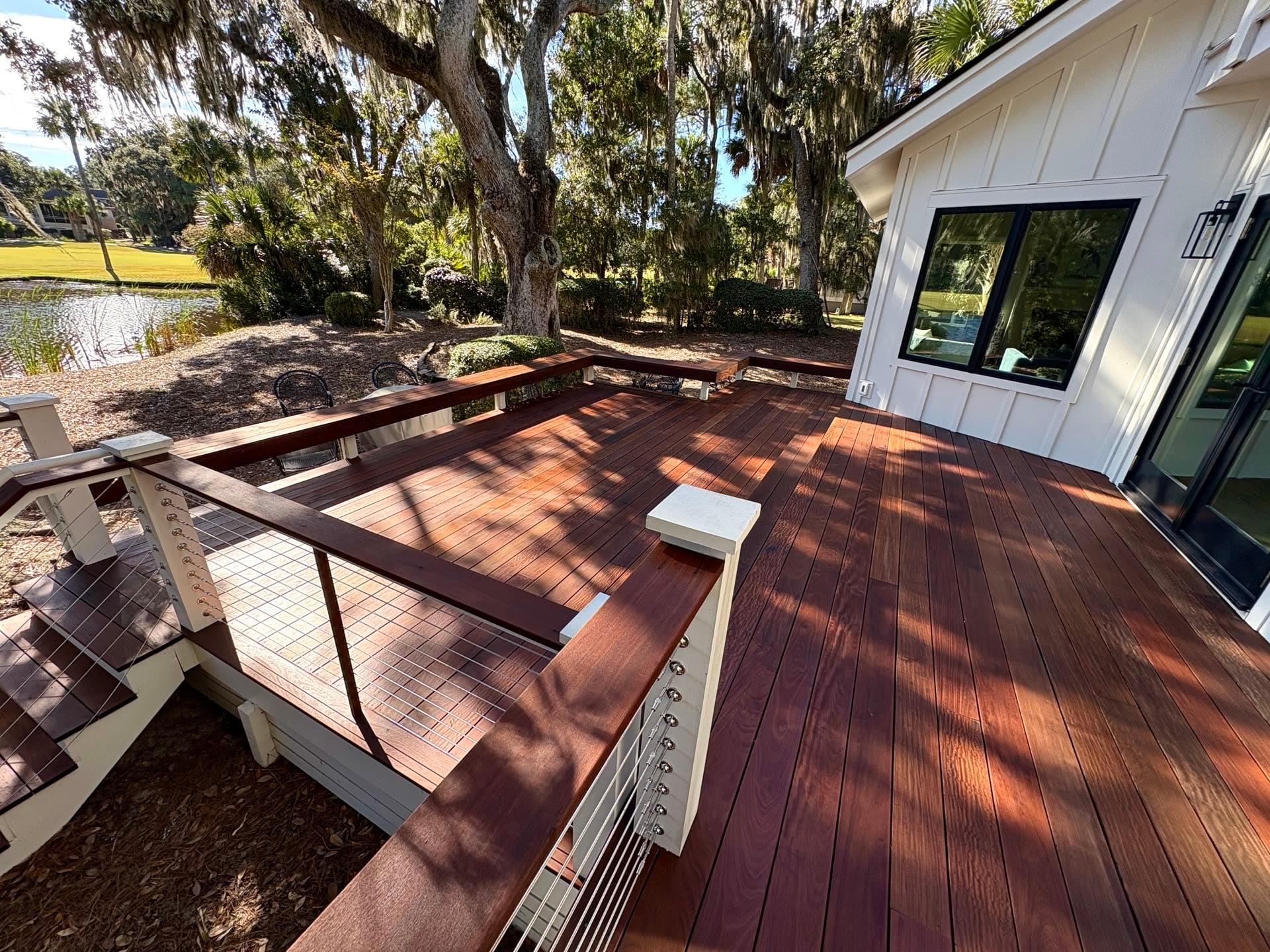
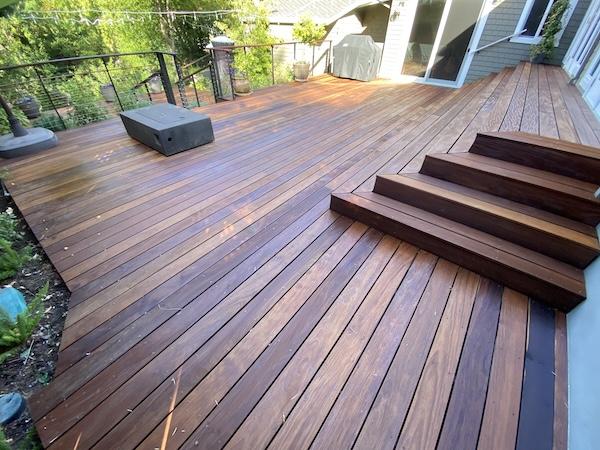
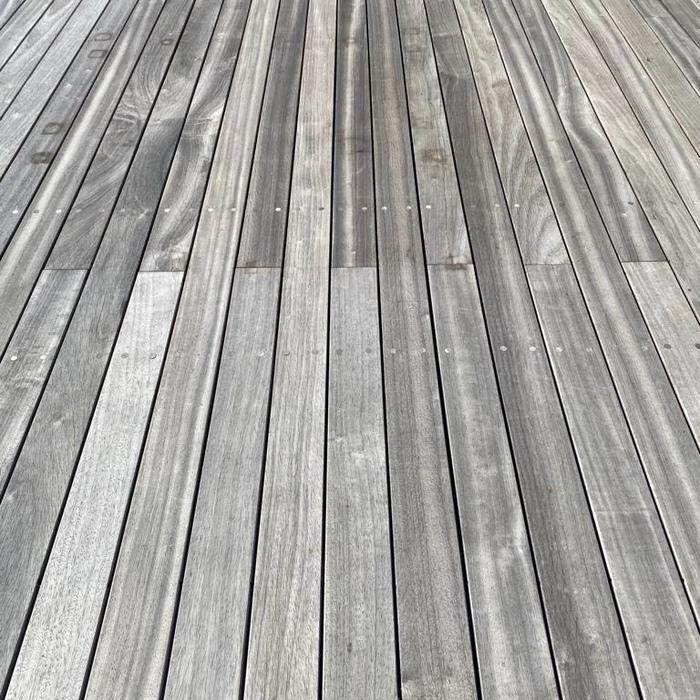
Ipe deck refinishing in Encinitas.
Ipe deck refinishing near Encinitas
Our crews run out to the neighbouring towns around Encinitas on the same schedule, so a shared crew day often means a better slot for you.
Worth reading before you book
Restoration vs. Replacement of Outdoor Wood Furniture
The decision is structural first and financial second. Appearance should not drive it at all.
Read guideSanding vs. Stripping Exterior Wood
Both are preparation methods with different jobs. Choosing wrong either wastes wood or leaves contamination behind.
Read guideTeak Oil vs. Teak Sealer
Oils look richer and want more attention. Sealers hold longer and read more uniform. The right answer depends on exposure and on how often you want to think about it.
Read guideTalk to the crew who will actually do the work in Encinitas.
No call centre and no sales visit — you speak to the restorer who will be on your deck.
Get a written quote for your Encinitas deck.
Square footage, condition notes and a fixed price — sent in writing, usually the day after we visit.