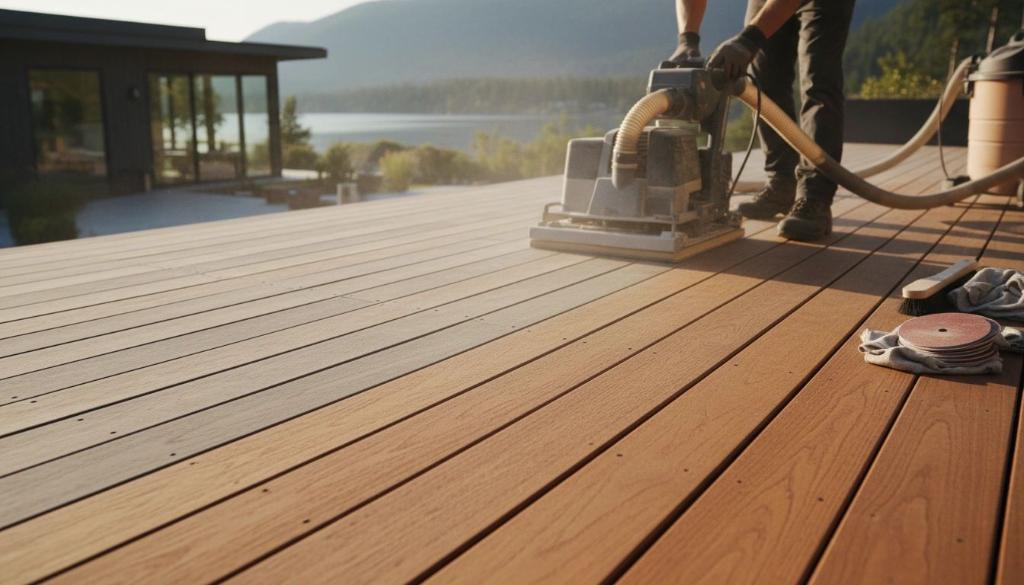
Ipe Deck Restoration in Laguna Hills
Tucked into the inland canyons of South Orange County, Laguna Hills sees hotter, drier conditions than its coastal neighbors, and that dry heat is exactly what dulls and cracks Ipe decking over time.
The premier Ipe refinishing crew in Laguna Hills, Orange County.
Laguna Hills homeowners and HOA boards choose Ipe for its density and fire-resistance, both valuable qualities in a community surrounded by rolling foothills and open space. But without shade from marine layer or ocean breeze, this inland pocket of Orange County puts decking through more direct UV exposure than towns closer to the water. We see a lot of graying, checking, and surface splintering on decks that were never sealed with a UV-inhibiting oil, and we restore them back to a rich, even finish.
Many Laguna Hills properties sit within gated communities and HOA-governed tracts near Nellie Gail Ranch and Moulton Parkway, where deck materials and finish colors are often subject to architectural guidelines. We're familiar with these approval processes and can provide documentation or sample boards when a board requires sign-off before work begins.
We're the same veteran-owned crew behind Laguna Hills teak restoration and outdoor furniture refinishing. Browse recent projects in our project gallery or request a free estimate for your Laguna Hills Ipe deck.
Serving Laguna Hills landmarks & communities
- Laguna Hills Community Center
- Nellie Gail Ranch
- Sheep Hills Park
- Aliso Creek
- Saddleback Church
- Nellie Gail Ranch
- Moulton Ranch
- Aliso Meadows
- Indian Cove
- Valley View
- Laguna Hills Village
Why Ipe Turns Gray in Laguna Hills' Dry Heat
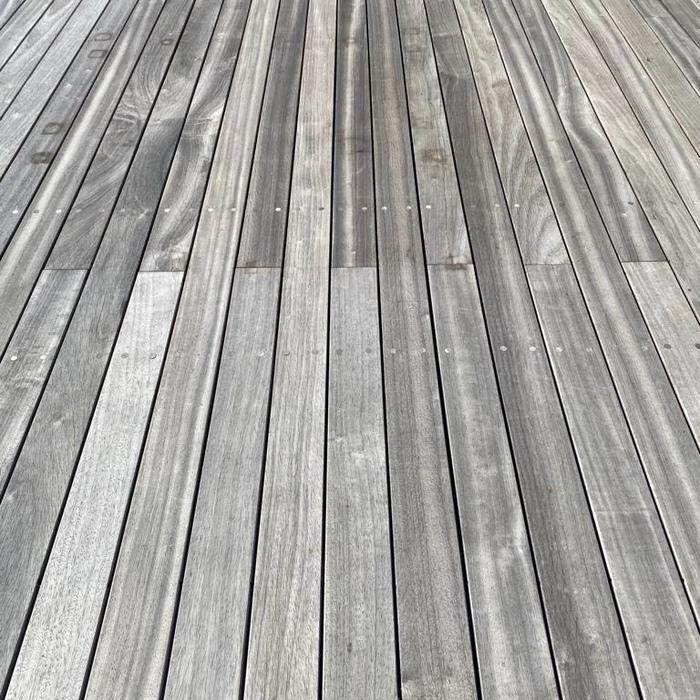
Unoiled Ipe develops a silvery gray patina everywhere, but inland heat accelerates it. Without the humidity buffer of coastal fog, UV rays break down the wood's natural lignin faster, and the surface can dry out to the point of hairline checking within a single hot summer. Once boards start cracking at the surface, moisture and dust work into those fissures and the deck ages faster than it should.
Benefits of Professional Restoration for Inland Decks
A proper sand-and-oil restoration removes the damaged gray layer and reseals the wood grain before it dries out further. In a hot, sun-exposed environment like Laguna Hills, we recommend a UV-blocking hardwood oil rather than a generic sealer, since standard products break down faster under direct, unfiltered sun. The result is a deck that resists checking, holds its tone longer between maintenance visits, and stays cooler underfoot in summer.
It reads as intentional
Silvered Ipe looks neglected next to modern glass and stone. A finished deck ties the whole elevation together.
It photographs
Listing and rental photography in Laguna Hills lives or dies on the outdoor space. A refinished deck changes the first frame.
It protects the substructure
Water that stops at the surface never reaches joists, hangers and fasteners underneath.
It is safer underfoot
Splintering, raised grain and lifted fasteners all get resolved as part of the same visit.
The Ipe surfaces we are asked about most
The craft is the same across all of them; access and detailing are what change the day.
Main deck field
Machine work, straightforward, and where most of the square footage sits.
Stairs and treads
Hand work, safety-critical, and the highest-wear element on any deck.
Fascia and skirting
Vertical, highly visible, and usually more weathered at the bottom than the top.
Rail caps and posts
Constant hand contact, so the finish choice here is about feel as much as looks.
Docks and gangways
Permanently damp and slip-critical. Product selection is driven by traction, not colour.
From gray boards to a finished deck.
Estimate visit
Free, on-site, usually thirty minutes. You get square footage, condition notes and a fixed written price — no surprises later.
Protect the site
Glass, stone, planting, pool coping and cable rail all get masked. Dust containment matters as much on a deck as it does indoors.
Wash and dwell
A dedicated hardwood cleaner is left to work rather than blasted off. Pressure washing shreds Ipe's soft early wood and we do not use it.
Sand flat and true
We chase out the fuzz, the checking and the traffic lanes until the surface is uniform under raking light.
Finish and detail
Oil on the field boards, hand-worked into fascia, stair risers and rail caps where the eye lands first.
Walk it with you
We hand the deck back in daylight, point out anything worth watching, and book the maintenance coat if you want one.
Ipe Deck Care in Laguna Hills
Because Laguna Hills gets more consistent direct sun than beach-adjacent cities, we typically recommend oiling every 10 to 12 months rather than stretching to 18, especially on south- and west-facing patios that bake all afternoon.
Irrigation overspray from landscaped hillside lots is another factor we watch for. Sprinklers hitting deck edges daily can cause uneven weathering patterns right next to areas baked dry by sun, so we advise adjusting sprinkler heads before finishing a restoration.
For HOA common areas and clubhouse decks, we schedule work during lower-traffic weekday windows and keep dust and overspray contained per most association maintenance requirements.
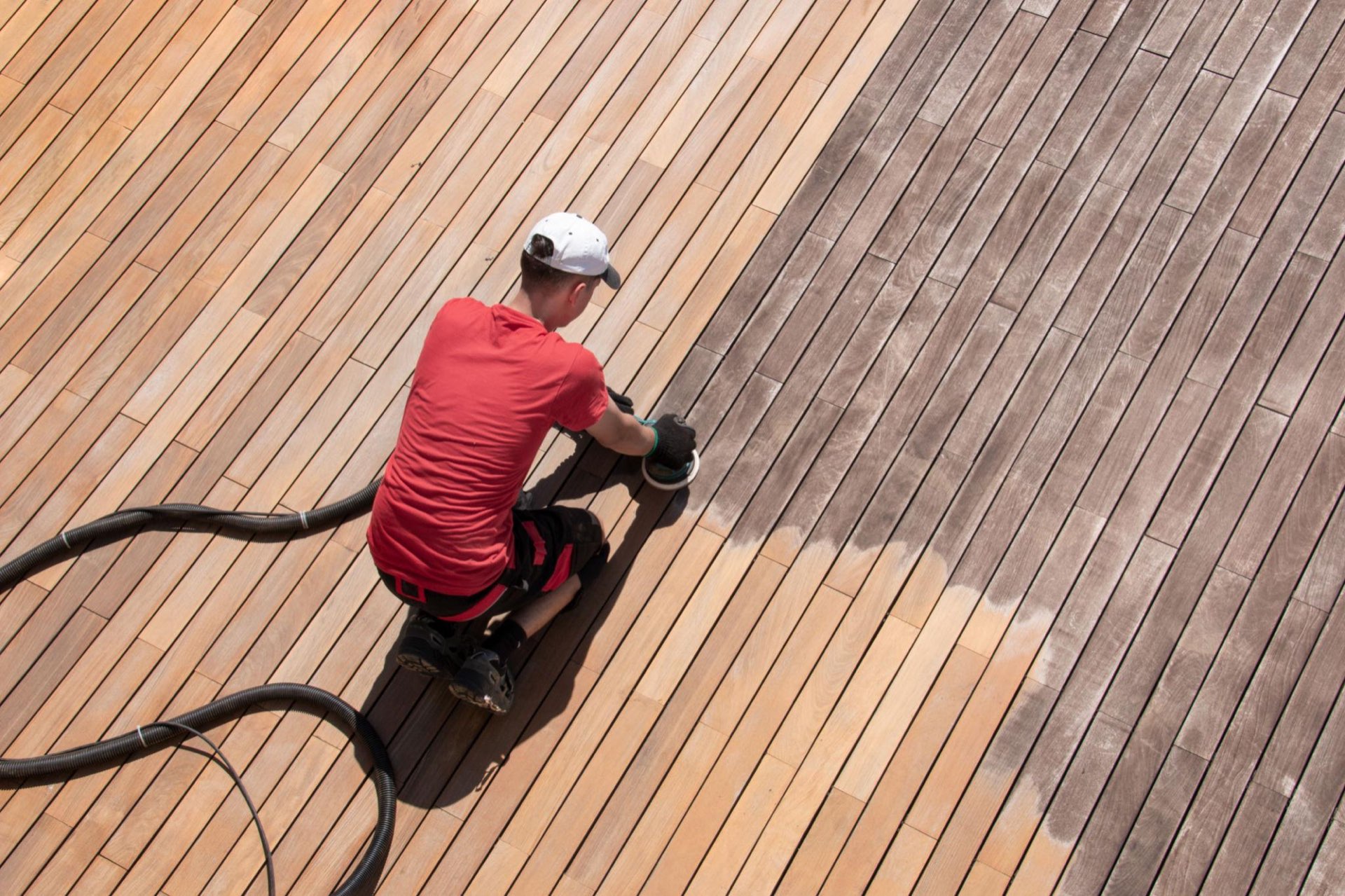
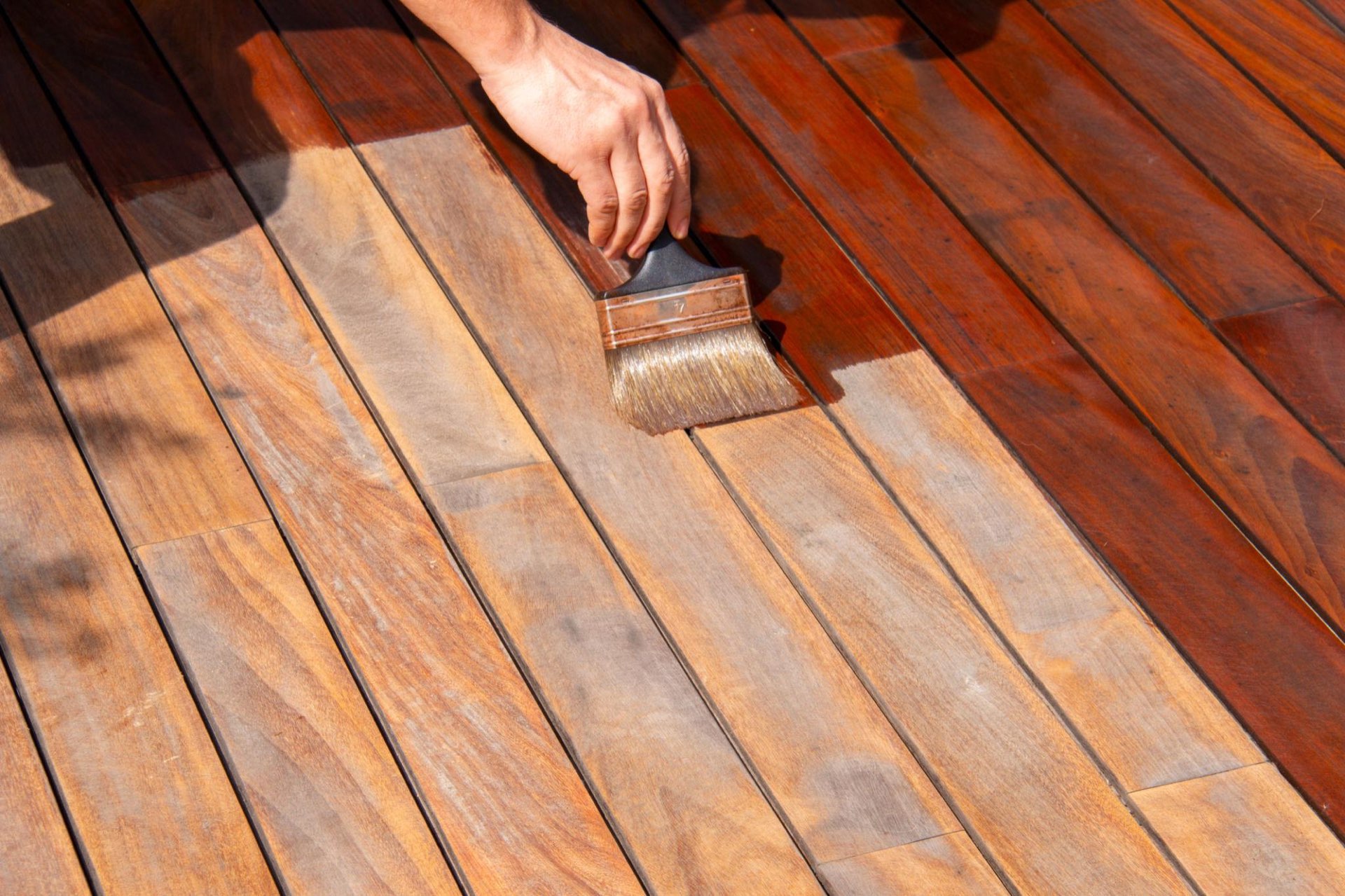
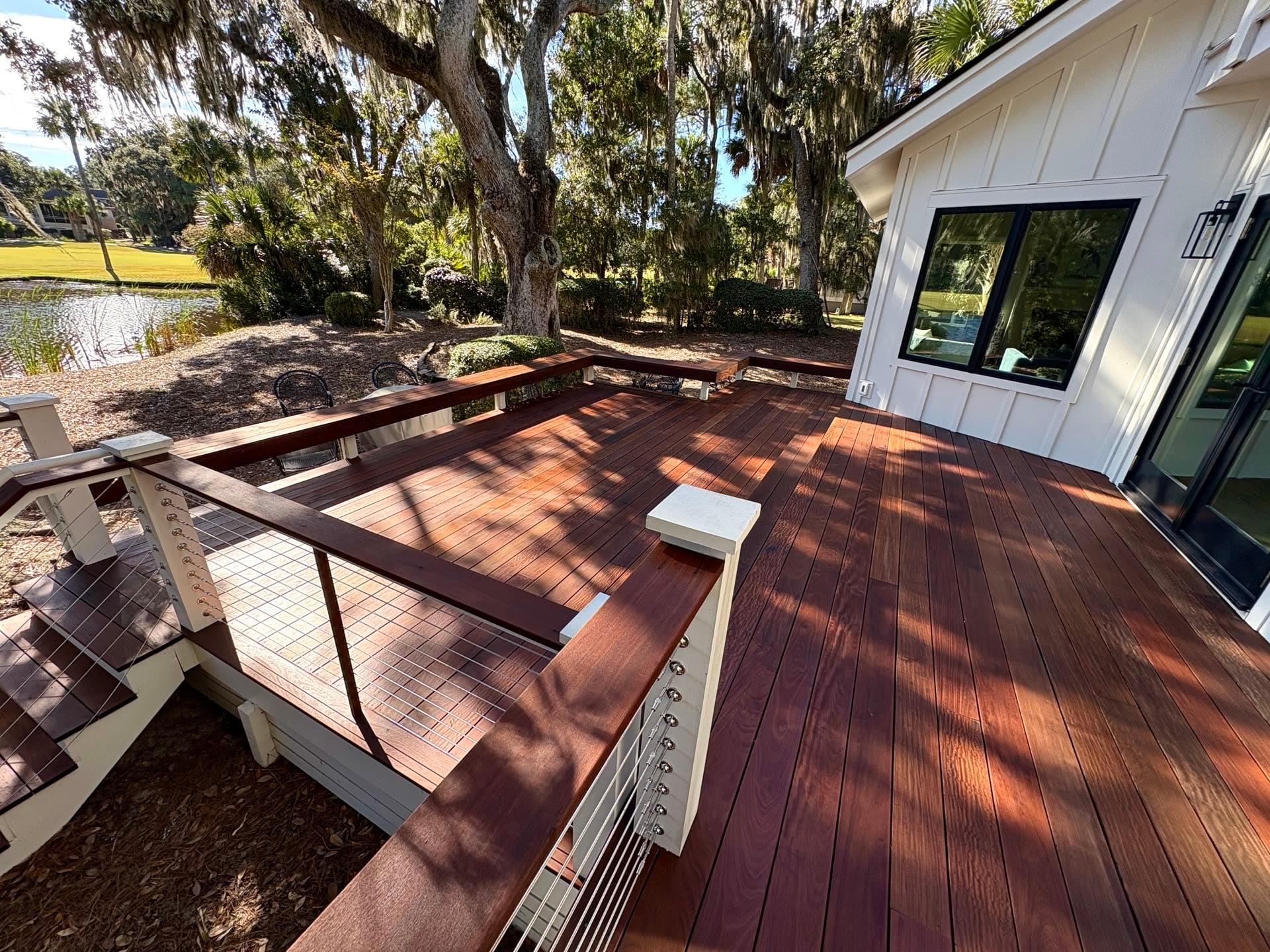
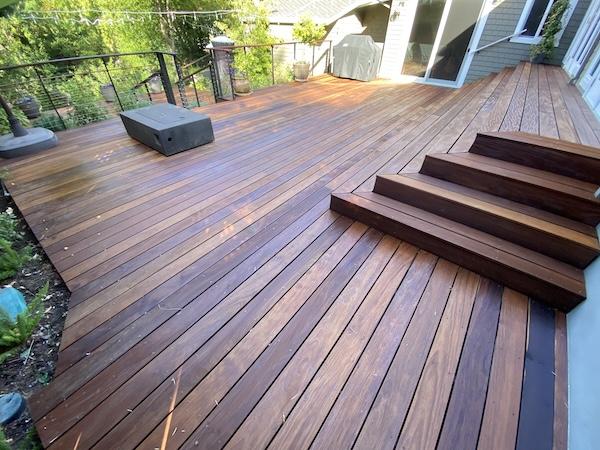
The same boards, a few days apart.
Nothing here was replaced. Each of these decks is the original Ipe, cleaned, abraded flat and re-oiled in place. See more on our full project gallery.
The five-minute monthly deck check
Walk the deck once a month and look for five things. Anything you catch here is cheap to fix; anything you miss gets expensive.
Beading
Flick water at three spots: the sunniest board, a traffic lane and a sheltered corner. Note where it stops beading first.
Fasteners
Any screw head standing proud of the surface is a splinter and a stain waiting to happen.
Edges and end grain
Board ends drink water. They are always the first place a finish gives up.
Under things
Lift a planter and a lounger. Damp, dark patches mean the deck is not drying underneath.
Colour drift
Compare an exposed board with a sheltered one. The gap tells you how far the finish has moved.
Ipe deck refinishing in Laguna Hills.
Ipe deck refinishing near Laguna Hills
If you are comparing quotes across the area, these nearby Laguna Hills service pages cover the same work in neighbouring towns.
Worth reading before you book
How Often Should Teak Furniture Be Refinished?
There is no universal interval. There is a simple test that answers it for your specific furniture in about ten seconds.
Read guideWhen Does an Ipe Deck Need Refinishing?
Colour loss alone is not a reason to refinish. These are the signals that are.
Read guideHow to Maintain Teak After Restoration
Freshly restored teak needs very little. What it needs, it needs consistently.
Read guideGet an honest read on your Laguna Hills deck.
We will tell you whether it needs a recoat, a refinish or nothing at all yet. No charge for the visit.
Book your Laguna Hills estimate.
Pick a time that suits, and the restorer who would run the job will walk the deck with you. There is no charge and no sales pitch.