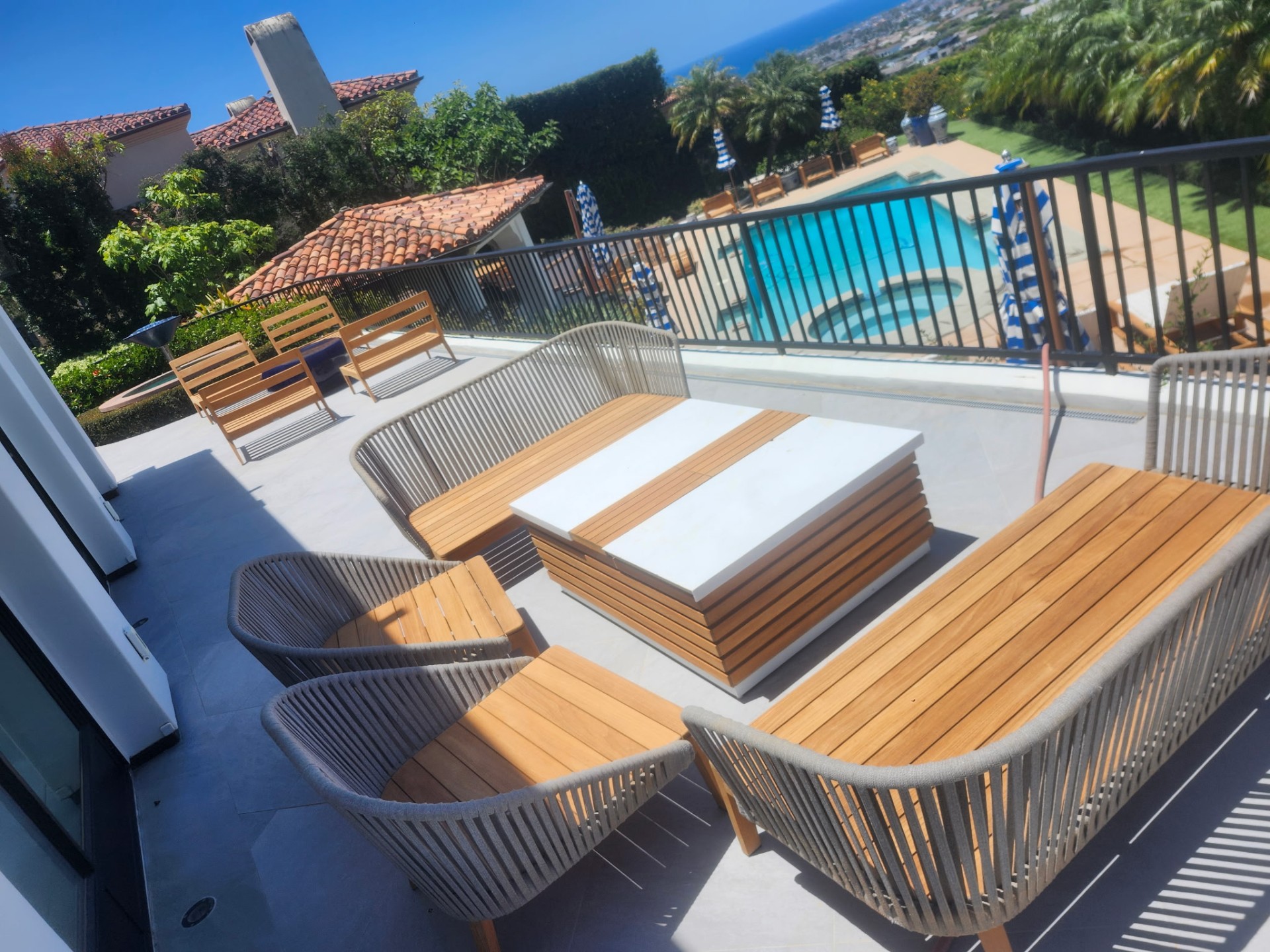
San Juan Capistrano Teak Furniture Restoration
From historic downtown adobes to hillside ranch estates, San Juan Capistrano's inland heat and dust call for a distinct teak care approach.
Trusted across San Juan Capistrano by
Teak Restoration for San Juan Capistrano's Ranch Character
San Juan Capistrano's history as a mission town and equestrian community shapes its outdoor spaces differently than the coastal cities nearby. Many properties, especially in the Hunt Club and around Ortega Highway, have large ranch-style patios and teak furniture used year-round for outdoor gatherings, and these pieces face more dust and dry heat than salt air.
Because the city sits further inland along the San Juan Creek watershed, summer temperatures run noticeably hotter than coastal San Clemente or Dana Point, and that heat pulls moisture from teak faster. Furniture left without regular oiling here tends to crack and check sooner than similar pieces closer to the coast.
Equestrian properties near the Hunt Club often have teak benches and tables set near barns or open pastures, where fine dust from riding arenas settles into the wood grain. This requires a more thorough cleaning step before refinishing than we'd use on a typical suburban patio.
Downtown San Juan Capistrano's historic district, near Mission San Juan Capistrano, includes older homes with teak furniture on shaded patios and porches. These pieces often show mildew or mold from the combination of mature trees and lower airflow, distinct from the sun-driven graying seen on more open hillside properties.
We serve teak furniture throughout San Juan Capistrano, including the Hunt Club, historic downtown near the Mission, and properties along Ortega Highway.
Neighborhoods we regularly service in San Juan Capistrano
- Mission Flats
- Alipaz
- Ortega Ranch
- Hunt Club
- Marbella
- Whispering Hills
What a finish can and cannot do
A finish is a sacrificial layer. Its job is to be degraded by UV and water instead of the wood, which means a finish that shows wear is working exactly as intended.
What it cannot do is stop movement. Teak expands and contracts with humidity regardless of what is on it, so no product prevents seasonal checking — the best ones simply slow the moisture exchange enough to reduce it.
It also cannot fix mechanical problems. Loose joints, corroded fixings and split slats need bench work; coating over them buys one comfortable season and costs more later.
Sun angle and reflected light on the San Juan Capistrano coast
Coastal light is not just direct. Water, pale stone and glass rails all reflect UV back upwards, so the undersides of San Juan Capistrano armrests and table aprons weather far more than they would on an inland patio.
The practical result is that shading a piece helps less here than people expect. An umbrella cuts the direct load but does little about the reflected component, which is why we assess the whole setting rather than just the orientation of a piece.
It also explains uneven sets: a chair pulled slightly further towards a glass balustrade greys measurably faster than the one beside it, and colour-matching across the set during finishing is what makes them read as a group again.
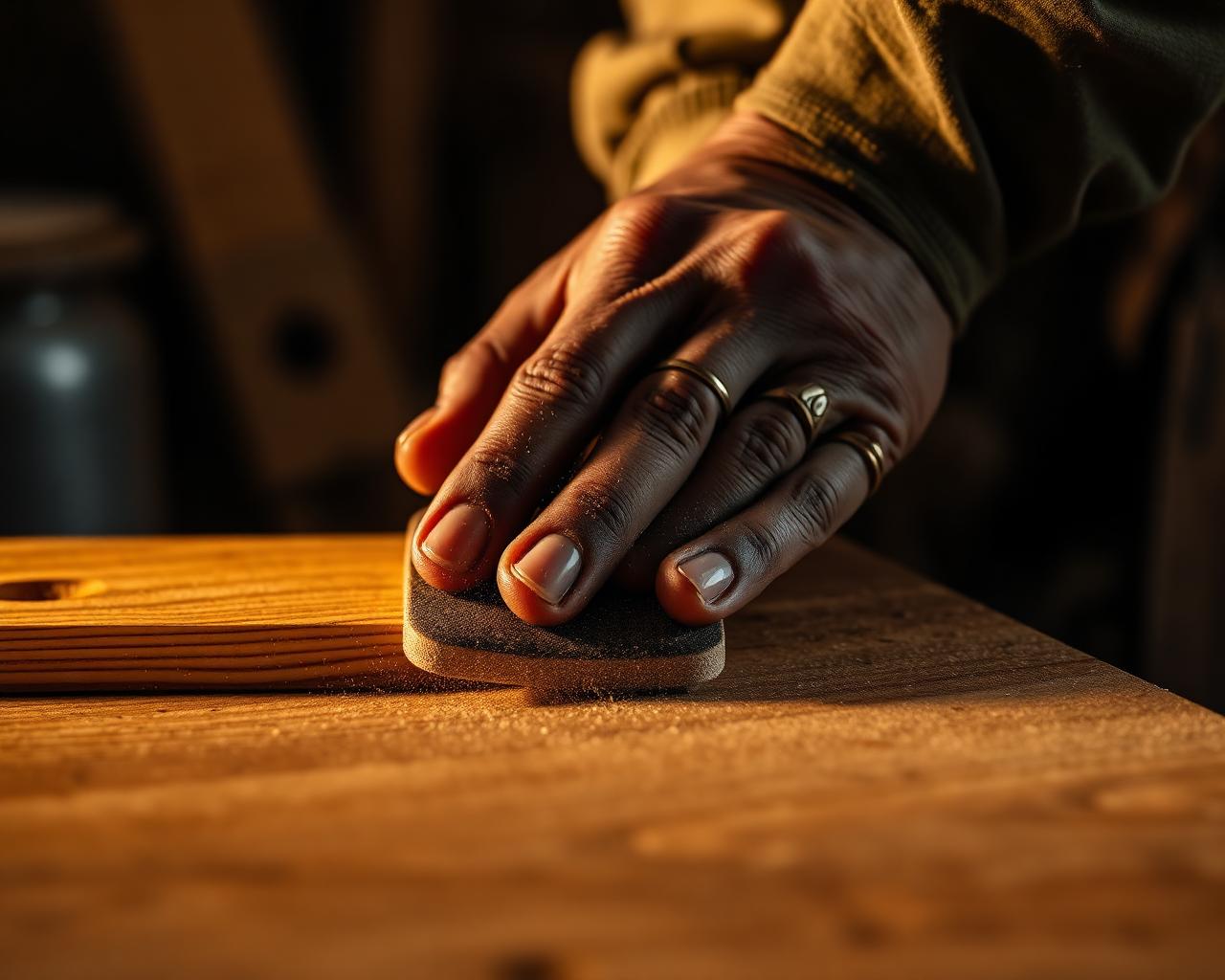
Hand-finished
Every grain inspected, sanded and sealed by a master craftsman.
Six stages, hand-finished on site.
- 01
On-Site Inspection
A free walk-through where we assess every piece, test the surface and quote in writing before anything begins.
- 02
Deep Cleaning
Two-part marine cleaning lifts oxidation, salt film, mildew and the grime held in open grain.
- 03
Precision Sanding
Hand-sanded through progressive grits until fresh, even grain is exposed across every face.
- 04
Joinery Repairs
Loose mortices, split slats and tired fasteners are corrected while the piece is stripped back.
- 05
Premium Finish
Marine-grade oil or sealer applied in thin coats and wiped back so nothing sits on the surface.
- 06
Final Inspection
We walk every piece with you in daylight and leave a written care schedule behind.
Questions worth asking any San Juan Capistrano teak restorer
Restoration is unregulated, and the difference between crews shows up two seasons later rather than on handover day. These are the questions that separate them.
Do you pressure wash?
If the answer is yes, keep calling. It erodes soft grain and creates a texture that then has to be sanded away.
What grit do you finish at?
Too coarse and the finish blotches. Too fine and the wood is burnished shut and cannot absorb oil at all.
Oil or sealer, and why?
There should be a reason tied to your exposure and your tolerance for maintenance, not a house default.
What happens to the joints?
Any piece that moves under hand pressure needs mechanical work before it is worth finishing.
Is the price fixed?
A written, fixed scope avoids the mid-job conversation nobody enjoys having.
Who does the work?
Ask whether the person quoting your Orange County project is the person who will be sanding it.
Recent San Juan Capistrano Teak Projects
Hunt Club Ranch Patio Set
A large teak dining set near an equestrian property had dust embedded in the grain from a nearby riding arena. We deep-cleaned and resealed the set to restore an even finish.
Ortega Highway Hillside Loungers
Sun-dried teak loungers on a hillside property showed early cracking from inland heat. We sanded and reoiled them to restore flexibility to the wood.
Historic Downtown Shaded Porch Bench
A teak bench on a shaded porch near the Mission had developed mildew staining from low airflow. We treated and resealed it with a mildew-resistant finish.
San Juan Creek Area Dining Table
A teak table near San Juan Creek had dust and pollen buildup mixed with light mold. We fully restored the surface and applied a protective sealant suited to the shaded, humid microclimate near the creek.
A realistic upkeep schedule for San Juan Capistrano
Exposure sets the interval far more than the calendar does, but this rhythm works for most properties here.
Monthly
Rinse, and clear anything sitting on horizontal surfaces long enough to hold moisture.
Seasonally
Wash with mild soap, check joints and fasteners, inspect undersides for trapped damp.
Annually
Run the water test. If exposed faces no longer bead, book a maintenance coat.
Every few years
A full sand and refinish on the most exposed pieces; sheltered items go considerably longer.
Teak restoration in San Juan Capistrano — answers to the questions we hear most.
Teak restoration near San Juan Capistrano
Adjacent towns we service regularly — useful if your property sits on the San Juan Capistrano boundary.
More ways we serve San Juan Capistrano
Understanding what your wood needs
How UV Exposure Damages Outdoor Wood
Sun does not just fade colour. It breaks down the material that holds wood fibres together, and it degrades the finish protecting them.
Read guideSanding vs. Stripping Exterior Wood
Both are preparation methods with different jobs. Choosing wrong either wastes wood or leaves contamination behind.
Read guideRestoration vs. Replacement of Outdoor Wood Furniture
The decision is structural first and financial second. Appearance should not drive it at all.
Read guideTalk to a restorer about your San Juan Capistrano project
Book a complimentary on-site estimate. Most quotes are returned in writing within 24 hours.
Tell us about your San Juan Capistrano teak project.
Photographs help more than descriptions. Attach or describe what you have and we will come back with a scope and a price.