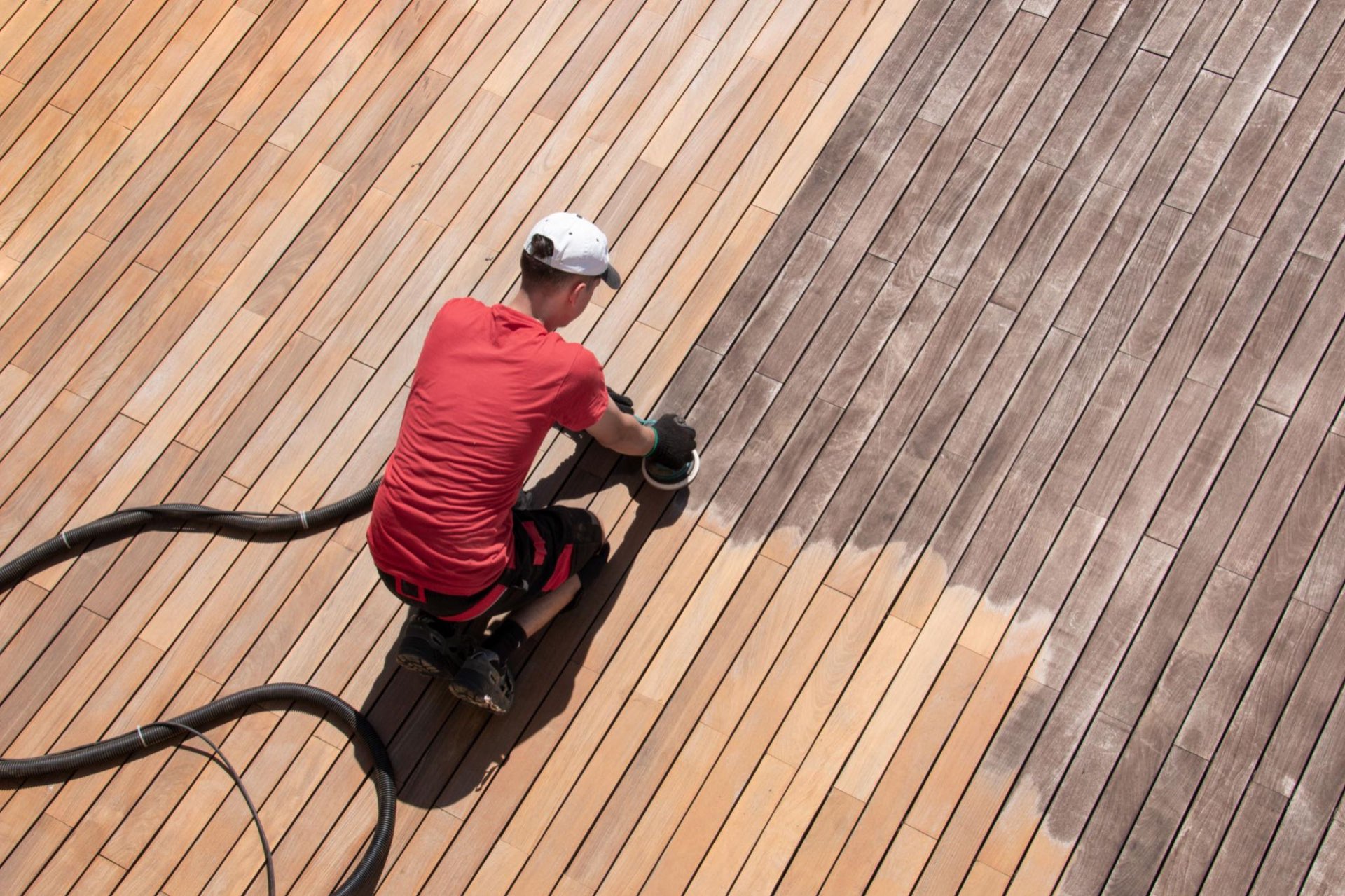
Ipe Deck & Gate Restoration in San Juan Capistrano
Between the historic Mission and the horse trails of the eastern hills, San Juan Capistrano's Ipe surfaces face long, dry summers that pull oils straight out of the wood.
The premier Ipe refinishing crew in San Juan Capistrano, Orange County.
San Juan Capistrano sits back from the coast in a valley that traps heat, and homeowners here notice their Ipe decks, gates, and courtyard railings turning ashy gray faster than they expected. The culprit isn't salt air, it's UV load: clear inland skies for most of the year mean the wood's lignin breaks down steadily, especially on south- and west-facing exposures near open pastures or hillside lots. We see a lot of ranch-style properties with Ipe used on entry gates, courtyard decks, and equestrian-adjacent patios, and each of those needs a slightly different approach depending on how much direct sun it takes daily.
Properties near the historic district and along Ortega Highway tend to have less tree cover than the newer developments closer to Rancho Mission Viejo, so UV exposure varies block by block even within the same zip code.
We're the same veteran-owned crew behind San Juan Capistrano teak restoration and outdoor furniture refinishing. Browse recent projects in our project gallery or request a free estimate for your San Juan Capistrano Ipe deck.
Serving San Juan Capistrano landmarks & communities
- Mission San Juan Capistrano
- Los Rios Historic District
- Marbella Country Club
- Ortega Highway
- Zoomars
- The Hunt Club
- Marbella
- Whispering Hills
- Rancho Madrina
- Los Rios
- Alto Capistrano
Heat, dry air and Ipe in San Juan Capistrano
Away from the coast, San Juan Capistrano decks trade salt for heat. Long, dry summers pull moisture out of the boards, and Ipe — which arrives at a fairly low moisture content already — shrinks slightly and then swells again with the first real rain.
That seasonal movement is the source of most of the surface checking we see inland: shallow hairline splits running with the grain, usually on the sunniest boards. They are cosmetic at first, but they hold dirt and water, so they are worth sealing before they deepen.
An inland refinish is therefore as much about closing the surface as it is about color. Getting oil into the checks matters more than the number of coats on the flat.
What Restoration Brings Back
A proper sand-and-oil restoration removes the UV-damaged surface layer and reintroduces the oils that were baked out, bringing back the amber-brown color and the wood's natural resistance to splintering and checking. For equestrian and ranch properties, this also matters functionally: freshly refinished Ipe resists the fine dust and grit common near paddocks and dirt drives better than gray, dried-out wood.
A deck you can walk barefoot on
Eroded early wood leaves a fibrous surface that catches skin. Abrading it flat is the single biggest comfort change.
Surface water that runs off
A saturated finish keeps San Juan Capistrano rain and irrigation spray sitting on top of the boards instead of soaking into end grain.
Even color across every board
Brightening pulls the tannin and iron staining out so replacement boards and originals read as one deck.
A shorter next job
Once the surface is sound, staying ahead of it is a maintenance coat rather than a full restoration.
What a restoration week actually looks like.
Day zero — walkthrough
We measure the deck, photograph problem areas, test moisture in a few boards and agree the scope in writing before anyone starts.
Board triage and carpentry
Cupped, split or fastener-damaged boards get flipped, re-fixed or swapped first. Sanding a deck with loose boards only hides the issue.
Strip and neutralize
Old film finishes and mill glaze come off chemically where sanding alone would gouge the surface, then the wood is neutralized and rinsed.
Progressive abrasion
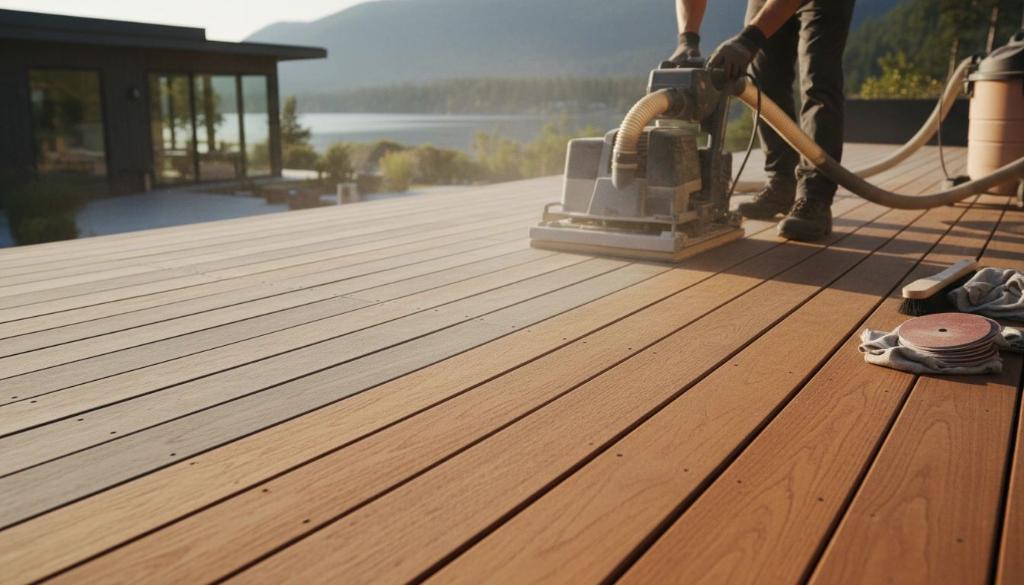
Coarse to fine in stages, with hand work along railings, stair noses and anywhere a machine cannot reach flat.
Saturation coats
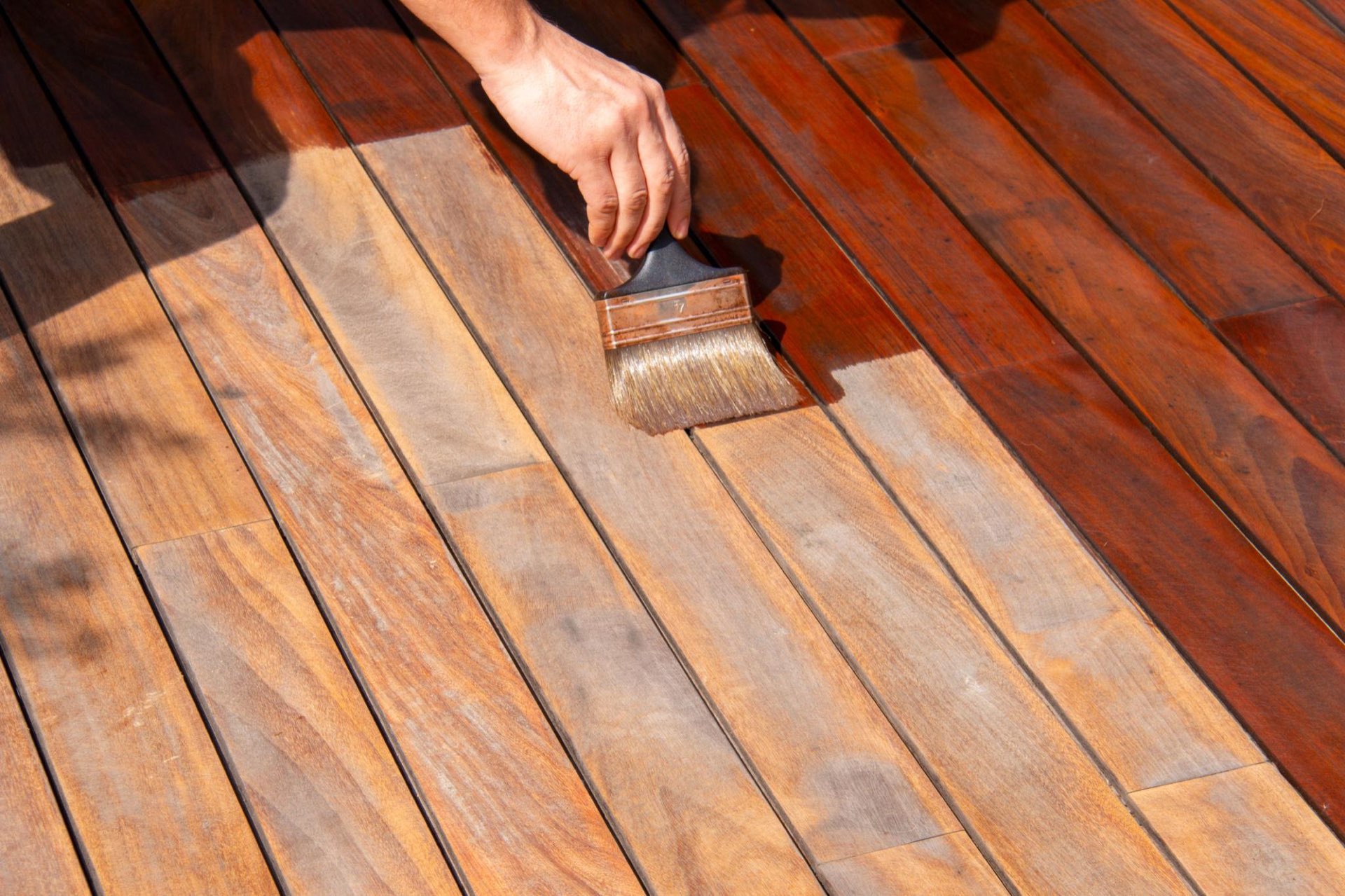
Oil goes on wet-on-wet until the boards stop drinking, then the excess is wiped back so nothing sits on the surface to go sticky.
Cure and handover
We stay off the deck through the cure window, return to buff any raised spots, and leave you a written care schedule.
What tone your deck will actually come back to
Ipe is not one colour. Depending on the log it can run from a warm reddish brown through chocolate to a distinctly olive-green cast, and a single deck usually has all of it.
Sanding reveals whatever is there — we cannot add colour that the boards do not have, and we will not use a stain to fake uniformity that would then peel. Brightening evens the tone as far as chemistry honestly allows.
Oil deepens what is revealed by roughly one shade and brings the figure up. The first week after finishing is the darkest the deck will look; it settles slightly as the oil cures.
Ipe surfaces we restore.
Ocean-facing decks
Constant salt load and no shade. These need the shortest interval and the toughest finish spec.
Courtyards & side yards
Shaded, slow to dry, and where mildew rather than UV is the main problem to solve.
Docks, gangways and steps
Wet, high-traffic and safety-critical. Slip resistance drives the finish choice here.
Siding, screens and gates
Vertical Ipe weathers unevenly top to bottom and needs blending rather than a straight recoat.
Outdoor kitchens & bars
Heat, grease and food spills, so we specify a finish that cleans up rather than one that only looks good day one.
Furniture and built-ins
Benches, planters and built-in seating restored alongside the deck so the whole space matches.
Decks we have brought back this season.
Coastal terraces, pool surrounds, roof decks and stairs — different exposures, the same preparation-first method. See more on our full project gallery.
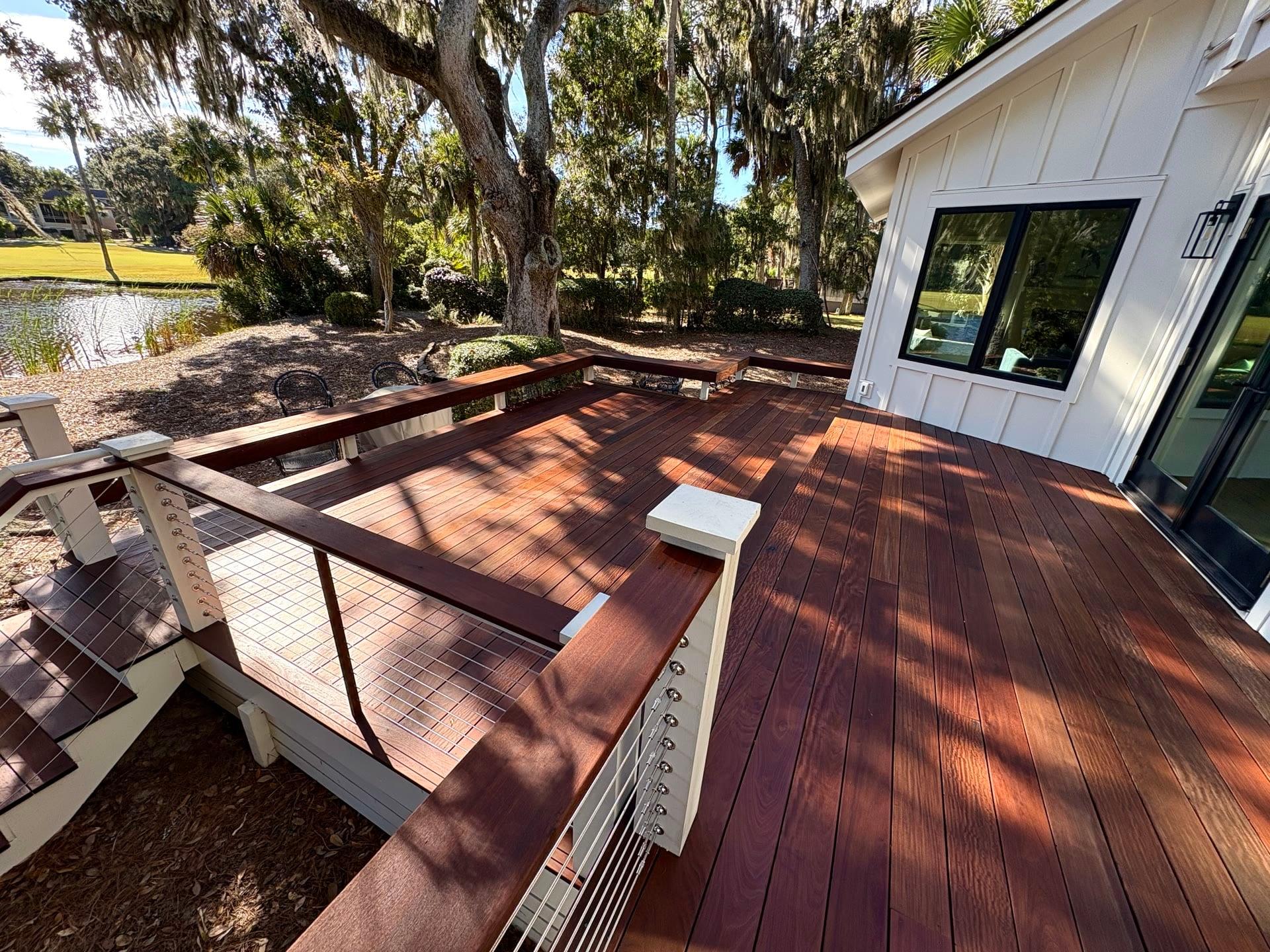
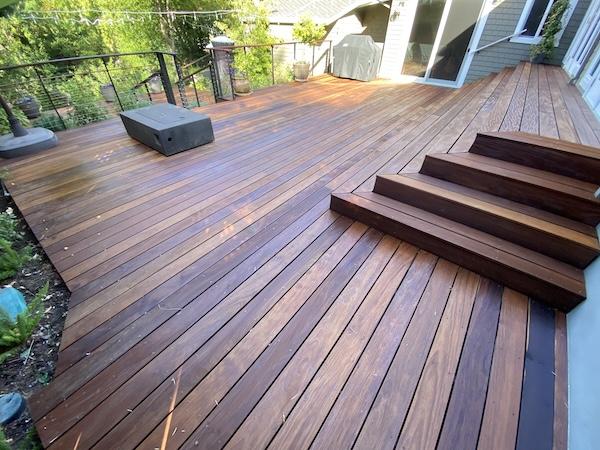
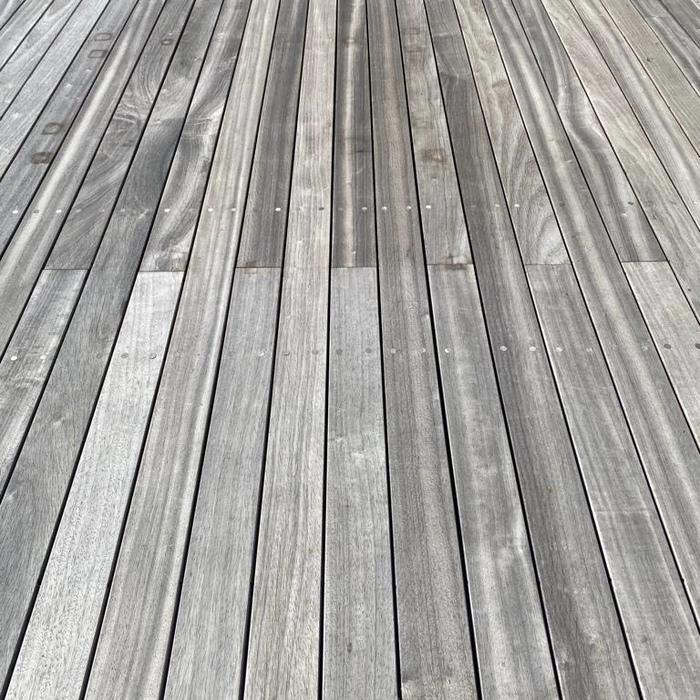
Ipe deck refinishing in San Juan Capistrano.
Ipe deck refinishing near San Juan Capistrano
Our crews run out to the neighbouring towns around San Juan Capistrano on the same schedule, so a shared crew day often means a better slot for you.
Worth reading before you book
How UV Exposure Damages Outdoor Wood
Sun does not just fade colour. It breaks down the material that holds wood fibres together, and it degrades the finish protecting them.
Read guideSanding vs. Stripping Exterior Wood
Both are preparation methods with different jobs. Choosing wrong either wastes wood or leaves contamination behind.
Read guideRestoration vs. Replacement of Outdoor Wood Furniture
The decision is structural first and financial second. Appearance should not drive it at all.
Read guideSee what is under the grey on your San Juan Capistrano deck.
We can sand a test patch during the estimate so you can see the color before committing to anything.
Book your San Juan Capistrano estimate.
Pick a time that suits, and the restorer who would run the job will walk the deck with you. There is no charge and no sales pitch.