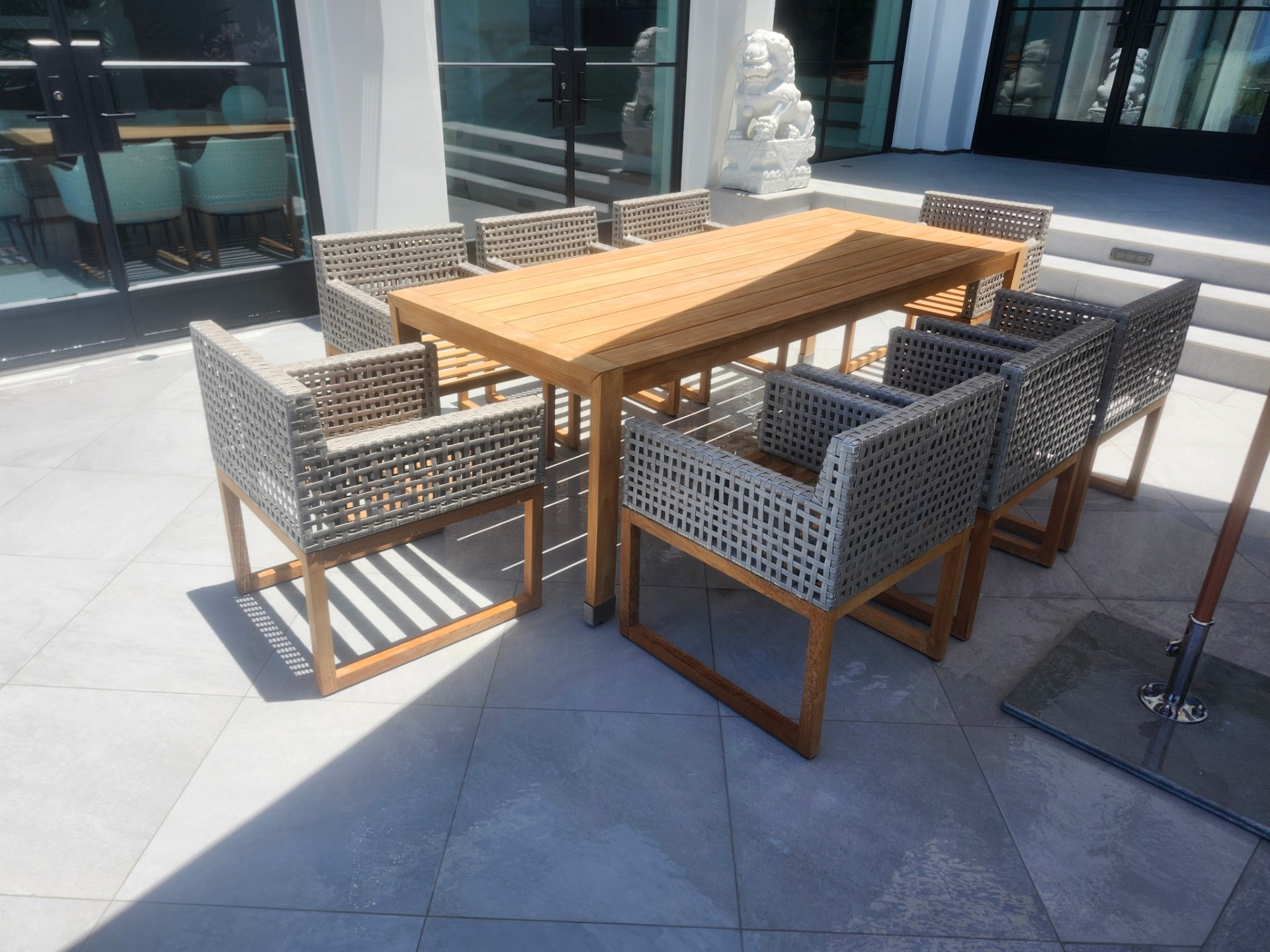
Brentwood Teak Restoration for Hillside and Flatland Patios
Restoring teak dining sets, loungers, and decking for Brentwood homes from the San Vicente flats to the Mandeville Canyon hillsides.
Trusted across Brentwood by
Teak Restoration Across Brentwood's Flats and Canyons
Brentwood spreads from the flat, tree-lined streets near San Vicente Boulevard up into the winding hillside roads of Mandeville Canyon and Old Brentwood, and teak furniture ages noticeably differently depending on which part of the neighborhood it's in. Flatland patios shaded by the neighborhood's famous coral trees see slower, more even weathering than exposed hillside terraces catching direct afternoon sun.
Because Brentwood sits a bit further from the ocean than Santa Monica or Pacific Palisades, salt air isn't the primary concern for teak here — instead, we deal mostly with UV fading and the effects of long, dry summer stretches on furniture left uncovered on decks and patios.
Many Brentwood homes have outdoor spaces designed for entertaining, with teak dining sets, bar areas, and lounge furniture arranged around pools or outdoor kitchens; these pieces see frequent use and regular exposure to sunscreen, food, and drink spills in addition to normal weathering.
The canyon homes higher up, particularly along Mandeville Canyon Road, often have teak furniture on decks cantilevered over sloped lots, which means more direct, unobstructed sun exposure for more hours of the day than a shaded flatland patio.
We work throughout Brentwood's residential streets, from the entertainment-industry homes near Kenter Canyon to quieter flatland blocks near Barrington Park, adjusting our restoration approach to each property's actual sun and use patterns.
We service homes throughout Brentwood, from the flats near San Vicente Boulevard to the hillside properties along Mandeville Canyon Road.
Neighborhoods we regularly service in Brentwood
- Brentwood Park
- Brentwood Circle
- Brentwood Glen
- Mandeville Canyon
- Kenter Canyon
- Sullivan Canyon
Not all teak is the same wood
The label covers several very different materials, and which one you own changes both the method and the realistic outcome.
Old-growth Burmese teak
Dense, tight-ringed, very high oil content. Restores beautifully and holds finish longest.
Plantation teak
Faster grown, lighter, more sapwood. Perfectly good outdoors but needs a gentler hand and more frequent coats.
Grade A, B and C stock
Grading describes how much heartwood is present. Sapwood-heavy pieces stain and weather unevenly by nature.
Teak veneer and composites
A thin skin over a substrate. These cannot be sanded meaningfully and are cleaned and coated only.
Teak-look hardwoods
Eucalyptus and shorea are often sold as teak alternatives. They restore well but on a shorter cycle.
Hand-finished
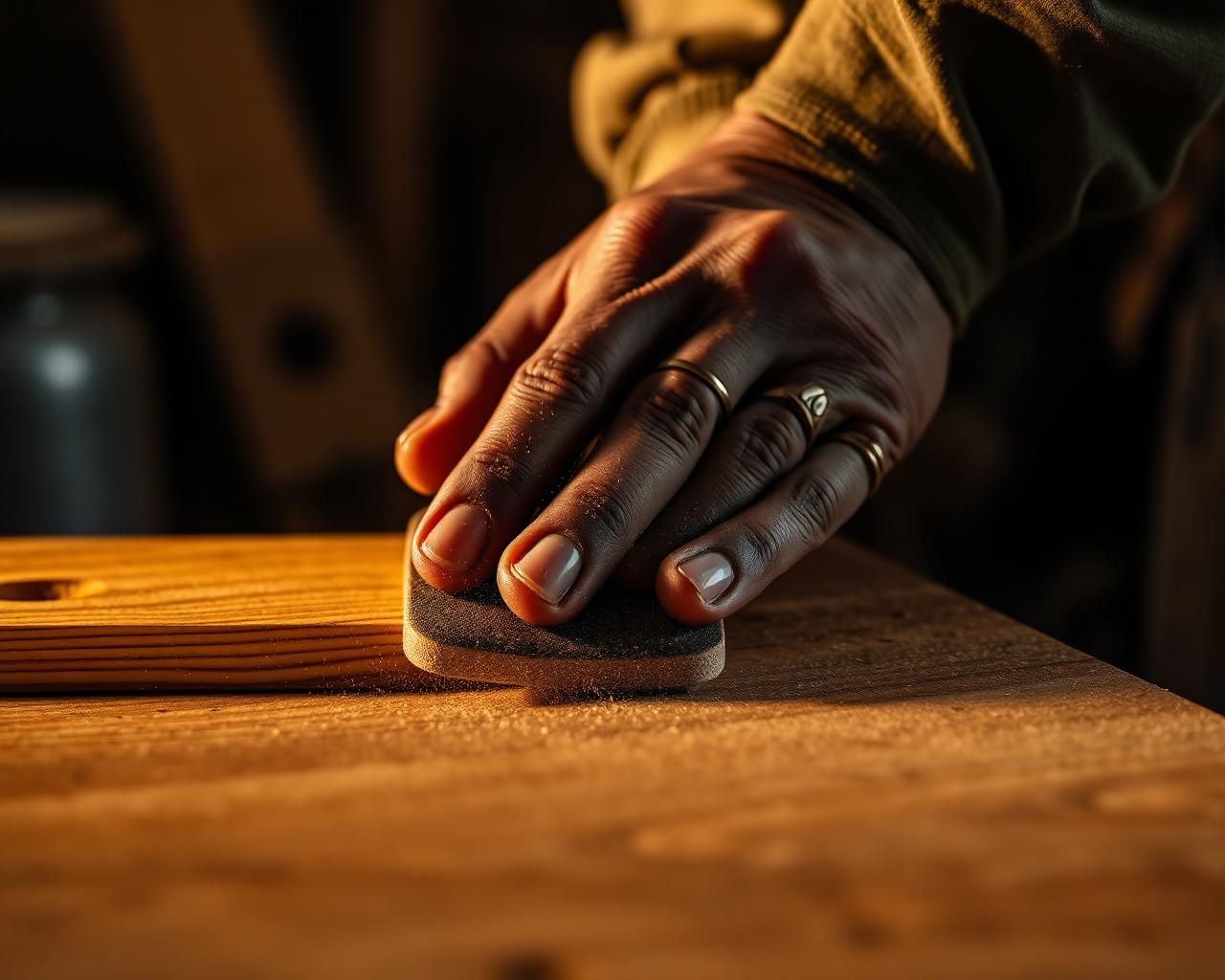
Every grain inspected, sanded and sealed by a master craftsman.
From first call to finished patio.
- 01
The call
A few photos and a description usually tell us the likely scope and rough range before we ever visit.
- 02
Free estimate visit
Thirty minutes on site. Piece count, condition grade, finish options and a fixed written price.
- 03
Disassembly where needed
Slatted loungers and folding chairs are opened up so the hidden faces get the same treatment as the visible ones.
- 04
Clean, neutralise, dry
The wood has to be genuinely dry before finish goes on. Oil over trapped moisture clouds and lifts.
- 05
Build the protection
Thin coats, wiped back, repeated. Depth comes from the number of coats, never from the thickness of one.
- 06
Handover
Reassembly, a final wipe down, and a walkthrough of what to watch over the next twelve months.
Choosing the tone you actually want
Restored teak can be finished anywhere between a pale, matt honey and a deep, almost amber brown, and the difference is mostly product choice and coat count rather than stain.
We sample on your own wood before committing the set, because the same oil reads differently on old, dense teak than on newer plantation stock, and photographs of other projects are a poor guide.
Darker is not automatically better outdoors. Deep tones absorb more heat, which shortens the interval on pieces in full sun, and that trade-off is worth making deliberately.
Hardscape heat and reflected load
Large expanses of pale stone, concrete and pool deck around Brentwood homes re-radiate heat well into the evening, so furniture standing on them cools far more slowly than the air does.
That extended warm period is why finishes on inland patios often fail from the feet upwards, with the lowest rails and stretchers dulling before the tabletop does.
It is easily managed once identified: pads under feet, a shift of a few metres, or simply specifying a finish with a higher heat tolerance for the pieces that live on the hottest surface.
The maintenance mistakes that undo good work
Most avoidable damage we are called out to fix came from well-intentioned care rather than neglect.
Pressure washing
Carves out soft grain and leaves a furrowed texture that sanding then has to chase flat.
Bleach-heavy cleaners
They lighten staining but break down fibre and lift protective finishes unevenly.
Non-breathable covers
Plastic traps condensation against the wood and often causes more harm than the weather it blocks.
Steel wool and wire brushes
Fragments left in the grain rust and produce permanent black spotting within weeks.
Waiting too long
Refinishing a sound surface is straightforward. Recovering an eroded one is a different job at a different price.
Proudly serving Brentwood & the Westside.
On-site teak restoration, refinishing and outdoor furniture restoration throughout Brentwood and every neighboring Westside community.
- Brentwood
- Newport Beach
- Corona del Mar
- Newport Coast
- Laguna Beach
- Costa Mesa
- Huntington Beach
- Irvine
- Tustin
- Orange
- Villa Park
- Yorba Linda
- Aliso Viejo
- Lake Forest
Teak restoration in Brentwood — answers to the questions we hear most.
Teak restoration near Brentwood
If you are just outside Brentwood, these are the nearby areas we cover with the same crew and schedule.
More ways we serve Brentwood
From our restoration library
How to Maintain Teak After Restoration
Freshly restored teak needs very little. What it needs, it needs consistently.
Read guideWhy Outdoor Teak Turns Gray
Silvering is a UV reaction at the surface of the wood. It is not rot, and it is not permanent.
Read guideHow Coastal Weather Affects Teak Furniture
Near the ocean, three separate forces act on outdoor wood at once. Understanding which one is doing the damage changes how you maintain it.
Read guideTalk to a restorer about your Brentwood project
Tell us what you have and how it is used. We will tell you what it needs and what it will cost.
Tell us about your Brentwood teak project.
Tell us what you have, how it is used and roughly how long since it was last finished. That is enough for a realistic range.