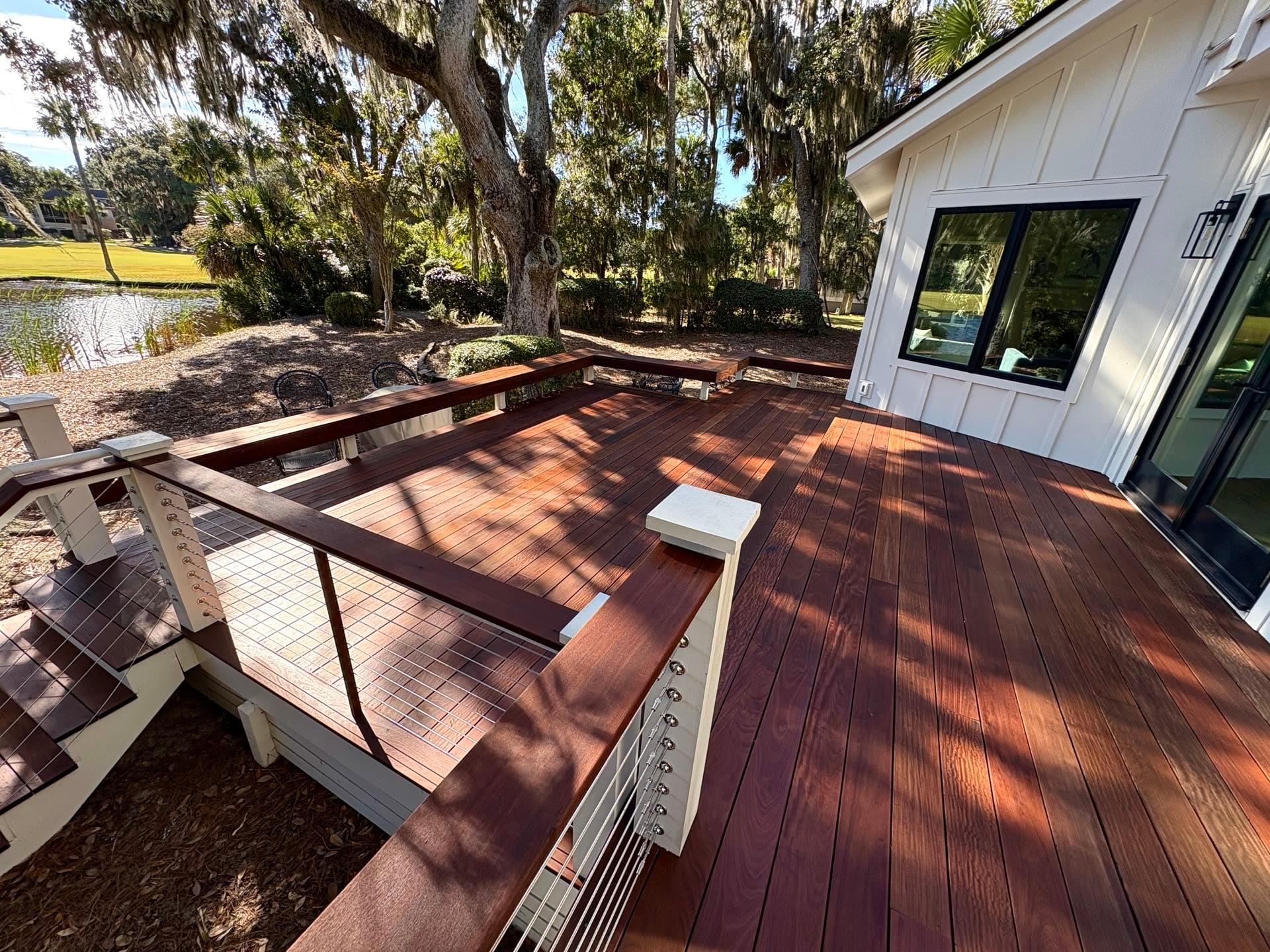
Ipe Deck Restoration in Santa Monica
Santa Monica's blend of dense residential streets, mixed-use commercial buildings, and rooftop entertaining decks means Ipe here is exposed to everything from persistent marine layer to reflected city heat.
The premier Ipe refinishing crew in Santa Monica, Los Angeles County.
Santa Monica decks come in two very different flavors: ground-level residential patios shaded by mature trees and fog, and elevated rooftop decks on commercial and multi-family buildings that catch full sun and wind above the marine layer. Both need Ipe restoration, but for different reasons. Fogged-in ground decks develop mildew and soft graying from persistent moisture, while rooftop decks dry out and check under stronger, more direct sun exposure once they're above the low coastal cloud line.
Between the Third Street Promenade corridor, the residential streets north of Wilshire, and mixed commercial-residential buildings near Main Street, we see a wide variety of deck types in Santa Monica, from private backyard patios to shared rooftop amenity decks serving multiple tenants. Building management coordination and after-hours access are often part of the job for commercial rooftop work.
We're the same veteran-owned crew behind Santa Monica teak restoration and outdoor furniture refinishing. Browse recent projects in our project gallery or request a free estimate for your Santa Monica Ipe deck.
Serving Santa Monica landmarks & communities
- Santa Monica Pier
- Palisades Park
- Third Street Promenade
- Santa Monica Beach
- Tongva Park
- North of Montana
- Ocean Park
- Sunset Park
- Wilshire Montana
- Mid-City
- Pico
Sun angle, glare and UV load on Santa Monica decks
Southern California delivers UV year-round, and it is UV rather than rain that drives most of what happens to a Santa Monica deck. Winter sun sits low and rakes across the boards; summer sun hits close to vertical and heats the surface far above air temperature.
Dark, dense Ipe absorbs a lot of that energy. Surface temperatures over 60 degrees are routine on an unshaded deck, and heat that high thins oil, drives off the lighter fractions and shortens the effective life of a coat regardless of how well it was applied.
Any shade you can add pays back. A sail, a pergola or even a well-placed umbrella over the hottest section changes the maintenance interval for that area measurably.
Benefits of Restoring Ipe in a Fog-to-Sun Microclimate
Because ground-level and rooftop decks in Santa Monica face such different conditions, we tailor the oil finish and drying schedule to the specific deck's exposure. Ground decks benefit from finishes with added mildew resistance, while rooftop decks need stronger UV protection. Either way, restoration removes the gray, soft surface layer and returns the wood to its structurally sound, rich brown state.
A deck you can walk barefoot on
Eroded early wood leaves a fibrous surface that catches skin. Abrading it flat is the single biggest comfort change.
Surface water that runs off
A saturated finish keeps Santa Monica rain and irrigation spray sitting on top of the boards instead of soaking into end grain.
Even color across every board
Brightening pulls the tannin and iron staining out so replacement boards and originals read as one deck.
A shorter next job
Once the surface is sound, staying ahead of it is a maintenance coat rather than a full restoration.
What a restoration week actually looks like.
Day zero — walkthrough
We measure the deck, photograph problem areas, test moisture in a few boards and agree the scope in writing before anyone starts.
Board triage and carpentry
Cupped, split or fastener-damaged boards get flipped, re-fixed or swapped first. Sanding a deck with loose boards only hides the issue.
Strip and neutralize
Old film finishes and mill glaze come off chemically where sanding alone would gouge the surface, then the wood is neutralized and rinsed.
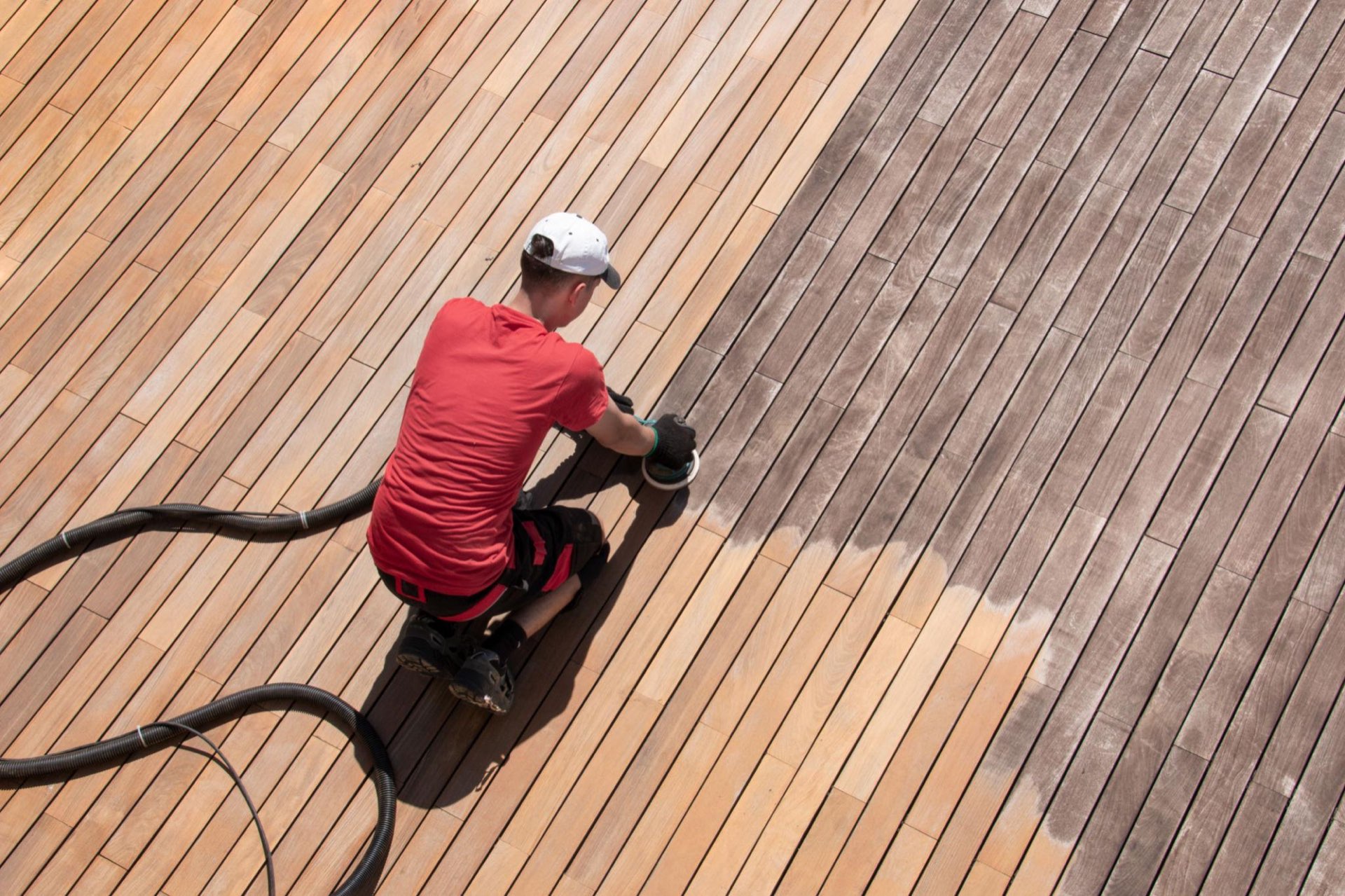
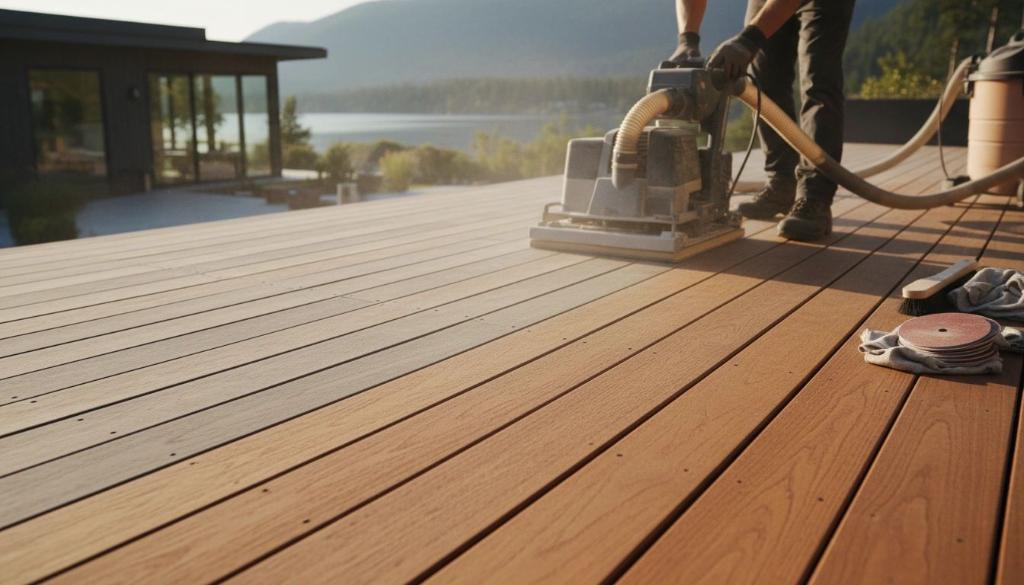
Progressive abrasion
Coarse to fine in stages, with hand work along railings, stair noses and anywhere a machine cannot reach flat.
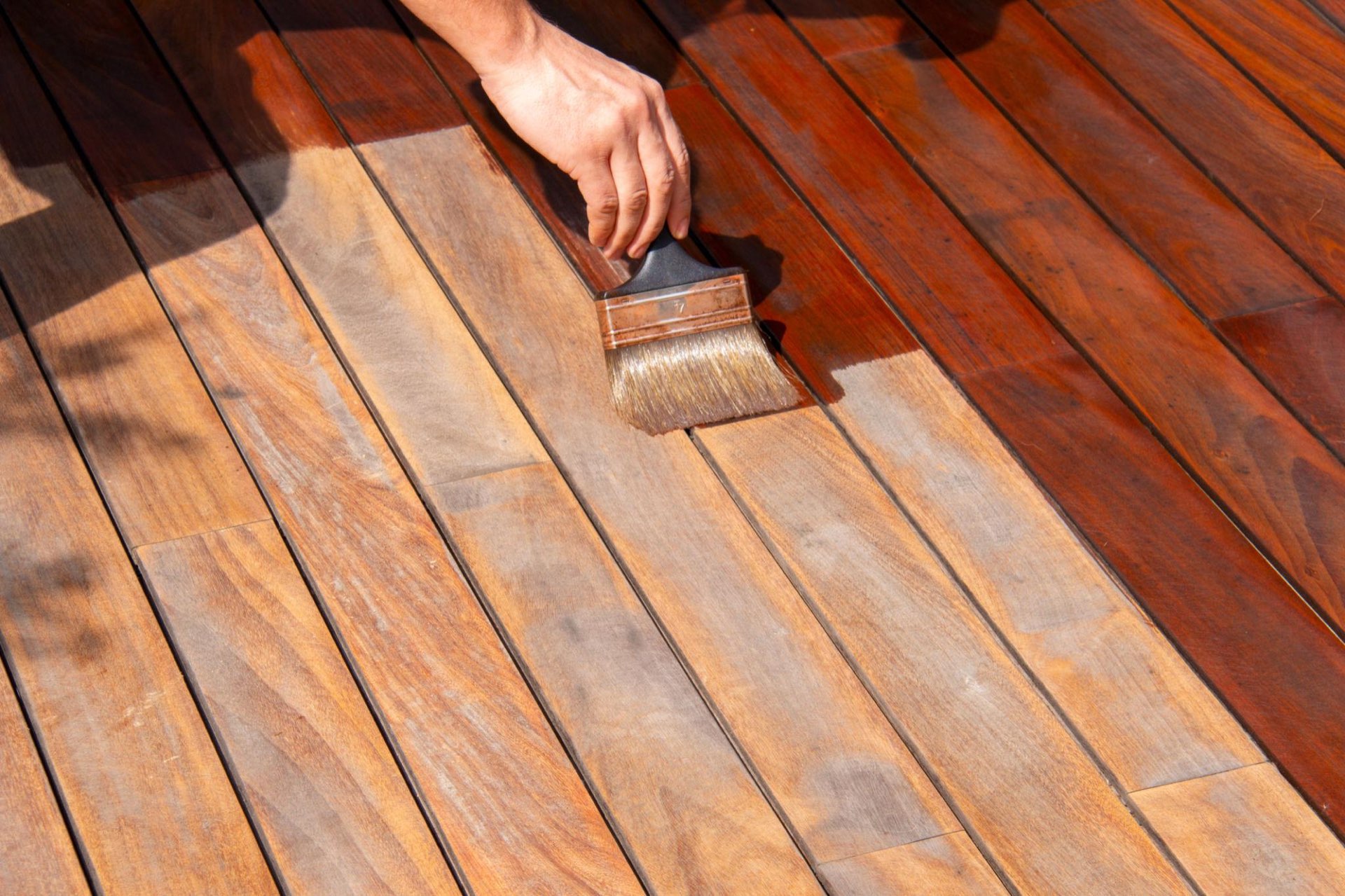
Saturation coats
Oil goes on wet-on-wet until the boards stop drinking, then the excess is wiped back so nothing sits on the surface to go sticky.
Cure and handover
We stay off the deck through the cure window, return to buff any raised spots, and leave you a written care schedule.
What tone your deck will actually come back to
Ipe is not one colour. Depending on the log it can run from a warm reddish brown through chocolate to a distinctly olive-green cast, and a single deck usually has all of it.
Sanding reveals whatever is there — we cannot add colour that the boards do not have, and we will not use a stain to fake uniformity that would then peel. Brightening evens the tone as far as chemistry honestly allows.
Oil deepens what is revealed by roughly one shade and brings the figure up. The first week after finishing is the darkest the deck will look; it settles slightly as the oil cures.
Ipe surfaces we restore.
Ocean-facing decks
Constant salt load and no shade. These need the shortest interval and the toughest finish spec.
Courtyards & side yards
Shaded, slow to dry, and where mildew rather than UV is the main problem to solve.
Docks, gangways and steps
Wet, high-traffic and safety-critical. Slip resistance drives the finish choice here.
Siding, screens and gates
Vertical Ipe weathers unevenly top to bottom and needs blending rather than a straight recoat.
Outdoor kitchens & bars
Heat, grease and food spills, so we specify a finish that cleans up rather than one that only looks good day one.
Furniture and built-ins
Benches, planters and built-in seating restored alongside the deck so the whole space matches.
Decks we have brought back this season.
Coastal terraces, pool surrounds, roof decks and stairs — different exposures, the same preparation-first method. See more on our full project gallery.
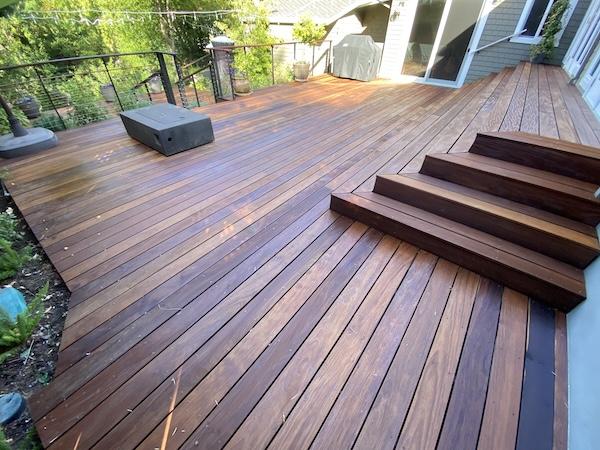
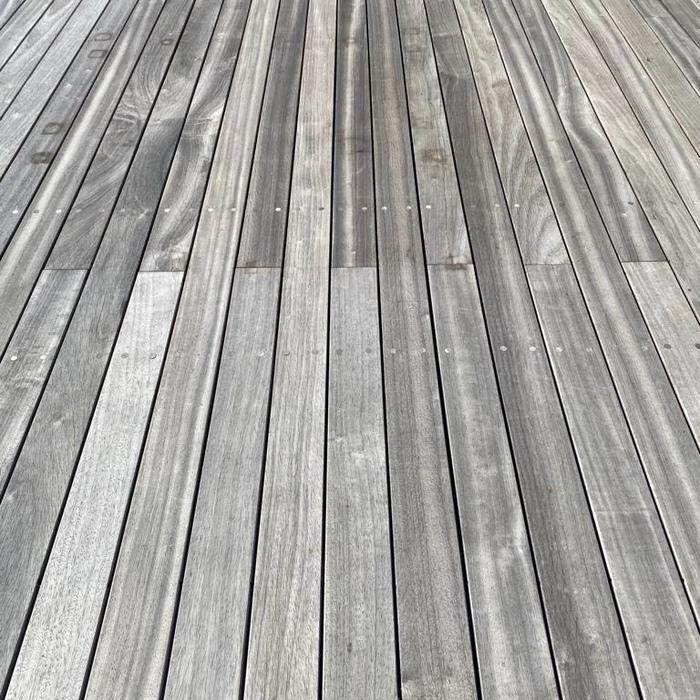
Ipe deck refinishing in Santa Monica.
Ipe deck refinishing near Santa Monica
Our crews run out to the neighbouring towns around Santa Monica on the same schedule, so a shared crew day often means a better slot for you.
Worth reading before you book
How to Restore Weathered Teak Furniture
Grey teak is almost always surface oxidation, not damage. Here is the full sequence used to bring it back, and the points where the job usually goes wrong.
Read guideRestoration vs. Replacement of Outdoor Wood Furniture
The decision is structural first and financial second. Appearance should not drive it at all.
Read guideHow Often Should Teak Furniture Be Refinished?
There is no universal interval. There is a simple test that answers it for your specific furniture in about ten seconds.
Read guideSee what is under the grey on your Santa Monica deck.
We can sand a test patch during the estimate so you can see the color before committing to anything.
Book your Santa Monica estimate.
Pick a time that suits, and the restorer who would run the job will walk the deck with you. There is no charge and no sales pitch.