Teak Restoration
Full structural restoration for sun-bleached, cracked or weather-damaged teak across Bel Air.
Teak Restoration Bel Air
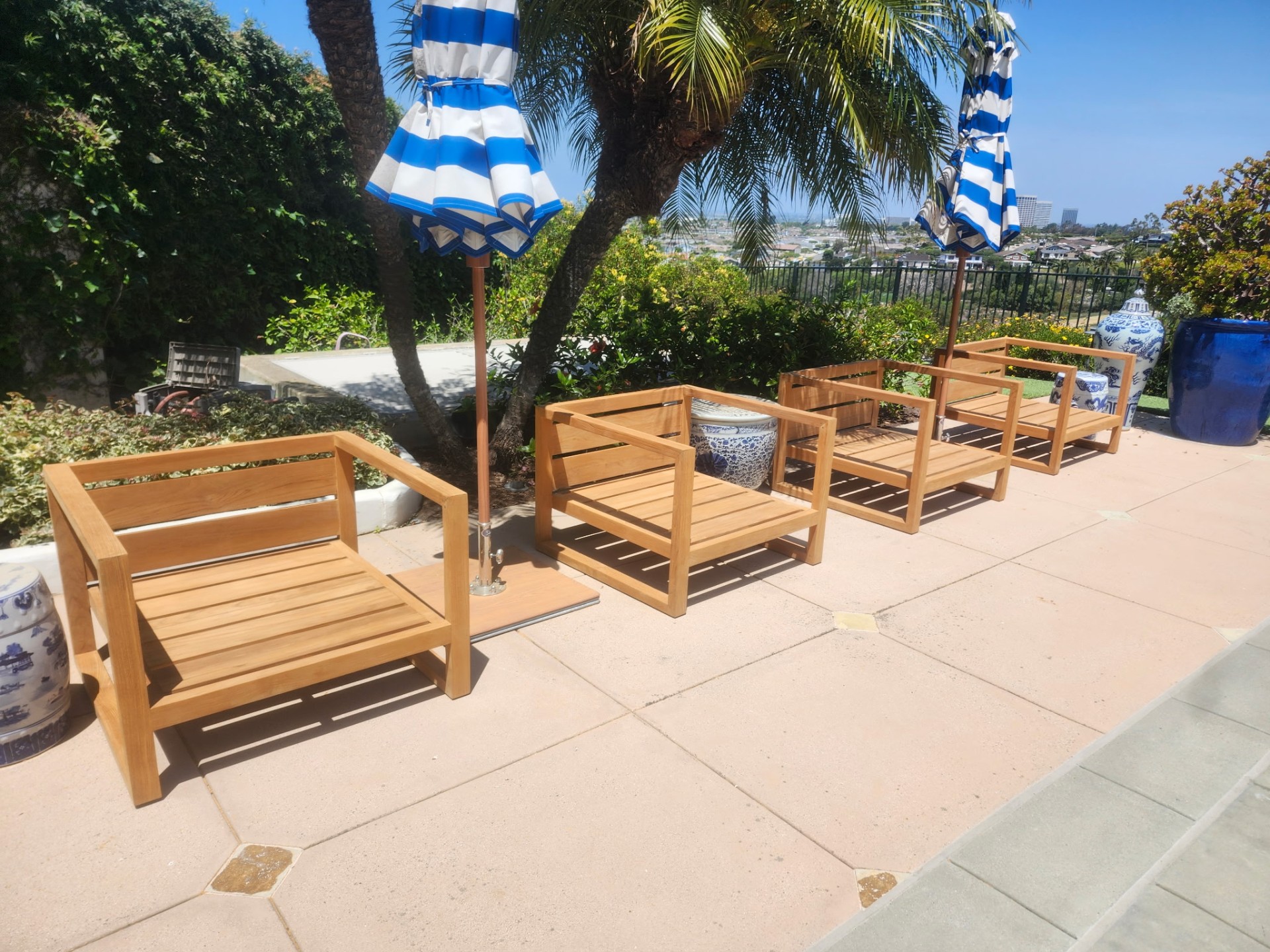
On-site refinishing for teak patio furniture, loungers, and built-in decking across Bel Air's gated hillside and canyon properties.
Full structural restoration for sun-bleached, cracked or weather-damaged teak across Bel Air.
Teak Restoration Bel Air
Hand-sanded, sealed and finished with marine-grade oils for a deep, even, long-lasting tone.
Teak Refinishing Bel Air
Two-part cleaning that lifts mildew, salt and oxidation from Bel Air teak without harming the fibre.
Teak Cleaning Bel Air
Patio sets, loungers, dining tables, benches and yacht decking, restored as a coordinated set.
Outdoor Furniture Restoration Bel Air
Deep cleaning, sanding and oiling that recovers the original chocolate character of dense hardwood.
Ipe Deck Restoration Bel Air
Teak, mahogany and tropical hardwood decks across Bel Air — stripped, sanded and re-sealed.
Deck Refinishing Bel Air
Scheduled cleaning, oiling and inspection so the finish never has to be rescued.
Teak Maintenance Bel Air
These get lumped together as 'the teak needs doing', but each has a different cause and a different fix, and treating them the same way is why finishes fail early.
UV oxidation. Shallow, uniform, cosmetic. Cleaning and light sanding resolve it completely.
Uneven absorption, usually from patchy old finish or inconsistent sanding. Needs stripping back to a level surface.
Over-applied oil that never cured. It has to be removed with solvent, not sanded, or it clogs everything.
Eroded early-wood, often from pressure washing. Only progressive sanding will bring the surface back flat.
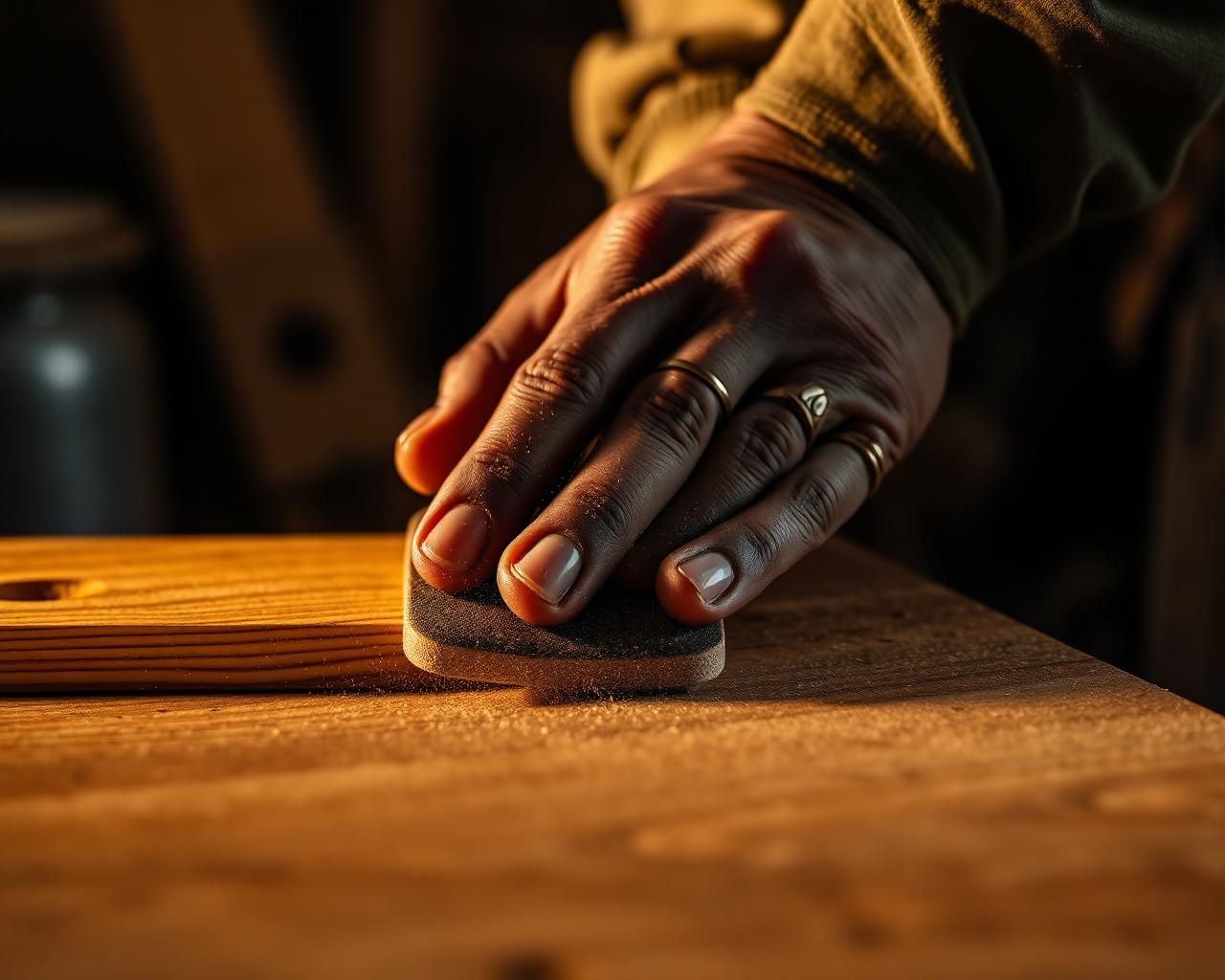
Hand-finished
Every grain inspected, sanded and sealed by a master craftsman.
Every restoration removes a little timber. We plan the lightest sequence that still gets the surface sound.
Grit ground into a surface destroys abrasives and drives dirt deeper. Cleaning always comes first.
Wobble, split rails and stretched joints are corrected before finishing, not hidden underneath it.
Skipping grades leaves scratch patterns that only appear once oil goes on, when it is too late to fix cheaply.
A shaded courtyard set and a west-facing terrace set get different specifications, and we explain why.
Feet, pads and covering advice, plus a realistic recoat interval for your specific exposure.
A finish is a sacrificial layer. Its job is to be degraded by UV and water instead of the wood, which means a finish that shows wear is working exactly as intended.
What it cannot do is stop movement. Teak expands and contracts with humidity regardless of what is on it, so no product prevents seasonal checking — the best ones simply slow the moisture exchange enough to reduce it.
It also cannot fix mechanical problems. Loose joints, corroded fixings and split slats need bench work; coating over them buys one comfortable season and costs more later.
Most avoidable damage we are called out to fix came from well-intentioned care rather than neglect.
Carves out soft grain and leaves a furrowed texture that sanding then has to chase flat.
They lighten staining but break down fibre and lift protective finishes unevenly.
Plastic traps condensation against the wood and often causes more harm than the weather it blocks.
Fragments left in the grain rust and produce permanent black spotting within weeks.
Refinishing a sound surface is straightforward. Recovering an eroded one is a different job at a different price.
Grey, blotchy, sticky and rough are four different problems. Treating them the same way is why finishes fail early.
A beautiful finish over a loose frame lasts one season. Structure is corrected before anything decorative happens.
We finish Bel Air teak with UV-stable, museum-grade oils built to hold color through long ridge-top sun exposure and cool canyon evenings.
We leave every Bel Air client a realistic maintenance interval for their exposure, not a generic annual reminder.
Bel Air's winding roads — Stone Canyon, Bellagio, Copa de Oro — climb through steep, heavily landscaped lots where privacy hedges and mature oaks create pockets of deep shade right next to areas of intense reflected sun off stucco walls and glass. Teak furniture on these properties often ages unevenly within the same patio depending on exactly where it sits relative to the tree line.
Because most Bel Air estates are set well back from the street behind gates and long driveways, our restoration visits here involve more coordination than a typical residential job — arranging gate codes, confirming access with staff, and often working around the estate's own landscaping or pool maintenance schedules.
The canyon terrain also means many outdoor living spaces are built on multiple terraced levels, with teak furniture spread across an upper dining terrace, a mid-level lounge area, and a pool deck lower down the slope, each catching different amounts of sun as the day moves.
Santa Ana wind events funnel through the canyons here with real force, and we've seen dry seasonal winds pull moisture out of exposed teak far faster than the calmer air along the coast, particularly on upper terraces with less wind protection from surrounding hedges.
Many of the homes we service in Bel Air feature custom-built teak elements — shower surrounds, spa decking, outdoor shower enclosures — installed by the original builder, which require a different repair approach than freestanding furniture sets.
We coordinate gate access and scheduling with estate staff throughout Bel Air, including properties along Stone Canyon Road and Bellagio Road.
We work throughout the communities surrounding Bel Air, often on the same trip.
The decision is structural first and financial second. Appearance should not drive it at all.
Read guideSilvering is a UV reaction at the surface of the wood. It is not rot, and it is not permanent.
Read guideNear the ocean, three separate forces act on outdoor wood at once. Understanding which one is doing the damage changes how you maintain it.
Read guideOn-site estimates are free across the region, usually within a couple of days of your call.
Tell us what you have, how it is used and roughly how long since it was last finished. That is enough for a realistic range.