Rancho Palos Verdes Teak Restoration for Bluff and Coastal Estates
Restoring teak patio furniture, decking, and loungers for homes along the Palos Verdes bluffs, Portuguese Bend, and the Peninsula's coastal terraces.
Restored teak across Rancho Palos Verdes' finest estates.
Sets, loungers, tables and built-ins finished on the client's own terrace. Tap to open any image full size.
Round Teak Dining Set
Newport Beach, CA
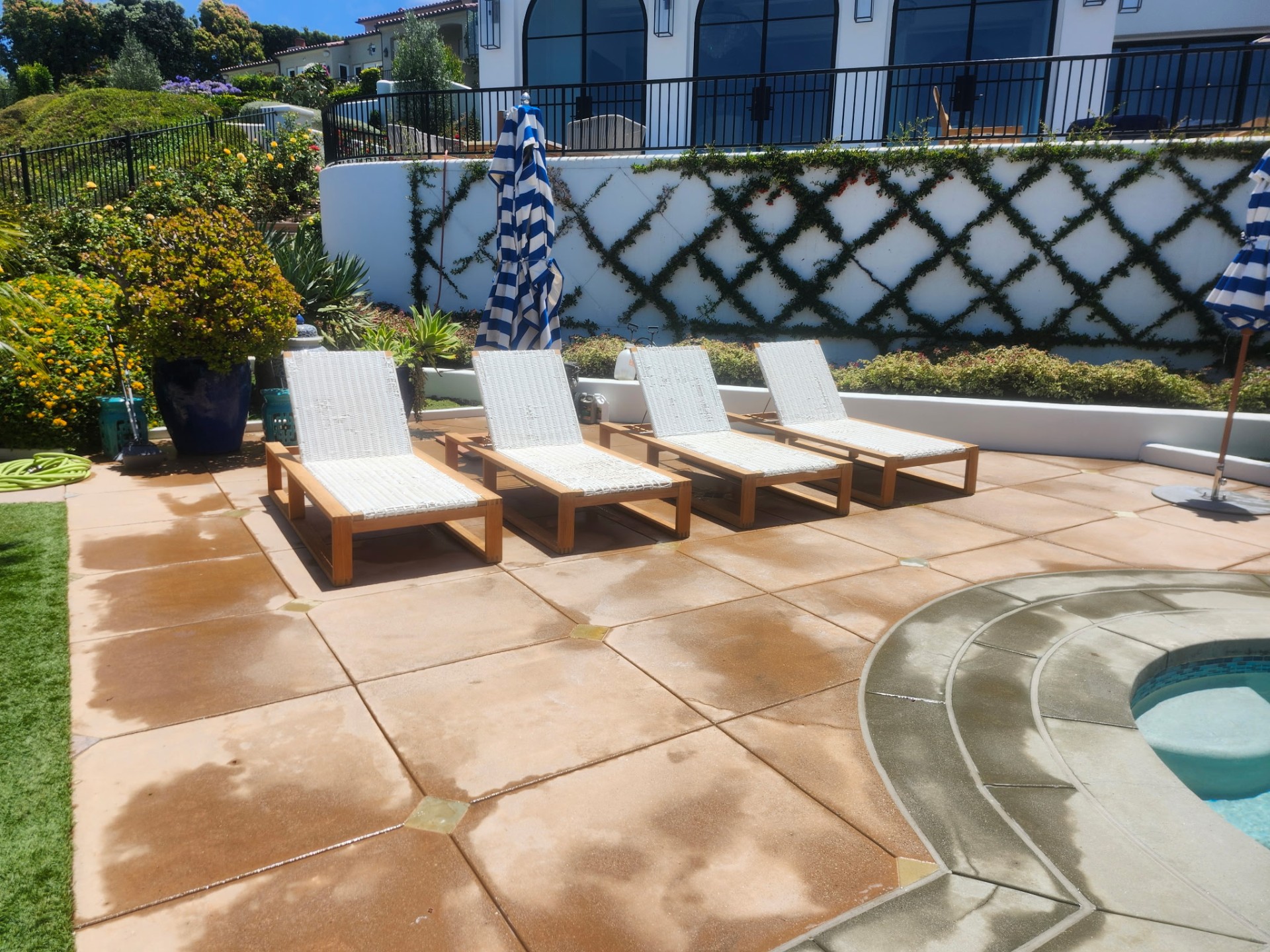
Chaise Loungers by the Spa
Newport Beach, CA
Additional restorations nearby
Teak Care Along the Palos Verdes Peninsula's Bluffs
Rancho Palos Verdes sits on some of the most dramatic bluff-top terrain in Southern California, with homes along Palos Verdes Drive South looking straight down onto the Pacific and Catalina beyond. Teak furniture on these open bluff terraces takes some of the most sustained, unobstructed wind and salt exposure we see anywhere in the region, well beyond what a typical beachfront city experiences.
The Peninsula's famous landslide-prone terrain around Portuguese Bend also means many properties have unusual outdoor layouts — split-level decks, retaining walls, and terraced patios built to work with shifting or sloped ground — which changes how we approach access and where teak furniture tends to be placed relative to wind exposure.
Inland toward Rolling Hills Estates and the golf course communities near Trump National, teak furniture experiences less direct salt spray but still deals with strong coastal wind funneling up from the shoreline, along with fog that settles into the canyons overnight and burns off by midday.
Because so many Palos Verdes homes were built with expansive view decks in mind, we regularly restore large teak dining sets and multi-piece lounge groupings positioned to take in views of the ocean, the Point Vicente Lighthouse area, or the Trump National coastline, all of which see more constant exposure than furniture tucked against a home's sheltered side.
We work throughout the Peninsula's neighborhoods, from Miraleste to the gated communities near Ganado, tailoring restoration schedules to how much direct wind and salt each specific bluff or canyon lot receives.
We service properties throughout the Palos Verdes Peninsula, including bluff-top homes along Palos Verdes Drive South and the terraced lots of Portuguese Bend.
Neighborhoods we regularly service in Rancho Palos Verdes
- Portuguese Bend
- Miraleste
- Rolling Hills Riviera
- Seaview
- Mediterrania
- Del Cerro
Wind, grit and coastal abrasion
Onshore wind carries fine sand and grit inland, and in exposed parts of Rancho Palos Verdes that grit lands on every horizontal surface daily. Left there, it acts like a slow abrasive under anything that moves across it — cushions, trays, feet, cloths.
Abrasion damage looks different from UV damage. It shows as localised dulling and fine scratching on the flattest surfaces, rather than the uniform silvering that sun produces. Owners often read it as a product failure when it is simply wear.
A plain water rinse before wiping is the whole solution. Wiping dry grit across a finished surface is the most common way a good restoration is prematurely worn down.
The teak we are asked about most in Rancho Palos Verdes
Every item behaves differently under the same sun. Tabletops take heat and spills, loungers take body oils, and slatted backs simply take time. Here is how each is handled.
Tabletops
The hardest-worked surface you own. Hot dishes, sunscreen and standing water mean these usually need the deepest sanding of any piece.
Slatted seating
Dozens of edges and gaps. Machines cannot reach most of it, so the honest measure of a restoration is what the slat sides look like.
Folding and reclining frames
Hardware is removed, the mechanism cleaned and lubricated, and the wood finished with the piece open.
Steamer and deck chairs
Classic marine forms with fine sections. Aggressive prep thins them, so these get hand work almost throughout.
Planters and screens
Constantly damp on one face. They need drainage checked as much as they need refinishing.
Umbrella poles and bases
Frequently forgotten, always in full sun, and the fastest way to make a restored set look unfinished.
Hand-finished
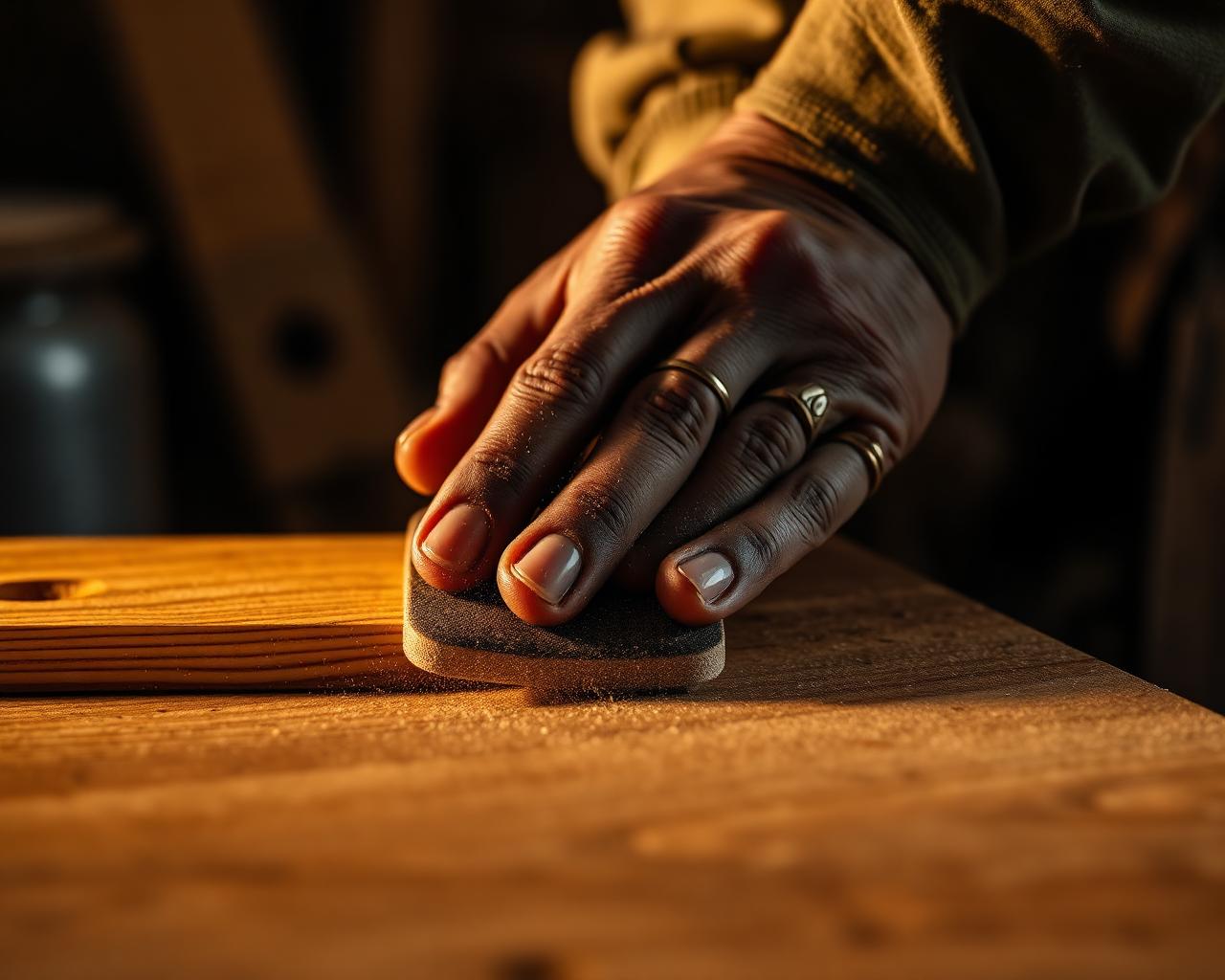
Every grain inspected, sanded and sealed by a master craftsman.
From first call to finished patio.
- 01
The call
A few photos and a description usually tell us the likely scope and rough range before we ever visit.
- 02
Free estimate visit
Thirty minutes on site. Piece count, condition grade, finish options and a fixed written price.
- 03
Disassembly where needed
Slatted loungers and folding chairs are opened up so the hidden faces get the same treatment as the visible ones.
- 04
Clean, neutralise, dry
The wood has to be genuinely dry before finish goes on. Oil over trapped moisture clouds and lifts.
- 05
Build the protection
Thin coats, wiped back, repeated. Depth comes from the number of coats, never from the thickness of one.
- 06
Handover
Reassembly, a final wipe down, and a walkthrough of what to watch over the next twelve months.
Protecting teak when it is not in use
Covering teak badly is worse than not covering it. Anything that seals moisture in creates the warm, damp, dark conditions mildew needs, and pieces come out of winter storage in worse condition than they went in.
If you cover, use breathable fabric, keep it off the surface with a frame or spacer, and lift furniture clear of standing water on the hardscape underneath.
For pieces that genuinely go away for the season, a clean and a dry space with air movement beats any product. Teak stored dry and unfinished is stable indefinitely.
Proudly serving Rancho Palos Verdes & the Peninsula.
On-site teak restoration, refinishing and outdoor furniture restoration throughout Rancho Palos Verdes and every neighboring South Bay community.
- Rancho Palos Verdes
- Newport Beach
- Corona del Mar
- Newport Coast
- Laguna Beach
- Costa Mesa
- Huntington Beach
- Irvine
- Tustin
- Orange
- Villa Park
- Yorba Linda
- Aliso Viejo
- Lake Forest
Teak restoration in Rancho Palos Verdes — answers to the questions we hear most.
Teak restoration near Rancho Palos Verdes
If you are just outside Rancho Palos Verdes, these are the nearby areas we cover with the same crew and schedule.
More ways we serve Rancho Palos Verdes
From our restoration library
Teak Oil vs. Teak Sealer
Oils look richer and want more attention. Sealers hold longer and read more uniform. The right answer depends on exposure and on how often you want to think about it.
Read guideWhen Does an Ipe Deck Need Refinishing?
Colour loss alone is not a reason to refinish. These are the signals that are.
Read guideIpe Deck Maintenance Guide
Ipe is dense enough to survive almost anything. Keeping it brown rather than silver is the part that takes a routine.
Read guideSee what your Rancho Palos Verdes furniture can look like again
Tell us what you have and how it is used. We will tell you what it needs and what it will cost.
Tell us about your Rancho Palos Verdes teak project.
Share a few details and we will respond within one business day with next steps and a tailored quote.