Lake Forest Teak Furniture Restoration for Planned Communities
Restoring teak patio sets and loungers for Lake Forest's master-planned neighborhoods, from Foothill Ranch to the Lake Forest II lakes.
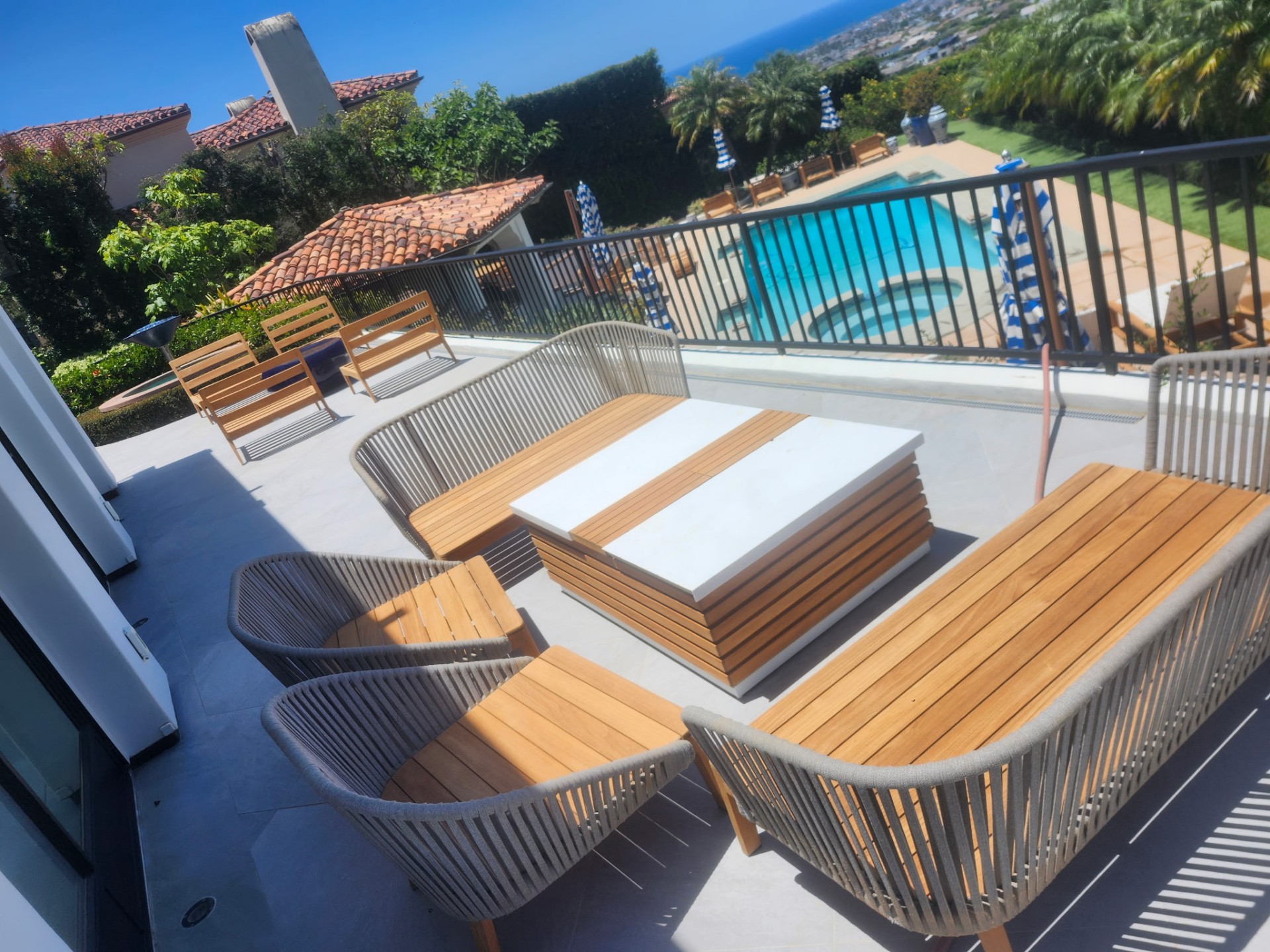
Restored teak across Lake Forest's finest properties.
These are all restorations, not replacements. Every set in these photographs arrived grey.
Veranda Lounge Suite
Newport Coast, CA
Infinity-Edge Fire Lounge
Laguna Beach, CA
More finished work
Teak Care Across Lake Forest's Planned Neighborhoods
Lake Forest is largely made up of master-planned communities built from the 1970s onward, and that history means a lot of the outdoor teak furniture we see is on patios governed by fairly consistent HOA architectural standards, particularly around the private lakes in the Lake Forest II area.
Homes near El Toro Road and the community's namesake lakes get warm, still inland air for much of the year, and without much ocean breeze to move air across a patio, we see teak furniture there develop a slower but more even weathering pattern than coastal cities, provided it isn't shaded too heavily.
Foothill Ranch, on the higher ground toward the eastern part of the city, sees more direct exposure to inland heat and Santa Ana winds funneling down from the surrounding hills, and teak dining sets there tend to dry out and need oiling more often than furniture closer to the lakes.
Because so many Lake Forest neighborhoods have private community amenities — resident-only lake access, pools, and clubhouses — homeowners often have secondary teak furniture near these shared spaces in addition to their backyard sets, and we occasionally get called to service both.
From the older Lake Forest II tracts to newer development near Portola Hills, we've found the biggest factor in how a piece has aged is simply how much direct afternoon sun that specific patio catches, more than the neighborhood's age or HOA style.
We serve homeowners throughout Lake Forest, including Lake Forest II, Foothill Ranch, and Portola Hills, and are familiar with common HOA patio layouts in the area.
Neighborhoods we regularly service in Lake Forest
- The Woods
- Lake Forest II
- Baker Ranch
- Portola Hills
- Foothill Ranch
Shade, trees and what falls on the wood
Mature inland gardens shelter furniture from UV, which helps, but they introduce their own problems. Sap, pollen, berry drop and bird staining all sit on Lake Forest teak for weeks between uses.
Tannin-rich leaf litter is the usual culprit behind the dark blotches people mistake for rot. It stains readily on bare wood and barely at all on a protected surface, which is a good argument for keeping the finish current under trees.
Shaded pieces also dry slowly, so the mildew that inland properties otherwise avoid tends to appear precisely where the planting is densest.
What teak restoration changes about a Lake Forest patio
People book restoration for colour and then notice the practical differences. This is what actually changes once the protection is back on the wood.
Water behaves again
A protected surface sheds rain and irrigation instead of drinking it, which is what stops the staining cycle.
Nothing rubs off
Oxidised teak leaves grey residue on clothing and cushion covers. That stops the day the surface is sealed.
Splinters go
Raised grain from wet-dry cycling is a safety issue on seating and armrests more than a cosmetic one.
Spills become recoverable
Wine, sunscreen and barbecue grease sit on a finished surface long enough to be wiped rather than absorbed.
Cushions stay clean
Fabric sitting on bare, damp teak picks up tannin marks that are far harder to remove than they look.
The set matches
Mixed-age Lake Forest sets are colour-balanced so newer replacements stop standing out from the originals.
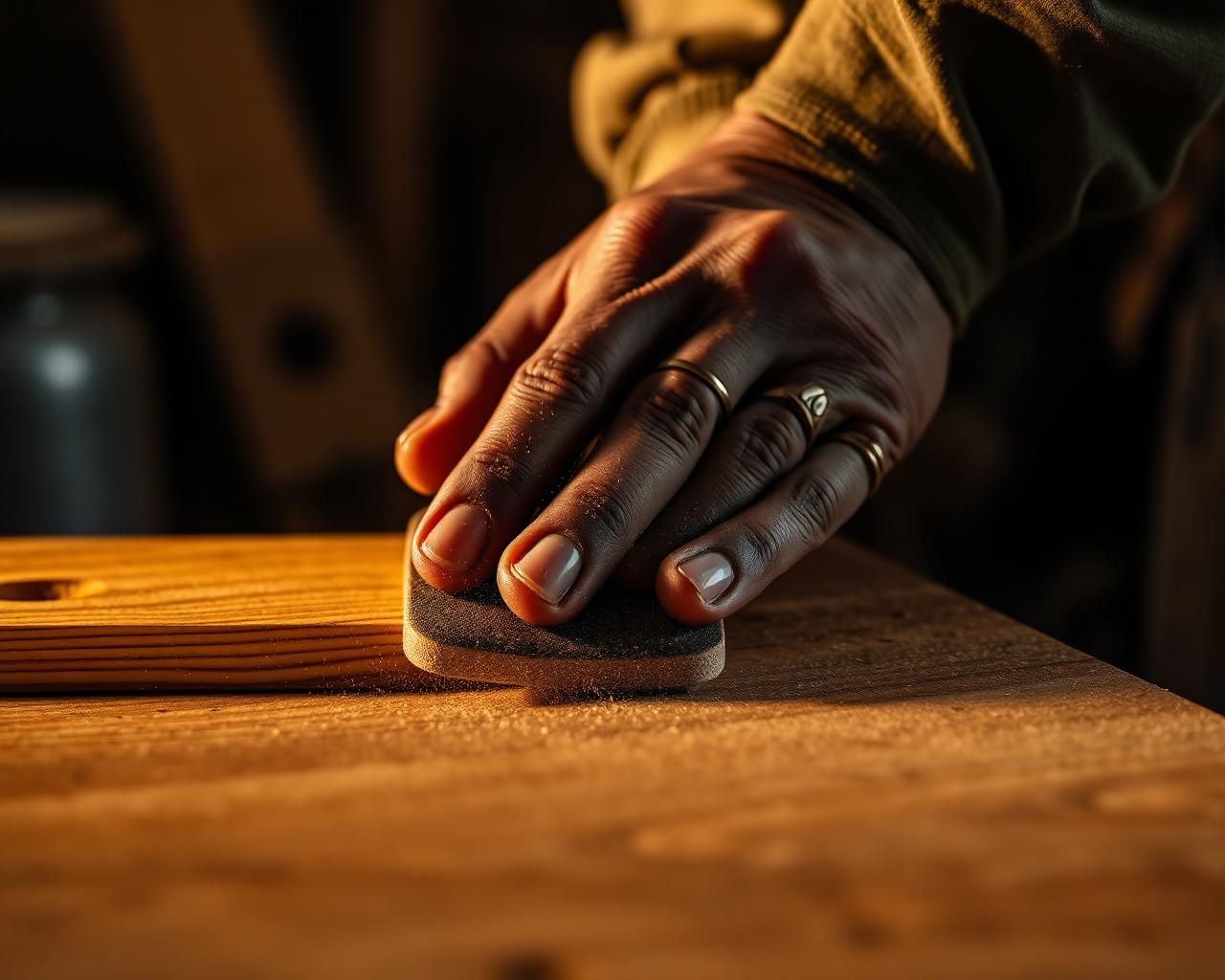
Hand-finished
Every grain inspected, sanded and sealed by a master craftsman.
Why preparation decides the finish.
- 01
Diagnose the surface
Grey, blotchy and sticky are three different failures with three different fixes. We identify which one you have first.
- 02
Kill the biology
Mildew and algae in shaded joints are living, not cosmetic. They are treated before abrasives touch the wood.
- 03
Remove, do not bleach
Staining is lifted with the correct chemistry rather than chlorine, which breaks down fibre and lightens unevenly.
- 04
Sand along the grain
Cross-grain scratches show through any oil finish. Every pass follows the grain, including the awkward edges.
- 05
Test before you coat
A sample area confirms tone and absorption on your actual wood before the whole set is committed to a product.
- 06
Record the specification
Product, grit sequence and coat count are logged so the next maintenance visit matches instead of fighting it.
A year of teak care, month by month
Tying maintenance to the season rather than a date is what keeps a restored set permanently in easy condition.
Late winter
Wash off the accumulated damp-season grime and check for any mildew that established in the shade.
Spring
The best window for a maintenance coat: dry surfaces, moderate temperatures, and the whole season ahead of it.
Summer
Rinse more often, keep sunscreen and food oils off bare edges, and reposition anything sitting in constant sun.
Autumn
Clear leaf litter promptly — tannin staining from wet leaves is the most common autumn damage we see.
Proudly serving Lake Forest & Orange County.
On-site teak restoration, refinishing and outdoor furniture restoration throughout Lake Forest and every neighboring Orange County community.
- Lake Forest
- Newport Beach
- Corona del Mar
- Newport Coast
- Laguna Beach
- Costa Mesa
- Huntington Beach
- Irvine
- Tustin
- Orange
- Villa Park
- Yorba Linda
- Aliso Viejo
- Ladera Ranch
Teak restoration in Lake Forest — answers to the questions we hear most.
Teak restoration near Lake Forest
Teak restoration is available across the neighbouring coastline and inland communities near Lake Forest.
More ways we serve Lake Forest
Guides that answer the common questions
How UV Exposure Damages Outdoor Wood
Sun does not just fade colour. It breaks down the material that holds wood fibres together, and it degrades the finish protecting them.
Read guideIpe Deck Maintenance Guide
Ipe is dense enough to survive almost anything. Keeping it brown rather than silver is the part that takes a routine.
Read guideWhy Outdoor Teak Turns Gray
Silvering is a UV reaction at the surface of the wood. It is not rot, and it is not permanent.
Read guideFree on-site assessment in Lake Forest
Free assessment, written scope, no obligation — and a straight answer on whether the work is worth doing.
Tell us about your Lake Forest teak project.
Tell us what you have, how it is used and roughly how long since it was last finished. That is enough for a realistic range.