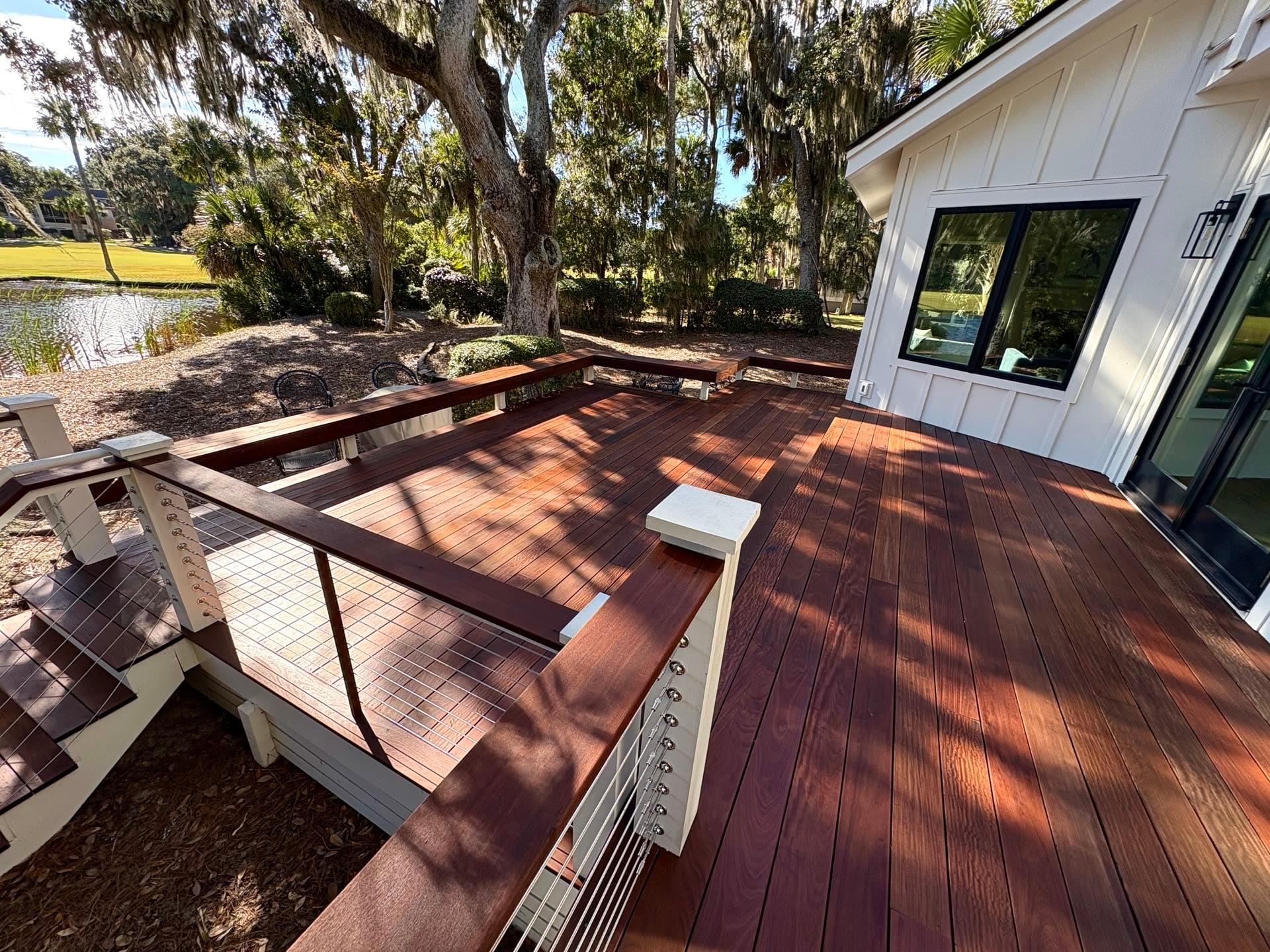
Newport Beach Ipe Deck Restoration & Refinishing
Whether your Ipe deck faces the harbor or the open ocean, Newport Beach's marine climate demands a restoration process built for salt exposure.
The premier Ipe refinishing crew in Newport Beach, Orange County.
Newport Beach spans everything from harborfront bayfront homes on Balboa Island to open-ocean properties along the peninsula, and each setting puts different stress on Ipe decking. Bayfront docks and patios deal with humidity and near-constant moisture off the harbor, while peninsula and Corona Highlands homes face direct salt spray and stronger UV off the open Pacific. My Teak Pro tailors its sanding and oiling process to whichever exposure your Newport Beach property faces.
Balboa Island and the peninsula are especially dense with wood decking used for both private patios and bayfront walkways, where boat traffic, tidal humidity, and heavy foot traffic combine to wear Ipe down faster than typical residential settings.
We're the same veteran-owned crew behind Newport Beach teak restoration and outdoor furniture refinishing. Browse recent projects in our project gallery or request a free estimate for your Newport Beach Ipe deck.
Serving Newport Beach landmarks & communities
- Balboa Peninsula
- Newport Harbor
- Fashion Island
- Back Bay
- Corona del Mar State Beach
- Balboa Island
- Lido Isle
- Newport Coast
- Big Canyon
- Newport Heights
- Bayshores
What is actually happening in the grey layer
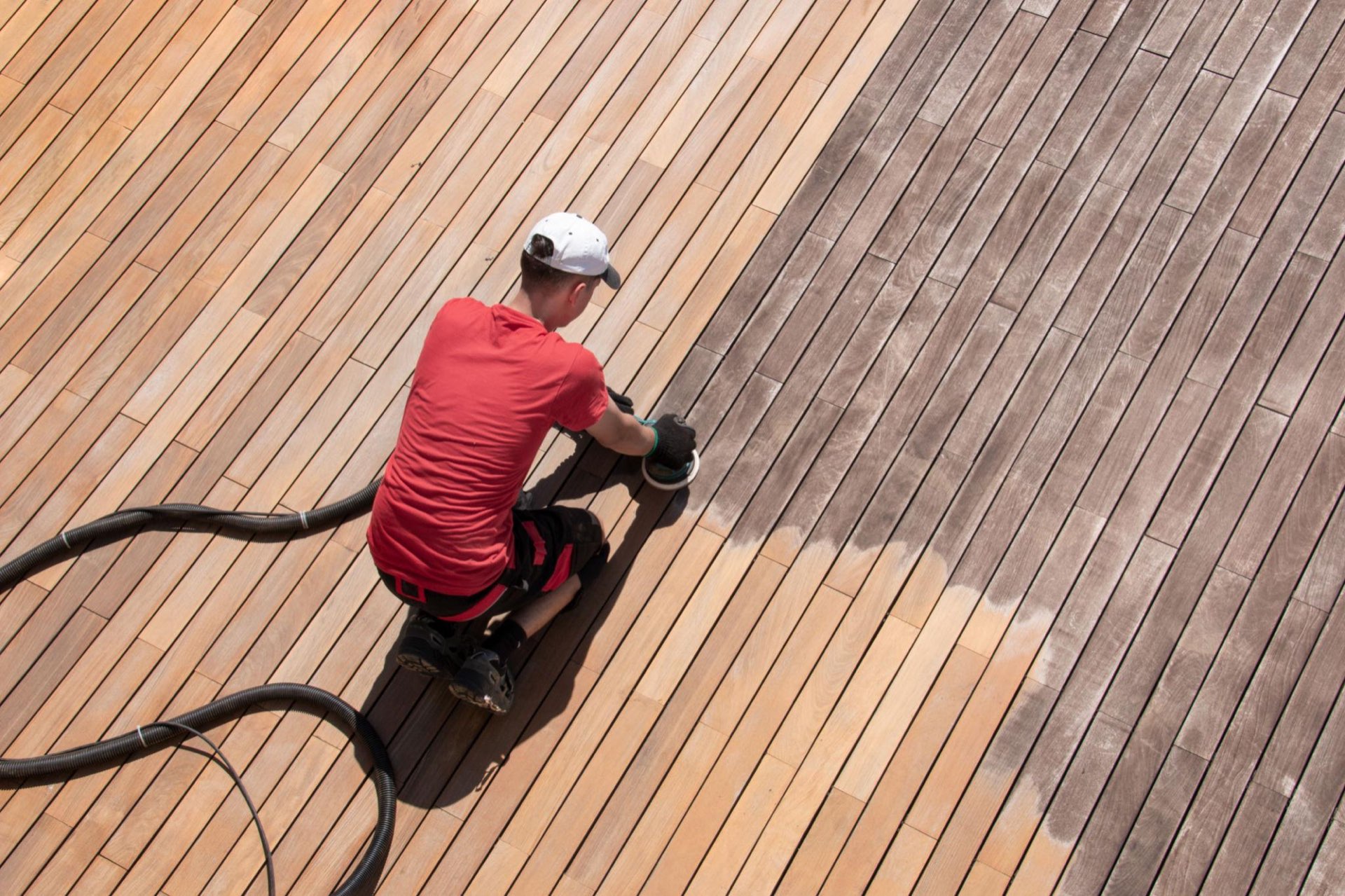
The silver-grey on a weathered Newport Beach deck is degraded lignin — the natural adhesive between wood fibres. UV breaks it down, rain and fog wash the residue away, and what is left is a loose, fibrous surface roughly a tenth of a millimetre deep.
Ipe's extractives, the same compounds that make it rot-resistant, also react with iron. That is the source of the dark halos around older screws and any steel that has sat on the deck. It is a chemical stain, not decay, and oxalic-based brightener lifts it.
Sanding through that layer is what reveals the chocolate and olive tones people forget the deck ever had. It is not a stain or a dye — the color was there the whole time under the oxidation.
What a Restored Ipe Deck Does for Newport Beach Properties
Given how visible outdoor living spaces are in Newport Beach — whether hosting on a bayfront patio or entertaining near the sand — a freshly restored Ipe deck keeps the property looking as polished as its surroundings. Restoration also protects the substantial investment many homeowners have made in premium hardscaping and outdoor kitchens built around the decking.
A deck you can walk barefoot on
Eroded early wood leaves a fibrous surface that catches skin. Abrading it flat is the single biggest comfort change.
Surface water that runs off
A saturated finish keeps Newport Beach rain and irrigation spray sitting on top of the boards instead of soaking into end grain.
Even color across every board
Brightening pulls the tannin and iron staining out so replacement boards and originals read as one deck.
A shorter next job
Once the surface is sound, staying ahead of it is a maintenance coat rather than a full restoration.
What a restoration week actually looks like.
Day zero — walkthrough
We measure the deck, photograph problem areas, test moisture in a few boards and agree the scope in writing before anyone starts.
Board triage and carpentry
Cupped, split or fastener-damaged boards get flipped, re-fixed or swapped first. Sanding a deck with loose boards only hides the issue.
Strip and neutralize
Old film finishes and mill glaze come off chemically where sanding alone would gouge the surface, then the wood is neutralized and rinsed.
Progressive abrasion
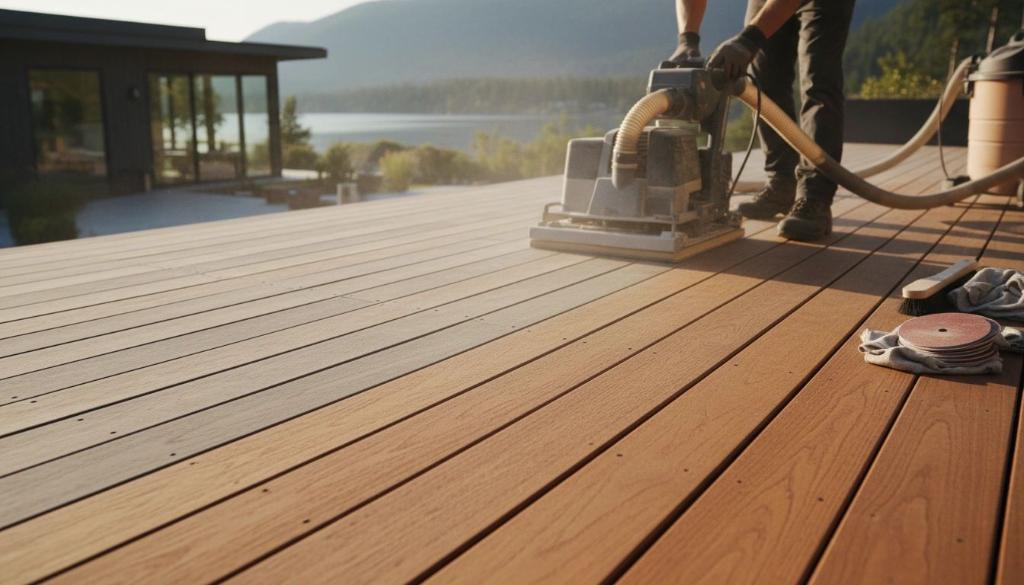
Coarse to fine in stages, with hand work along railings, stair noses and anywhere a machine cannot reach flat.
Saturation coats
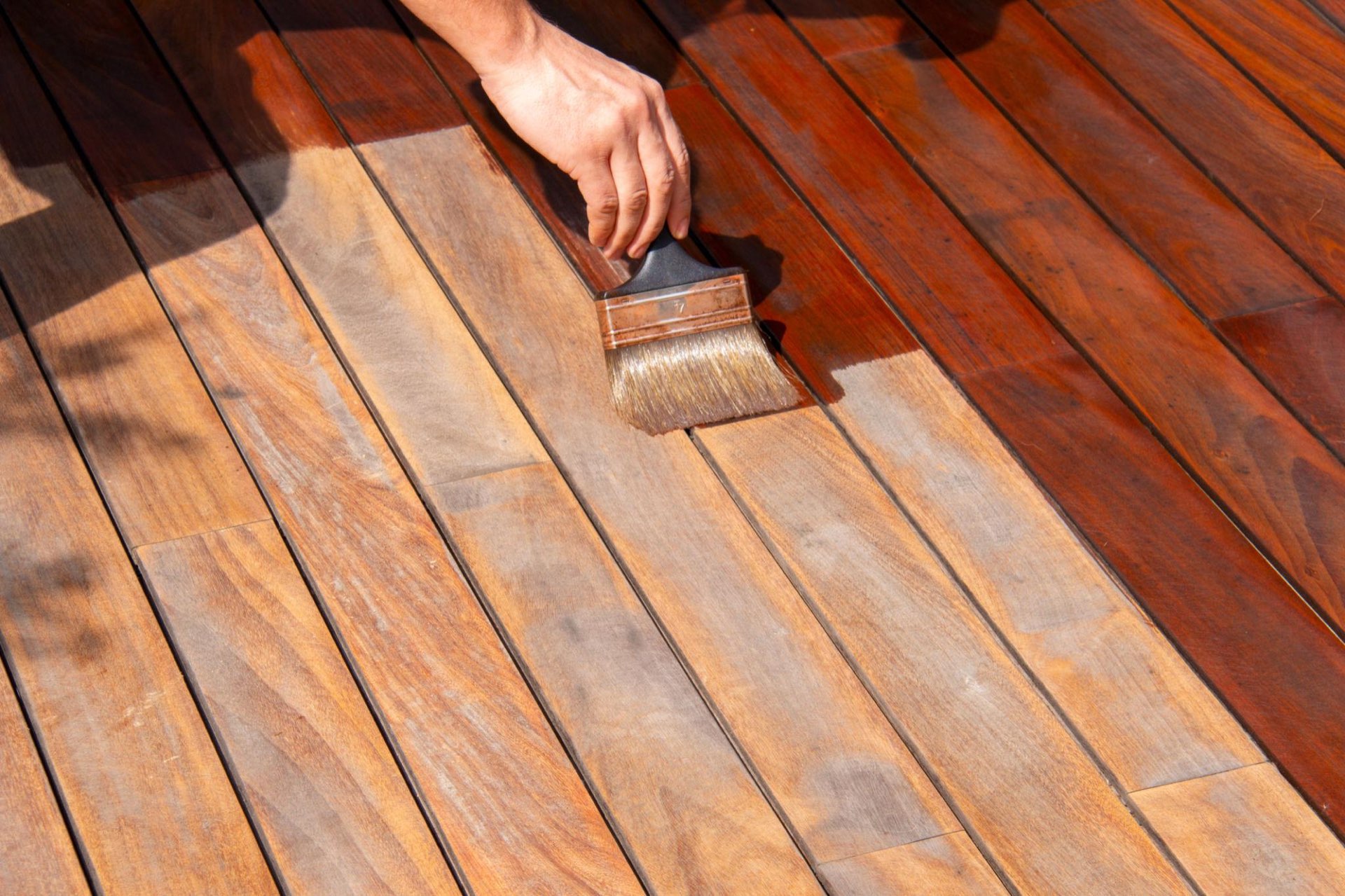
Oil goes on wet-on-wet until the boards stop drinking, then the excess is wiped back so nothing sits on the surface to go sticky.
Cure and handover
We stay off the deck through the cure window, return to buff any raised spots, and leave you a written care schedule.
What each finish costs you in upkeep
Richer colour always means a shorter interval. Natural-tone oils show the wood at its best and want refreshing soonest. Pigmented and UV-fortified versions hold longer but read slightly more uniform and less lively.
Leaving Ipe bare is the cheapest ongoing option and entirely valid, provided the surface has been sanded smooth so it silvers evenly rather than patchily and never splinters underfoot.
Beyond the deck boards.
Board replacement & repair
Sourcing, milling and swapping damaged Ipe so the repair disappears into the run instead of announcing itself.
Railing & stair refinishing
Handrails, cable rail posts and stair treads take the most contact and weather differently from the field boards.
Stain & tannin removal
Rust halos around fasteners, planter rings, barbecue grease and sunscreen shadow all come out with the right chemistry.
Pool & spa surrounds
Chlorine splash-out and constant wet traffic need a finish specified differently from a dry upper terrace.
Pre-sale refresh
A fast turnaround package for listings — clean, light sand and a single saturating coat before photography.
Rooftop & balcony decks
Access-limited work with hand tools and containment, common on multi-level and HOA properties.
The same boards, a few days apart.
Nothing here was replaced. Each of these decks is the original Ipe, cleaned, abraded flat and re-oiled in place. See more on our full project gallery.
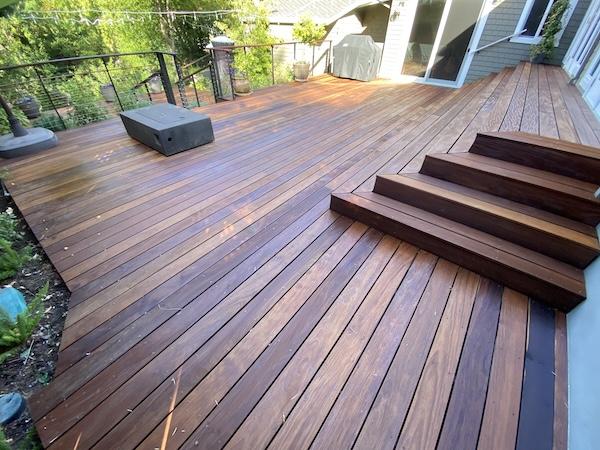
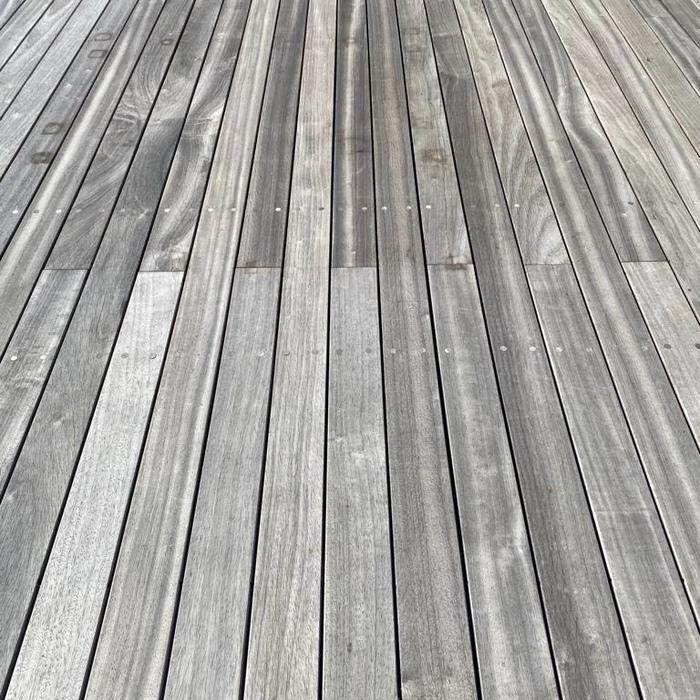
Ipe deck refinishing in Newport Beach.
Ipe deck refinishing near Newport Beach
Our crews run out to the neighbouring towns around Newport Beach on the same schedule, so a shared crew day often means a better slot for you.
Worth reading before you book
How Often Should Teak Furniture Be Refinished?
There is no universal interval. There is a simple test that answers it for your specific furniture in about ten seconds.
Read guideSanding vs. Stripping Exterior Wood
Both are preparation methods with different jobs. Choosing wrong either wastes wood or leaves contamination behind.
Read guideHow UV Exposure Damages Outdoor Wood
Sun does not just fade colour. It breaks down the material that holds wood fibres together, and it degrades the finish protecting them.
Read guideGet an honest read on your Newport Beach deck.
We will tell you whether it needs a recoat, a refinish or nothing at all yet. No charge for the visit.
Not sure what your Newport Beach deck needs?
Send a photo with your details. We can usually tell you whether it is a recoat or a full refinish before we visit.