Restoring Ipe Terraces and Railings on Newport Coast's Hillside Estates
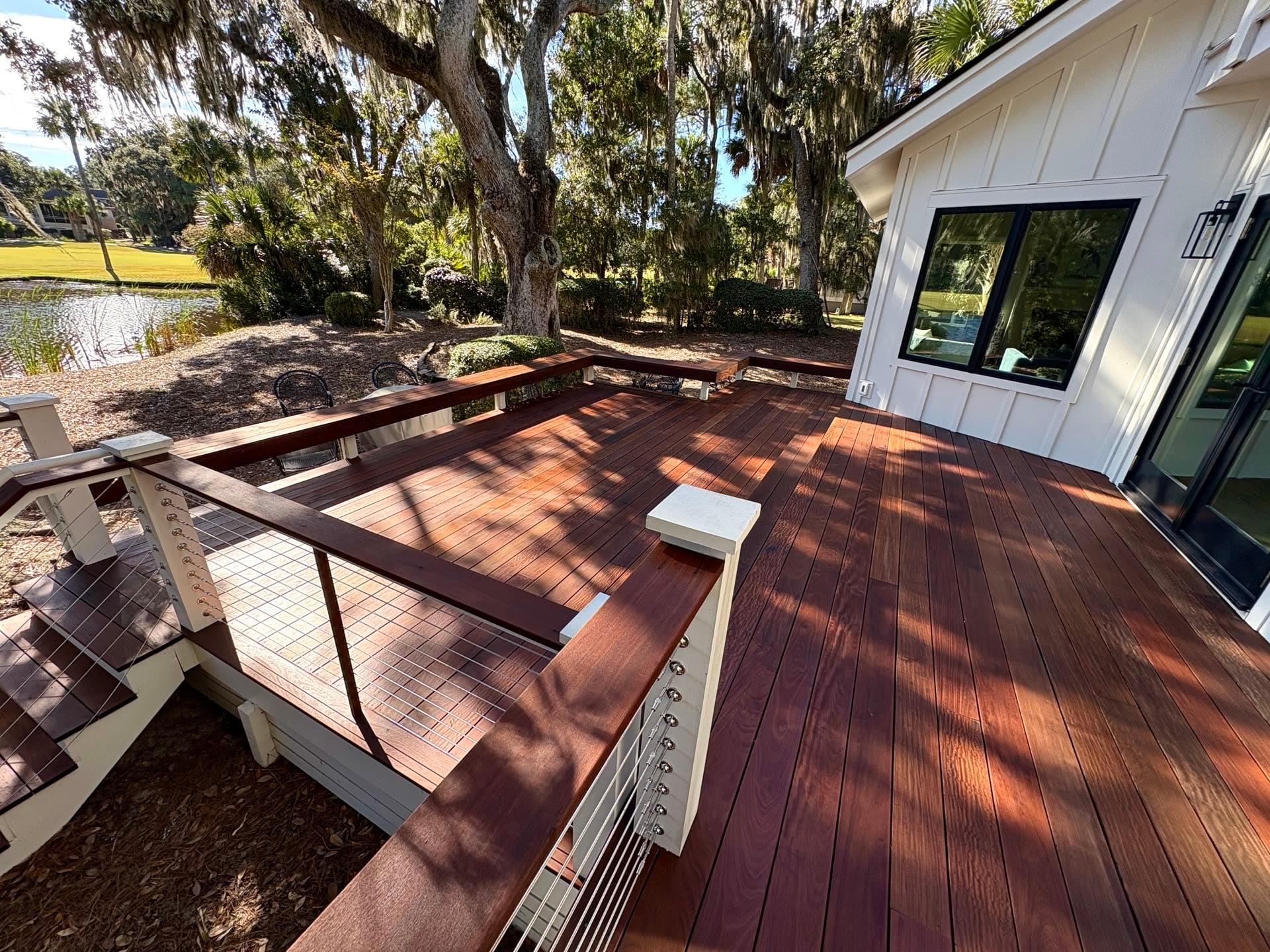
Perched high above Crystal Cove with unobstructed ocean views, Newport Coast's Ipe terraces face intense, unfiltered sun exposure that most inland decks never experience.
Why Ocean-View Exposure Ages Ipe Quickly on Newport Coast
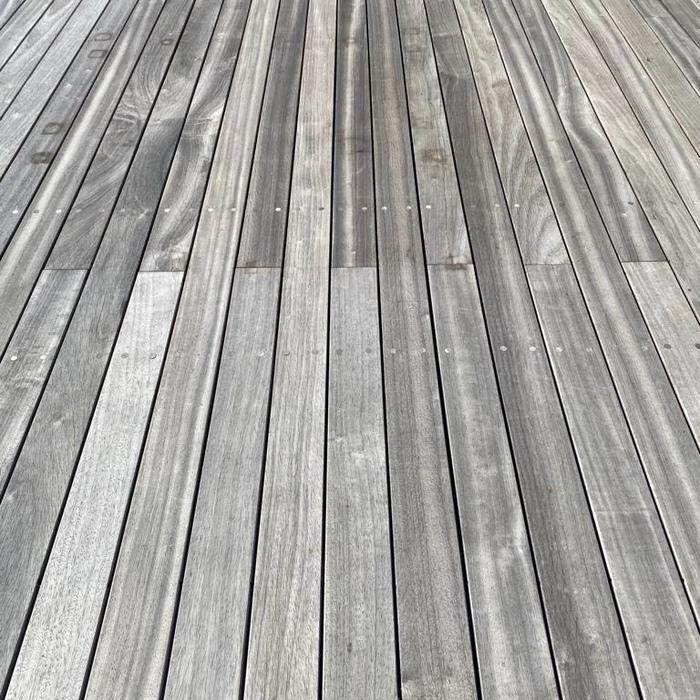
The same unobstructed sightlines that make Newport Coast terraces so desirable also mean the wood receives essentially uninterrupted UV exposure for most of the day, breaking down surface oils considerably faster than on a shaded or partially covered deck. Elevation adds wind intensity too, since hillside terraces sit well above the marine layer that would otherwise soften some of that sun exposure closer to sea level, and wind-driven salt still reaches these heights on clear days when visibility stretches out toward Catalina.
The premier Ipe refinishing crew in Newport Coast, Orange County.
Newport Coast's hillside estates, many built within gated communities like Crystal Cove, Pelican Hill, and Newport Ridge, are positioned specifically to capture ocean views — which also means their outdoor Ipe terraces and balconies sit in some of the most sun-exposed spots in coastal Orange County, with few trees or neighboring structures to interrupt afternoon light. That view-oriented siting is a design asset but a maintenance challenge: elevated decks and cantilevered terraces catch wind coming straight off the water, along with the UV load of a south- or west-facing slope with almost nothing blocking it from midmorning through sunset.
Many of the homes here were designed with Ipe specifically because of its reputation as a premium, long-lasting hardwood suited to high-end architecture, and owners in this price range typically expect their outdoor spaces to look as finished as their interiors. That expectation, combined with large expanses of decking on multi-level terraces, means a graying deck stands out more visually here than it might on a smaller backyard patio elsewhere in the county.
We're the same veteran-owned crew behind Newport Coast teak restoration and outdoor furniture refinishing. Browse recent projects in our project gallery or request a free estimate for your Newport Coast Ipe deck.
Serving Newport Coast landmarks & communities
- Crystal Cove State Park
- Pelican Hill Resort
- Newport Coast Drive
- Pacific Ridge
- Los Trancos
- Pelican Hill
- Pelican Crest
- Pelican Point
- Crystal Cove
- Newport Ridge
- Coastal Canyon
The problems that get worse if you wait
Greying can wait. These cannot, because the cost of fixing them climbs with every season.
Open checking
Hairline splits collect water and dirt and deepen. Sealed early they stay cosmetic.
Standing water
A low spot or blocked gap means water sits. That is where the substructure gets attacked, not the Ipe.
Proud or corroding fasteners
They snag, they stain and eventually they split the board they were meant to hold.
Cupping across the width
A ventilation problem underneath. Sanding it flat without fixing the cause just buys a year.
Ipe next to the other hardwoods we restore
Species behave differently under the same sun, and the method changes accordingly.
Ipe
Dense, tight-grained, takes finish sparingly. Prep-led work with careful grit sequencing.
Teak
Naturally oily and forgiving. Silvers gracefully and comes back with less effort than any other species.
Cumaru and garapa
Similar density to Ipe with more colour variation. Same method, more attention to blending tone.
Mahogany and sapele
Richer colour, less durable outdoors. These genuinely want a film-forming protective finish.
Cedar and redwood
Soft and easily over-sanded. Gentle abrasion only, and a very different product spec.
Six-step process, hand-finished on-site.
Inspection
On-site assessment of every board — condition, exposure, prior finish and any repairs needed.
Deep Cleaning
Professional cleaning removes mildew, salt residue, sunscreen, oils and years of environmental buildup.
Sanding
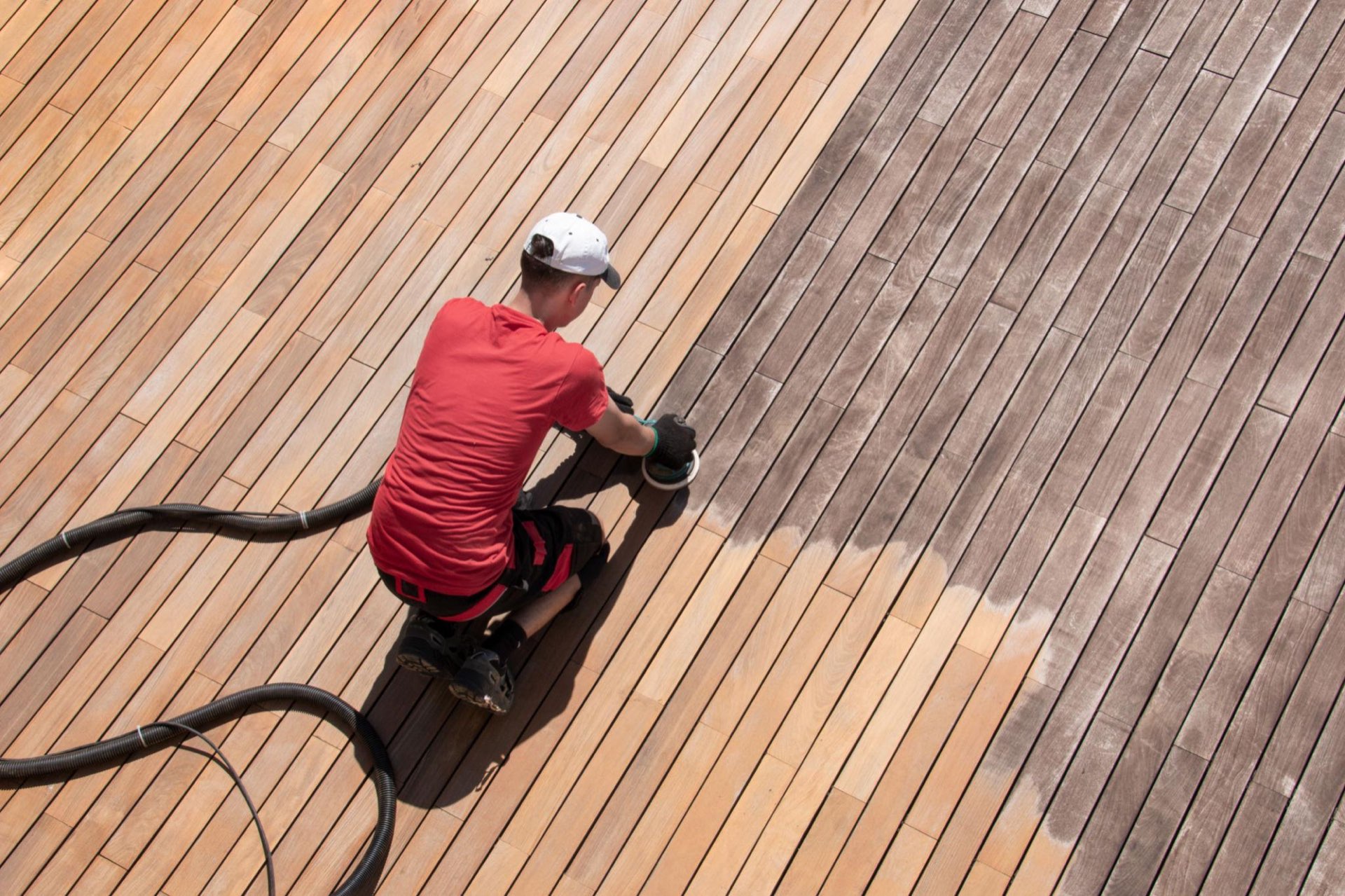
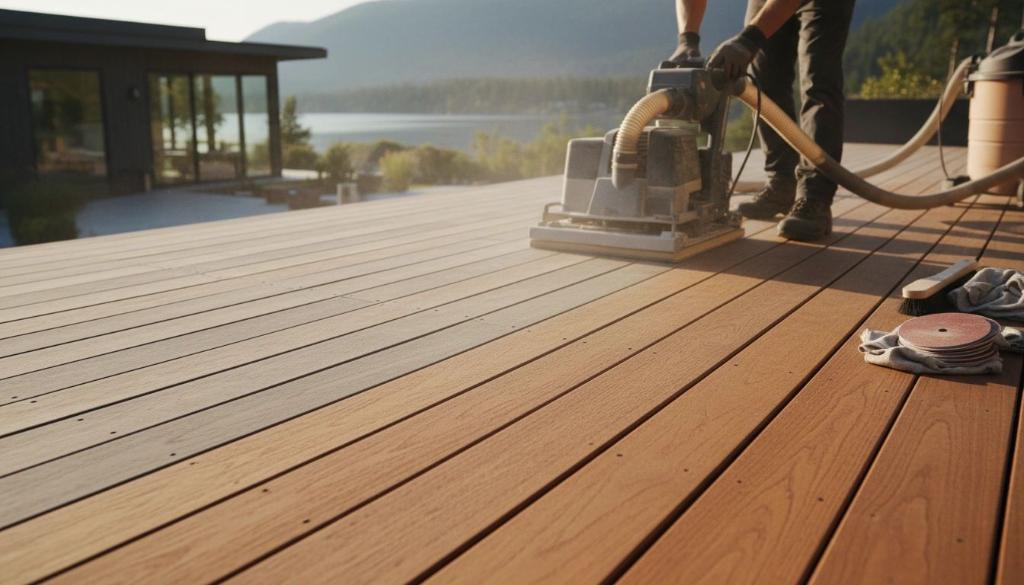
Multi-grit sanding down to fresh wood — the oxidized gray layer is removed, exposing rich color below.
Brightening
A wood brightener neutralizes tannins and evens the tone across every board for a uniform finish.
Premium Oil Finish
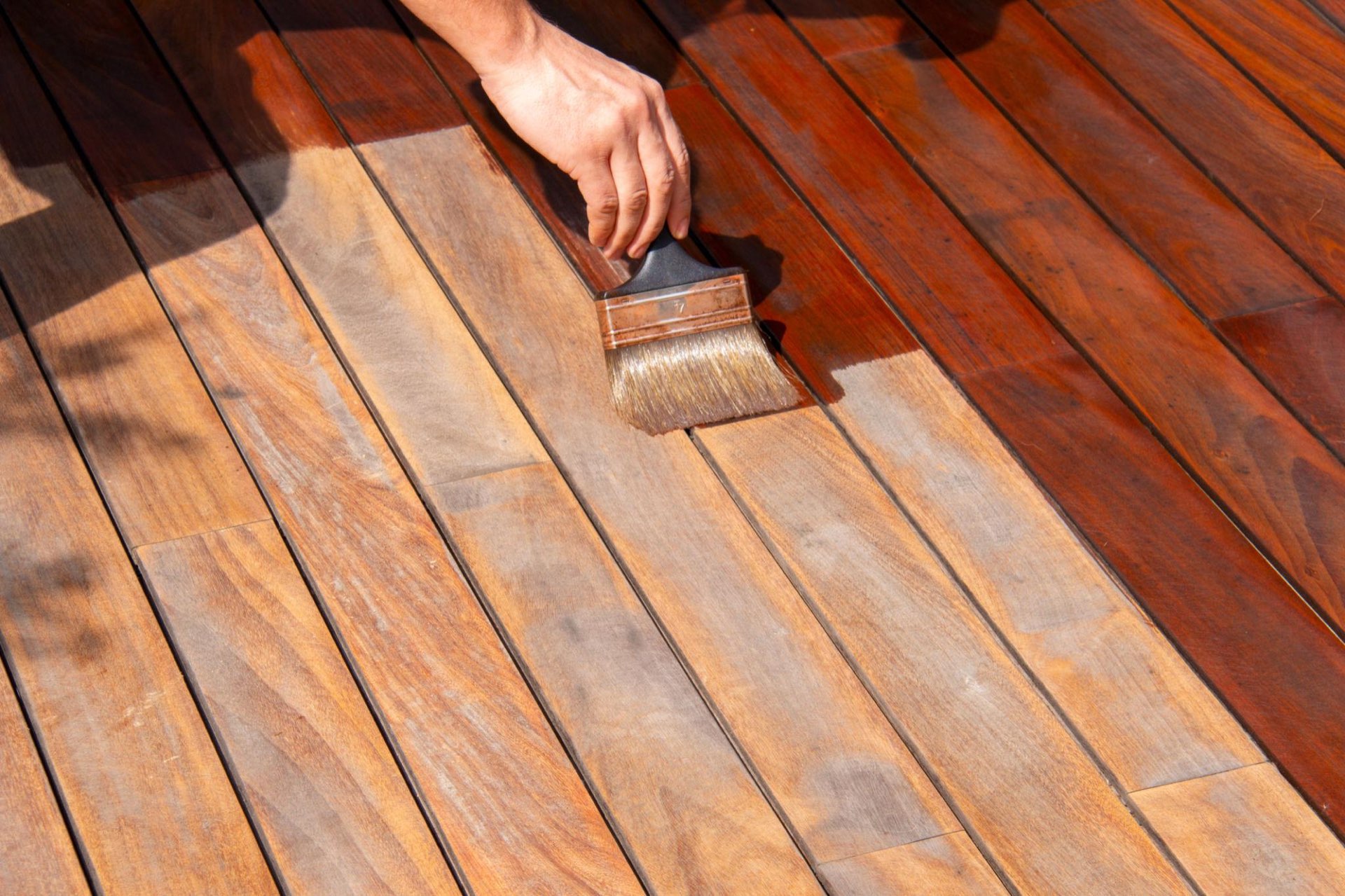
Marine-grade Ipe oil is hand-applied in multiple coats, penetrating deep to seal against sun and salt.
Final Inspection
Every square foot is inspected, edges detailed, and the site left cleaner than we found it.
The five-minute monthly deck check
Walk the deck once a month and look for five things. Anything you catch here is cheap to fix; anything you miss gets expensive.
Beading
Flick water at three spots: the sunniest board, a traffic lane and a sheltered corner. Note where it stops beading first.
Fasteners
Any screw head standing proud of the surface is a splinter and a stain waiting to happen.
Edges and end grain
Board ends drink water. They are always the first place a finish gives up.
Under things
Lift a planter and a lounger. Damp, dark patches mean the deck is not drying underneath.
Colour drift
Compare an exposed board with a sheltered one. The gap tells you how far the finish has moved.
Care Recommendations for Newport Coast's Elevated Ipe Terraces
Given the intensity of sun exposure on most Newport Coast lots, we typically recommend a shorter reoiling cycle here than we would for a similarly sized deck set back from the coastal bluffs.
Elevated terraces should also be checked periodically for wind-driven debris and salt buildup around railing bases and drainage points, since water that pools in these areas after a storm can accelerate localized graying and staining if left unaddressed.
For large multi-level decks, we often recommend restoring in sections that follow the sun exposure pattern of the property, prioritizing the most exposed west-facing terrace before working back toward more sheltered areas.
Ipe deck refinishing in Newport Coast.
Ipe deck refinishing near Newport Coast
We also provide professional Ipe deck refinishing throughout nearby Southern California communities.
Worth reading before you book
Teak Oil vs. Teak Sealer
Oils look richer and want more attention. Sealers hold longer and read more uniform. The right answer depends on exposure and on how often you want to think about it.
Read guideSanding vs. Stripping Exterior Wood
Both are preparation methods with different jobs. Choosing wrong either wastes wood or leaves contamination behind.
Read guideHow Often Should Teak Furniture Be Refinished?
There is no universal interval. There is a simple test that answers it for your specific furniture in about ten seconds.
Read guideSee what is under the grey on your Newport Coast deck.
We can sand a test patch during the estimate so you can see the color before committing to anything.
Get a written quote for your Newport Coast deck.
Square footage, condition notes and a fixed price — sent in writing, usually the day after we visit.