Ipe Deck Restoration for Rancho Bernardo Homes
Set inland from San Diego's coast, Rancho Bernardo's dry canyon heat pulls the life out of Ipe decking faster than most owners expect.
The premier Ipe refinishing crew in Rancho Bernardo, San Diego County.
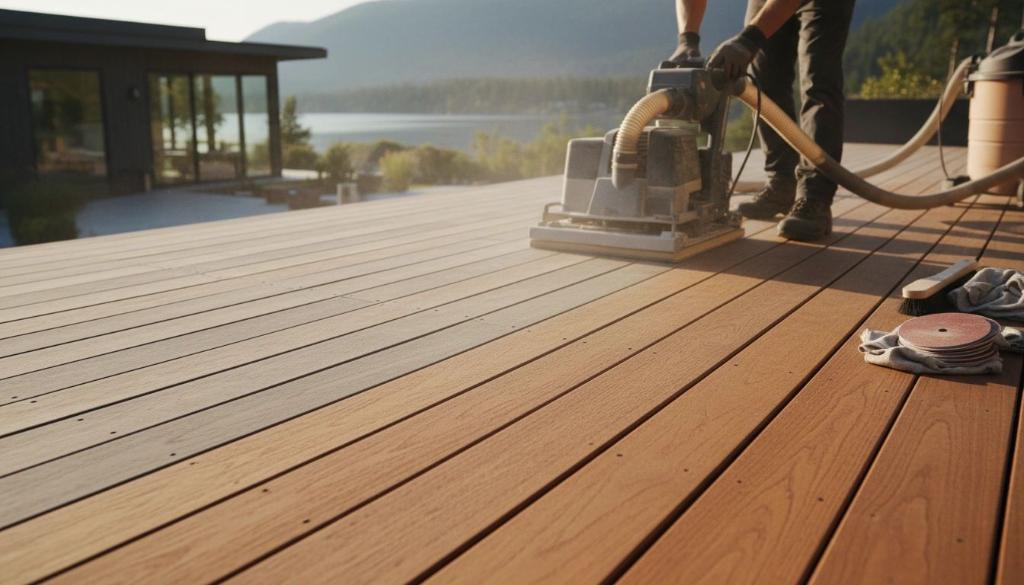
Rancho Bernardo's rolling terrain around Bernardo Heights and the golf communities near Stoneridge Country Club puts many backyard decks in direct, unshaded sun for most of the day. Without a coastal marine layer to soften the exposure, the dry inland heat here draws moisture out of Ipe boards steadily, leaving them brittle and pale gray well before the wood's structural life is anywhere near over. My Teak Pro's sand-and-oil process rehydrates that dried-out grain and restores the deep chocolate color Ipe is prized for.
Many Rancho Bernardo properties back up to open canyon space or golf course fairways, meaning decks often sit exposed to reflected heat and dry Santa Ana winds with little windbreak from neighboring structures.
We're the same veteran-owned crew behind Rancho Bernardo teak restoration and outdoor furniture refinishing. Browse recent projects in our project gallery or request a free estimate for your Rancho Bernardo Ipe deck.
Serving Rancho Bernardo landmarks & communities
- Rancho Bernardo Inn
- Lake Hodges
- Bernardo Winery
- Webb Park
- Rancho Bernardo Community Park
- The Trails
- Westwood
- Oaks North
- Bernardo Heights
- Seven Oaks
- High Country West
Why Inland Heat Dries Out Ipe in Rancho Bernardo
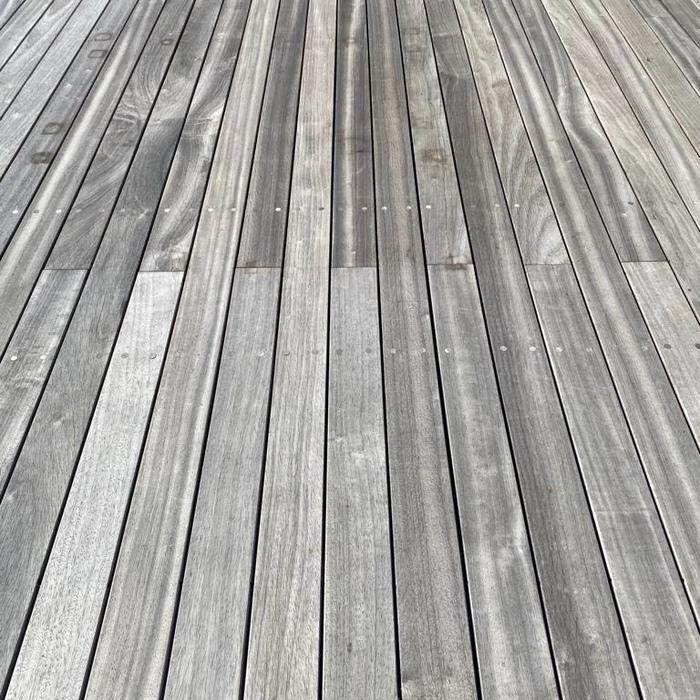
Rancho Bernardo regularly runs several degrees warmer and drier than coastal San Diego, and that consistent heat evaporates the natural oils in Ipe faster than intermittent sun exposure would elsewhere. Combined with occasional Santa Ana wind events that strip humidity from the air entirely, decks here can develop surface checking and a chalky gray finish within a year or two of installation.
The Payoff of Restoring Ipe in a Dry Climate
Re-oiling reintroduces the moisture Ipe needs to resist cracking under sustained dry heat, while sanding removes the UV-bleached surface layer that makes decks look older than they are. For homes backing onto canyons or fairways, a restored deck also holds up better against blowing dust and debris common in these open, exposed lots.
It reads as intentional
Silvered Ipe looks neglected next to modern glass and stone. A finished deck ties the whole elevation together.
It photographs
Listing and rental photography in Rancho Bernardo lives or dies on the outdoor space. A refinished deck changes the first frame.
It protects the substructure
Water that stops at the surface never reaches joists, hangers and fasteners underneath.
It is safer underfoot
Splintering, raised grain and lifted fasteners all get resolved as part of the same visit.
The Ipe surfaces we are asked about most
The craft is the same across all of them; access and detailing are what change the day.
Main deck field
Machine work, straightforward, and where most of the square footage sits.
Stairs and treads
Hand work, safety-critical, and the highest-wear element on any deck.
Fascia and skirting
Vertical, highly visible, and usually more weathered at the bottom than the top.
Rail caps and posts
Constant hand contact, so the finish choice here is about feel as much as looks.
Docks and gangways
Permanently damp and slip-critical. Product selection is driven by traction, not colour.
From gray boards to a finished deck.
Estimate visit
Free, on-site, usually thirty minutes. You get square footage, condition notes and a fixed written price — no surprises later.
Protect the site
Glass, stone, planting, pool coping and cable rail all get masked. Dust containment matters as much on a deck as it does indoors.
Wash and dwell
A dedicated hardwood cleaner is left to work rather than blasted off. Pressure washing shreds Ipe's soft early wood and we do not use it.
Sand flat and true
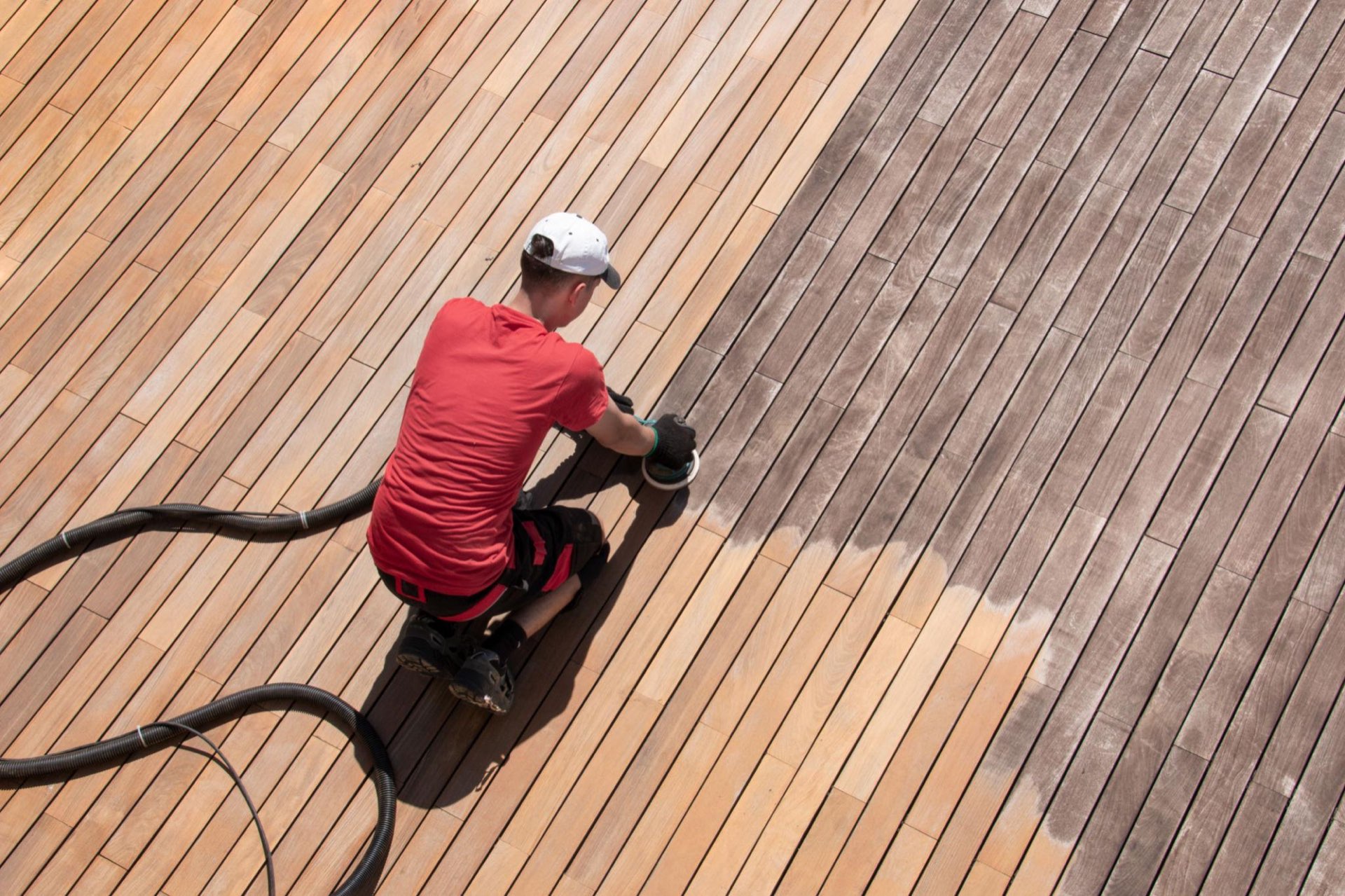
We chase out the fuzz, the checking and the traffic lanes until the surface is uniform under raking light.
Finish and detail
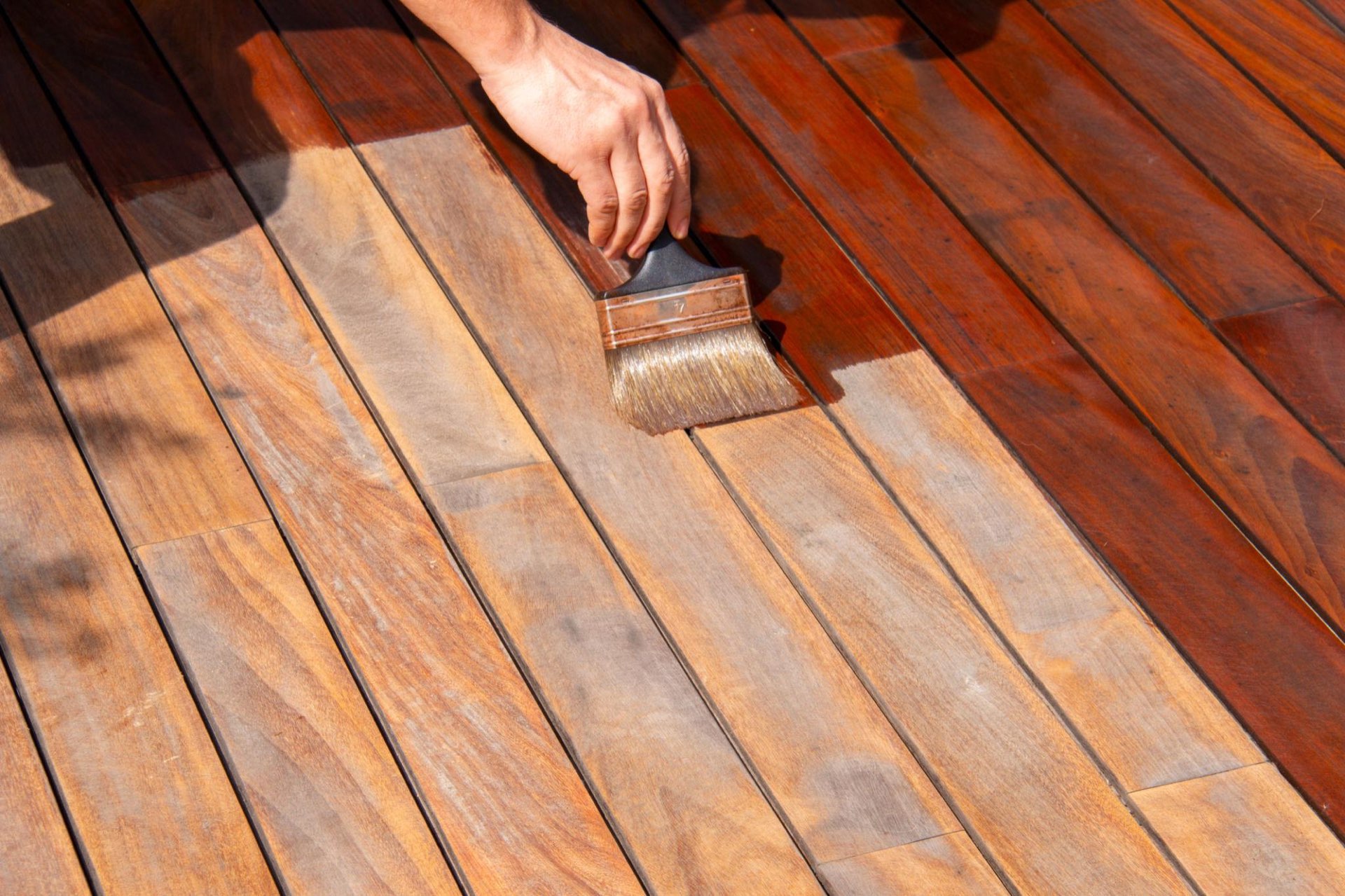
Oil on the field boards, hand-worked into fascia, stair risers and rail caps where the eye lands first.
Walk it with you
We hand the deck back in daylight, point out anything worth watching, and book the maintenance coat if you want one.
Maintaining Ipe Decks in Rancho Bernardo's Dry Heat
Because rainfall is rare here, dust and pollen tend to accumulate on deck surfaces rather than wash off, so periodic rinsing helps prevent grit from grinding into the wood grain underfoot.
Santa Ana wind events can rapidly dry out recently oiled Ipe, so we time re-oiling visits to avoid scheduling right before forecasted wind spikes when possible.
Decks near golf course boundaries should be checked for irrigation overspray, which can create uneven moisture patterns that lead to patchy fading over time.
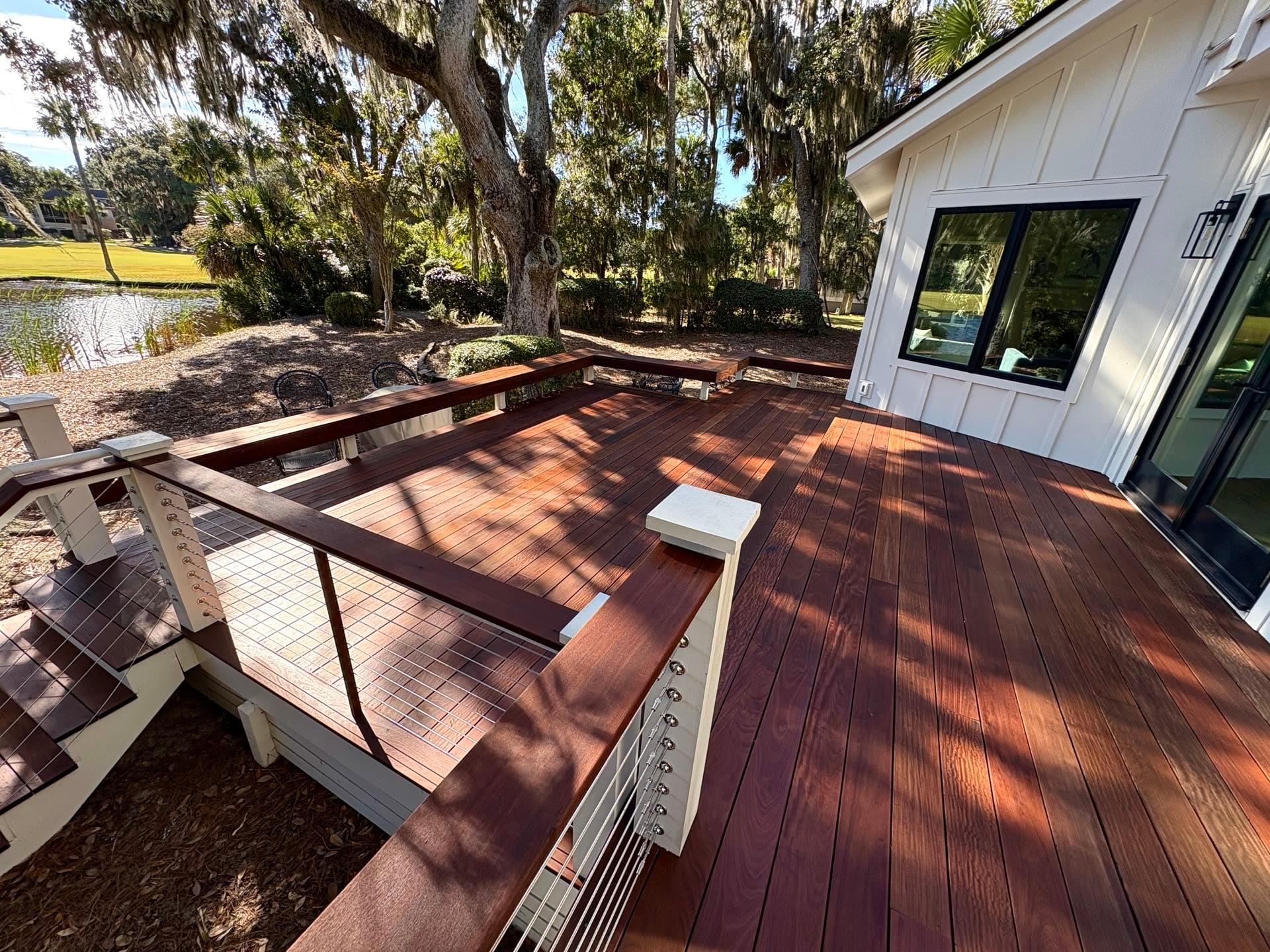
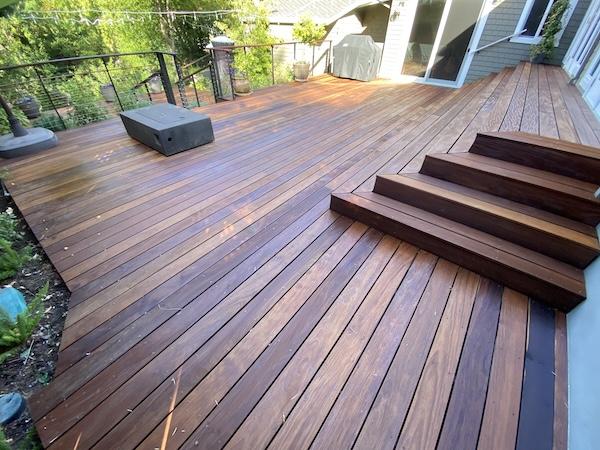
Decks we have brought back this season.
Coastal terraces, pool surrounds, roof decks and stairs — different exposures, the same preparation-first method. See more on our full project gallery.
The five-minute monthly deck check
Walk the deck once a month and look for five things. Anything you catch here is cheap to fix; anything you miss gets expensive.
Beading
Flick water at three spots: the sunniest board, a traffic lane and a sheltered corner. Note where it stops beading first.
Fasteners
Any screw head standing proud of the surface is a splinter and a stain waiting to happen.
Edges and end grain
Board ends drink water. They are always the first place a finish gives up.
Under things
Lift a planter and a lounger. Damp, dark patches mean the deck is not drying underneath.
Colour drift
Compare an exposed board with a sheltered one. The gap tells you how far the finish has moved.
Ipe deck refinishing in Rancho Bernardo.
Ipe deck refinishing near Rancho Bernardo
If you are comparing quotes across the area, these nearby Rancho Bernardo service pages cover the same work in neighbouring towns.
Worth reading before you book
Ipe Deck Maintenance Guide
Ipe is dense enough to survive almost anything. Keeping it brown rather than silver is the part that takes a routine.
Read guideWhy Outdoor Teak Turns Gray
Silvering is a UV reaction at the surface of the wood. It is not rot, and it is not permanent.
Read guideRestoration vs. Replacement of Outdoor Wood Furniture
The decision is structural first and financial second. Appearance should not drive it at all.
Read guideSee what is under the grey on your Rancho Bernardo deck.
We can sand a test patch during the estimate so you can see the color before committing to anything.
Tell us about your Rancho Bernardo Ipe deck.
Share a few details and we'll respond within one business day with next steps and a tailored quote.