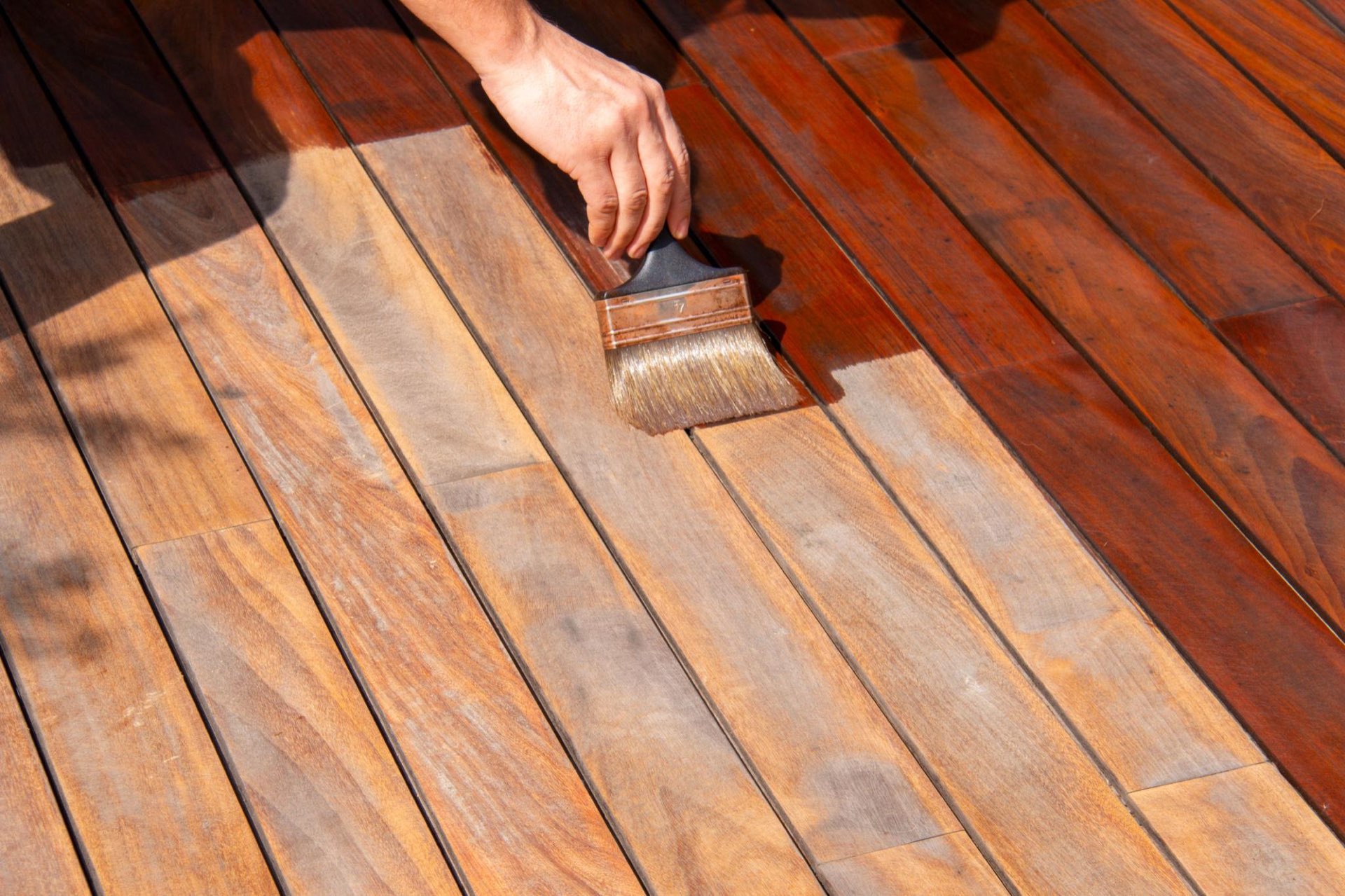
Ipe Deck and Patio Restoration for San Clemente's Bluffs and Spanish-Style Homes
San Clemente's south-facing orientation gives it some of the most consistent sun in Orange County, which is exactly why Ipe patios and bluff-top decks here need more frequent care than the surface might suggest.
Signs your Ipe deck is due
Not every grey deck needs work this month. These are the indicators that actually matter.
Water soaks straight in
The most reliable single test. No beading means no protection left in the surface.
Fibrous, dull grey surface
Degraded lignin at the top of the grain. Reversible, but it means the oil went some time ago.
Splinters underfoot
Raised grain from repeated wet-dry cycling. This is the safety threshold, not a cosmetic one.
Dark rings and halos
Iron reacting with Ipe's extractives, or tannin drawn out under planters. Both lift with brightener.
Visible traffic lanes
A pale path where the finish has worn through first. Spot-coating now avoids a full refinish later.
The premier Ipe refinishing crew in San Clemente, Orange County.
Laid out along a coastline that curves to face nearly due south, San Clemente gets a different sun angle than most of the rest of Orange County, with light hitting bluff-top decks and courtyard patios more directly for more of the day. The city's Spanish Colonial architectural character, still visible in red-tile roofs and stucco walls throughout the older parts of town, often pairs with Ipe decking on rear patios, balconies, and stair landings that connect homes down toward the beach trail below the bluffs. That combination — strong, consistent sun plus ocean-bluff wind exposure near the Pier Bowl and Trestles areas — puts real strain on Ipe's surface finish over a typical year.
Because so much of San Clemente's residential character sits on or near coastal bluffs, outdoor living spaces are often built specifically to take advantage of ocean views toward San Clemente Island and Catalina on clear days, which means decks and patios frequently sit right at the edge of that wind and salt exposure. Homes further inland, up toward Rancho San Clemente, see meaningfully less of both factors.
We're the same veteran-owned crew behind San Clemente teak restoration and outdoor furniture refinishing. Browse recent projects in our project gallery or request a free estimate for your San Clemente Ipe deck.
Serving San Clemente landmarks & communities
- San Clemente Pier
- Trestles
- Calafia Beach
- Casa Romantica
- T-Street Beach
- Cyprus Shore
- Cotton Point Estates
- Sea Pointe Estates
- Talega
- Rivera District
- Southwest San Clemente
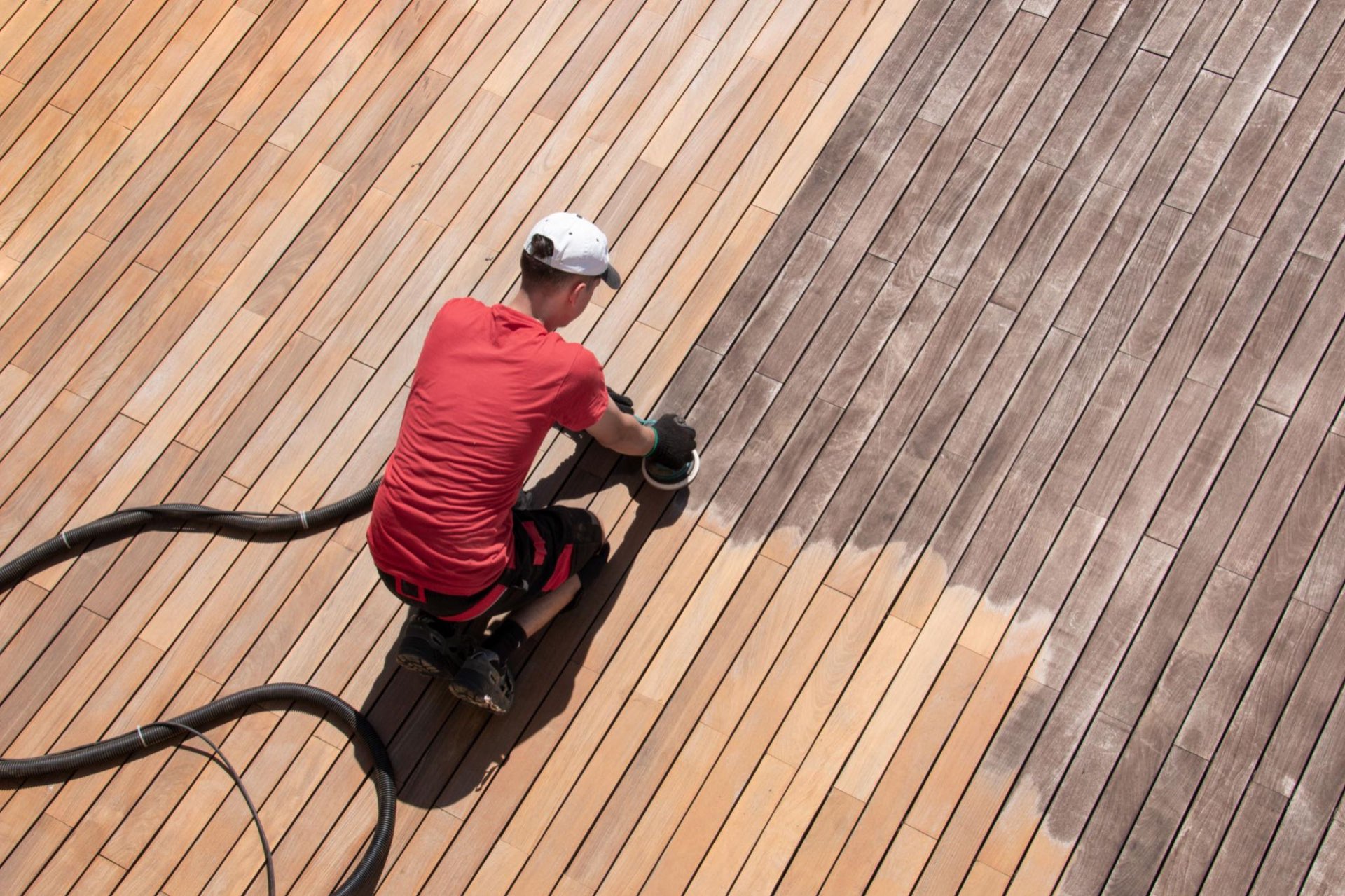
Preparation is ninety percent of an Ipe finish.
Read the deck
Ipe is dense enough that finish failure is almost always a preparation story. We find out what was on it before and why it let go.
Remove the biology
Mildew, algae and the black spotting under planters are living, not cosmetic. They get treated before any abrasive touches the wood.
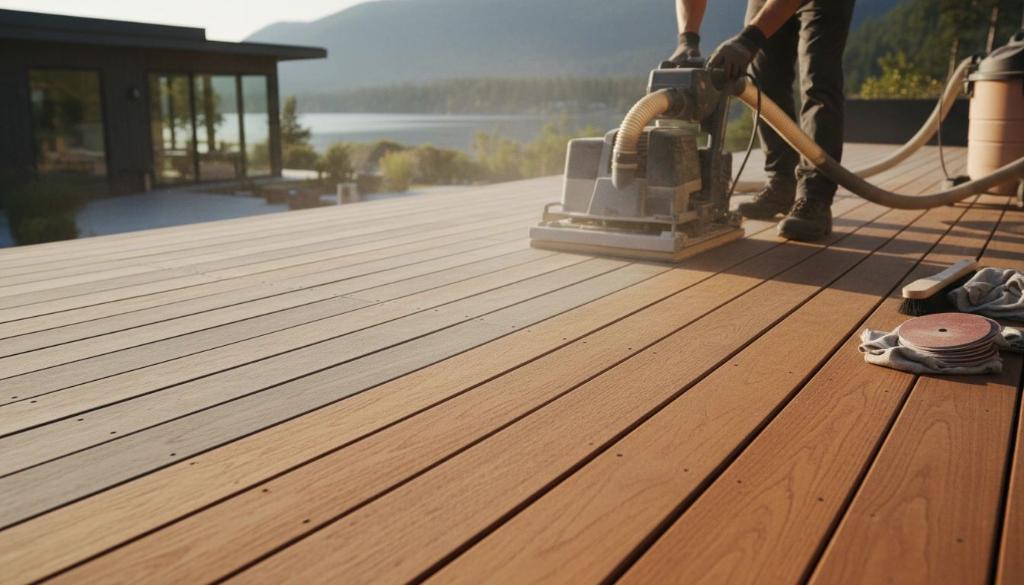
Open the grain
Ipe's tight pores close up under weathering. Correct grit sequencing opens them just enough to accept oil without leaving scratch marks.
Balance the tone
Brightener resets the pH and pulls the iron staining out from around screws so the whole deck reads one color, not a patchwork.
Feed the wood
Penetrating oil chosen for your exposure, applied in thin coats. Ipe takes far less product than pine — over-applying is the classic mistake.
Document the finish
We record the exact product and grit sequence used, so the next maintenance coat matches rather than fights what is already there.
What to keep in the garage for your deck
You do not need much, and the cheap items matter more than the expensive ones.
A stiff-bristle broom
Not wire. Along the grain, weekly. This is the single highest-value maintenance habit.
A pH-neutral hardwood cleaner
Diluted, with dwell time. Nothing caustic and nothing containing chlorine bleach.
Furniture pads
Non-metallic feet under every leg. They prevent both the iron staining and the wear rings.
A litre of the matching oil
We leave you the spec. Spot-treating a high-wear lane at six months delays the whole refinish.
A moisture meter, optional
Cheap, and it takes the guesswork out of deciding whether the deck is dry enough to coat.
Six reasons homeowners choose us.
Veteran-Owned
Founded and operated by U.S. military veterans. Integrity is the standard.
20+ Years Experience
Two decades of restoring premium hardwood decks across Southern California.
Licensed & Insured
Fully licensed, bonded and insured. Certificates provided on request.
Free Estimates
On-site assessment and written quote returned within 24 hours.
Serving Southern California
From Newport to San Diego — coastal Ipe deck specialists.
Premium Finishes
Only marine-grade oils and sealers designed for salt and UV exposure.
Recent Ipe Deck Projects in San Clemente
Spanish Courtyard Patio Restoration
An open Ipe courtyard patio behind a Spanish-style home had grayed unevenly due to a lack of overhead shade. Full sanding and oiling restored a consistent tone across the entire open surface.
Pier Bowl Bluff-Top Deck
A bluff-top deck overlooking the pier area needed attention to its railing base, where wind-driven salt had collected and accelerated localized graying compared to the rest of the deck.
Beach Trail Stair Landing
A stair system connecting a hillside home down toward the coastal trail was refinished tread by tread, with particular focus on the landing at the base where moisture tends to linger longest.
Exterior Bench and Gate Refresh
A built-in Ipe bench and matching entry gate on a Spanish-style property were sanded and oiled to match a recently restored main patio, unifying the home's outdoor finishes.
What San Clemente homeowners say.
Read My Teak Pro reviews on Yelp →"Our Ipe deck had turned completely silver-gray from San Clemente sun and marine air. My Teak Pro brought it back to a rich chocolate finish — it looks brand new."
"They sanded, brightened and oiled our entire back deck in three days. Professional, veteran-owned, and truly museum-grade workmanship."
"We manage several oceanfront properties in San Clemente and My Teak Pro is the only crew we trust with Ipe. Consistent finish, on-time, spotless cleanup."
Ipe deck refinishing in San Clemente.
Ipe deck refinishing near San Clemente
Ipe behaves differently a few miles apart along this coast. These nearby pages cover the conditions specific to each community.
Worth reading before you book
How UV Exposure Damages Outdoor Wood
Sun does not just fade colour. It breaks down the material that holds wood fibres together, and it degrades the finish protecting them.
Read guideHow to Restore Weathered Teak Furniture
Grey teak is almost always surface oxidation, not damage. Here is the full sequence used to bring it back, and the points where the job usually goes wrong.
Read guideWhen Does an Ipe Deck Need Refinishing?
Colour loss alone is not a reason to refinish. These are the signals that are.
Read guide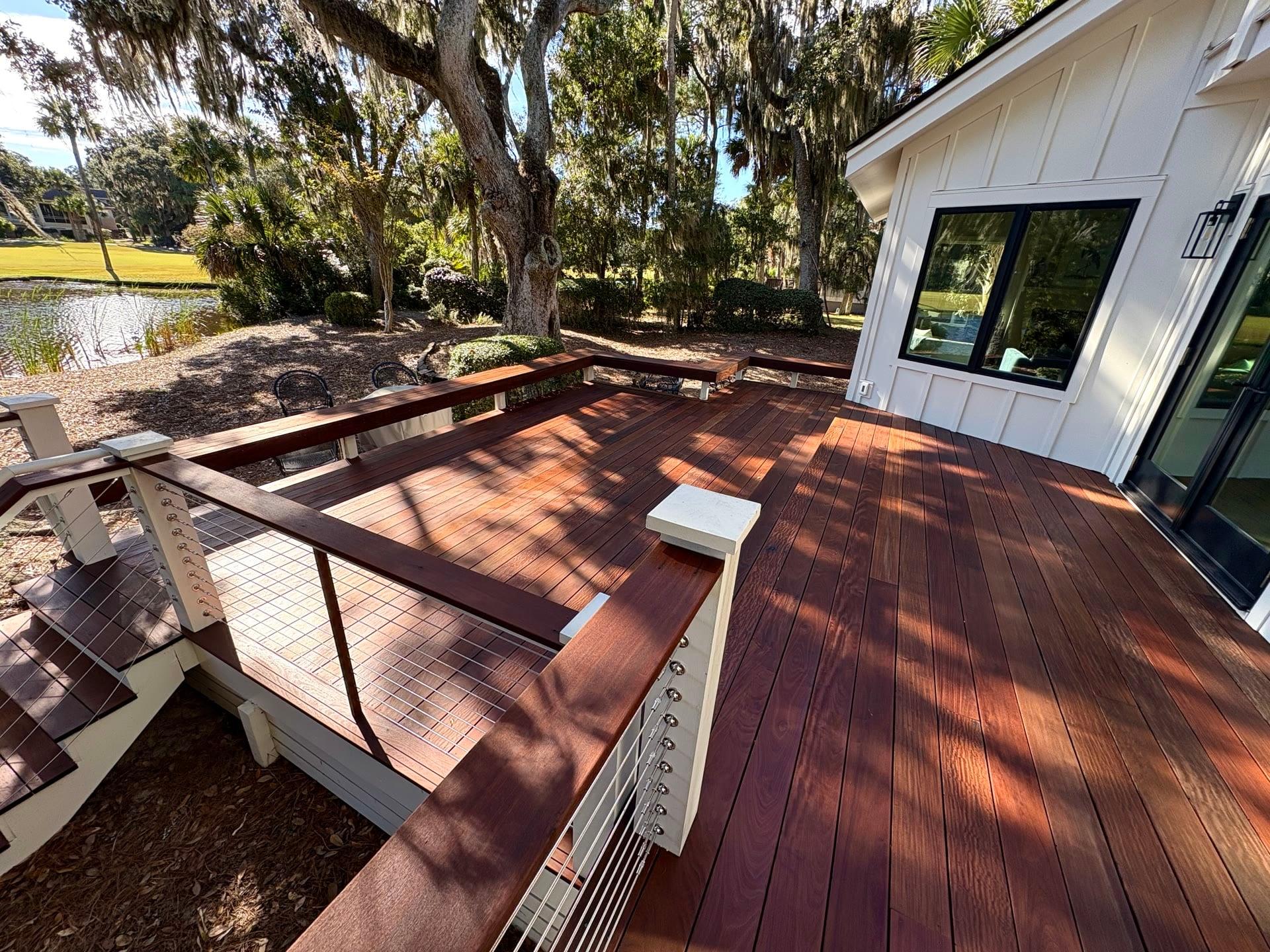
Get an honest read on your San Clemente deck.
We will tell you whether it needs a recoat, a refinish or nothing at all yet. No charge for the visit.
Tell us about your San Clemente Ipe deck.
Share a few details and we'll respond within one business day with next steps and a tailored quote.