Heirloom furniture revival
Older, well-made pieces with joinery worth keeping. Slow prep, minimal material removal, colour matched across the set.
Teak Furniture Restoration San Clemente
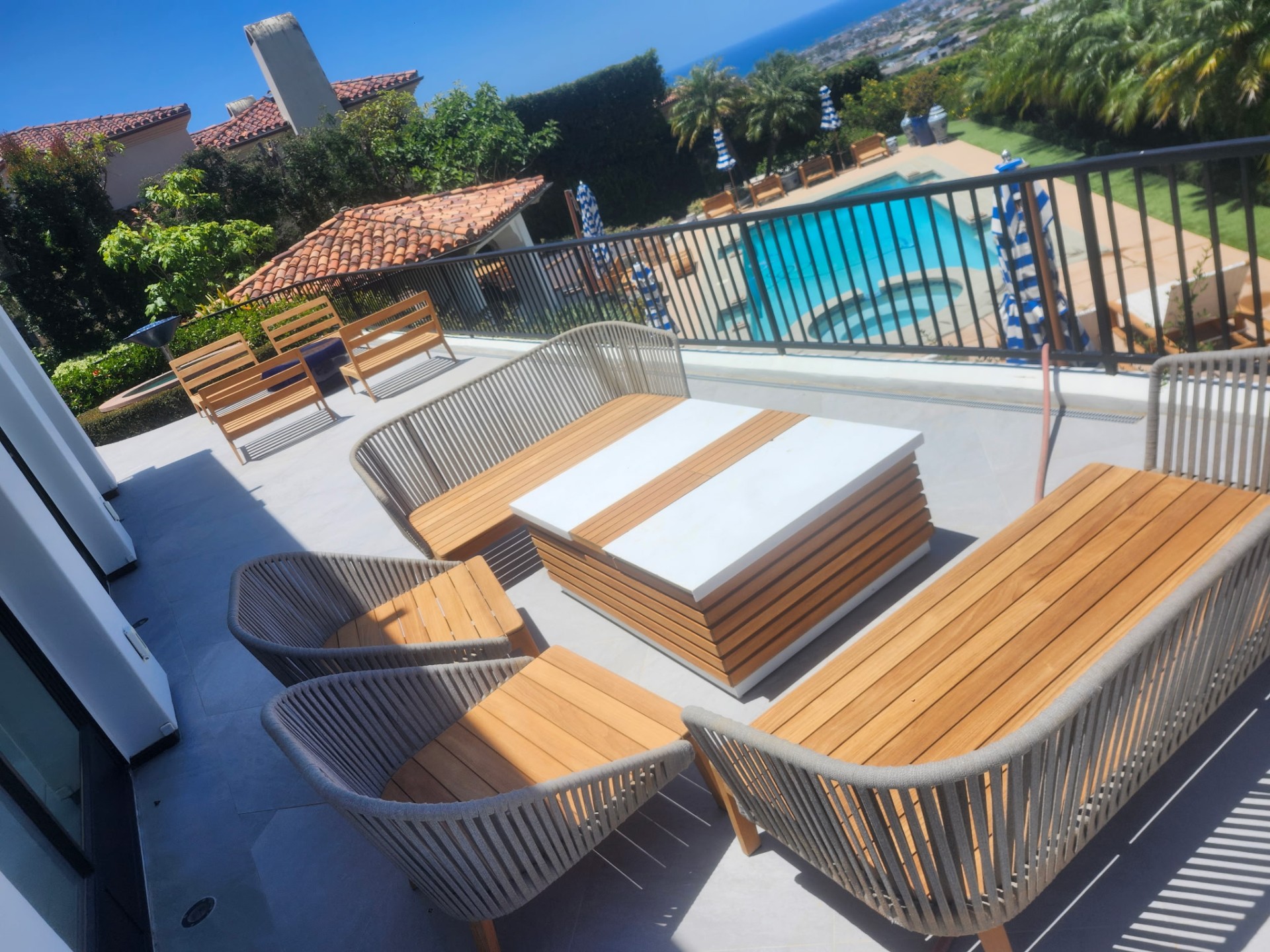
From the Pier Bowl to Talega, San Clemente's Spanish Village charm and coastal air both shape how we restore teak here.
San Clemente is known for its Spanish Village architecture, and many homes near the Pier Bowl and North Beach pair that style with teak patio furniture on small courtyards and balconies just steps from the sand. That proximity to the ocean means near-constant salt air exposure, so teak here tends to gray faster than in inland San Clemente neighborhoods like Talega.
Talega and Forster Ranch, set back from the immediate coastline, get a milder version of San Clemente's marine layer, with more consistent temperatures but less direct salt spray. Teak furniture in these areas often shows slower, more even weathering, which changes how frequently we recommend reoiling.
San Clemente's beach trail and pier area see a lot of foot traffic and coastal humidity, and homes with teak furniture on ocean-facing balconies often deal with a fine layer of salt residue that regular washing alone won't remove. We use a dedicated cleaning process to lift that residue before restoring the finish.
Many older San Clemente homes have narrow courtyards or rooftop decks where teak furniture is a fixed part of the outdoor living space. We do all sanding and refinishing on-site, which matters in tighter properties where moving large teak dining sets isn't practical.
We restore teak furniture throughout San Clemente, from the Pier Bowl and North Beach to Talega and Forster Ranch.
Quality teak furniture is built to outlast several finishes. The grey surface that makes a set look finished is a fraction of a millimetre deep; below it the timber is usually sound and dense.
Restoration also preserves what replacement cannot: the joinery of well-made older pieces, dimensions that fit a specific space, and matching across a set that is no longer manufactured. In San Clemente that matters most on built-in benches and custom tables.
Replacement is genuinely right sometimes — widespread rot, failed structural joinery, or pieces that were low-grade to begin with. We say so rather than sell a finish onto wood that cannot hold it.
Restoration is the same craft across items; access and handling are what change.
Tabletops take the most abuse from sun, spills and heat, and usually need the deepest sanding.
Slatted construction with many edges. Slow to prepare properly, and where shortcuts show first.
Fixed pieces restored in place with surrounding stone, glass and planting fully masked.
Large horizontal area with traffic and drag marks. Prep and dust control are most of the job.
Refinished on site where possible; a failing exterior door finish is the first thing visitors notice.
Most San Clemente enquiries fall into one of these. If yours does not, describe it on the phone and we will tell you honestly whether it is our job.
Older, well-made pieces with joinery worth keeping. Slow prep, minimal material removal, colour matched across the set.
Teak Furniture Restoration San Clemente
Re-gluing mortice and tenon joints, replacing broken slats in matched teak and setting fasteners that have worked loose.
Teak Repair San Clemente
Black spotting, tannin bleed, iron halos around bolts and the shadow left under planters and cushions.
Teak Cleaning San Clemente
Evening out sets where some pieces sat in sun and others in shade, so the whole group reads as one again.
Teak Refinishing San Clemente
Benches, screens, shower seats, gates and decking that cannot leave the property, restored in place in San Clemente.
Outdoor Wood Restoration San Clemente
A fast clean, light sand and single maintenance coat before a wedding, a listing photo shoot or a season opener.
Teak Maintenance San Clemente
Tying maintenance to the season rather than a date is what keeps a restored set permanently in easy condition.
Wash off the accumulated damp-season grime and check for any mildew that established in the shade.
The best window for a maintenance coat: dry surfaces, moderate temperatures, and the whole season ahead of it.
Rinse more often, keep sunscreen and food oils off bare edges, and reposition anything sitting in constant sun.
Clear leaf litter promptly — tannin staining from wet leaves is the most common autumn damage we see.
A small teak bistro set on an ocean-facing balcony had visible salt film and graying. We cleaned, sanded, and resealed it on-site given the tight balcony space.
A Spanish-style courtyard's teak dining table showed uneven weathering from partial shade and salt spray. We restored a consistent finish across the full set.
Inland teak loungers in Talega had dried and lightly cracked from sun exposure. We sanded and reoiled them to restore flexibility and tone to the wood.
A teak garden bench had developed dark staining from nearby landscaping irrigation. We removed the staining and applied a fresh protective finish.
Every sanding takes material you can never put back. Our sequence is the lightest one that still leaves the surface sound.
It is fast and it looks effective, but it carves out soft early-wood and leaves a furrowed texture we then have to sand flat.
Marine-grade sealers and oils engineered to protect San Clemente teak from salt spray, marine layer and reflected coastal UV.
If a San Clemente piece is past economic restoration, we say so rather than sell a finish onto wood that cannot hold it.
Teak restoration is available across the neighbouring coastline and inland communities near San Clemente.
Sun does not just fade colour. It breaks down the material that holds wood fibres together, and it degrades the finish protecting them.
Read guideGrey teak is almost always surface oxidation, not damage. Here is the full sequence used to bring it back, and the points where the job usually goes wrong.
Read guideColour loss alone is not a reason to refinish. These are the signals that are.
Read guideFree assessment, written scope, no obligation — and a straight answer on whether the work is worth doing.
Tell us what you have, how it is used and roughly how long since it was last finished. That is enough for a realistic range.