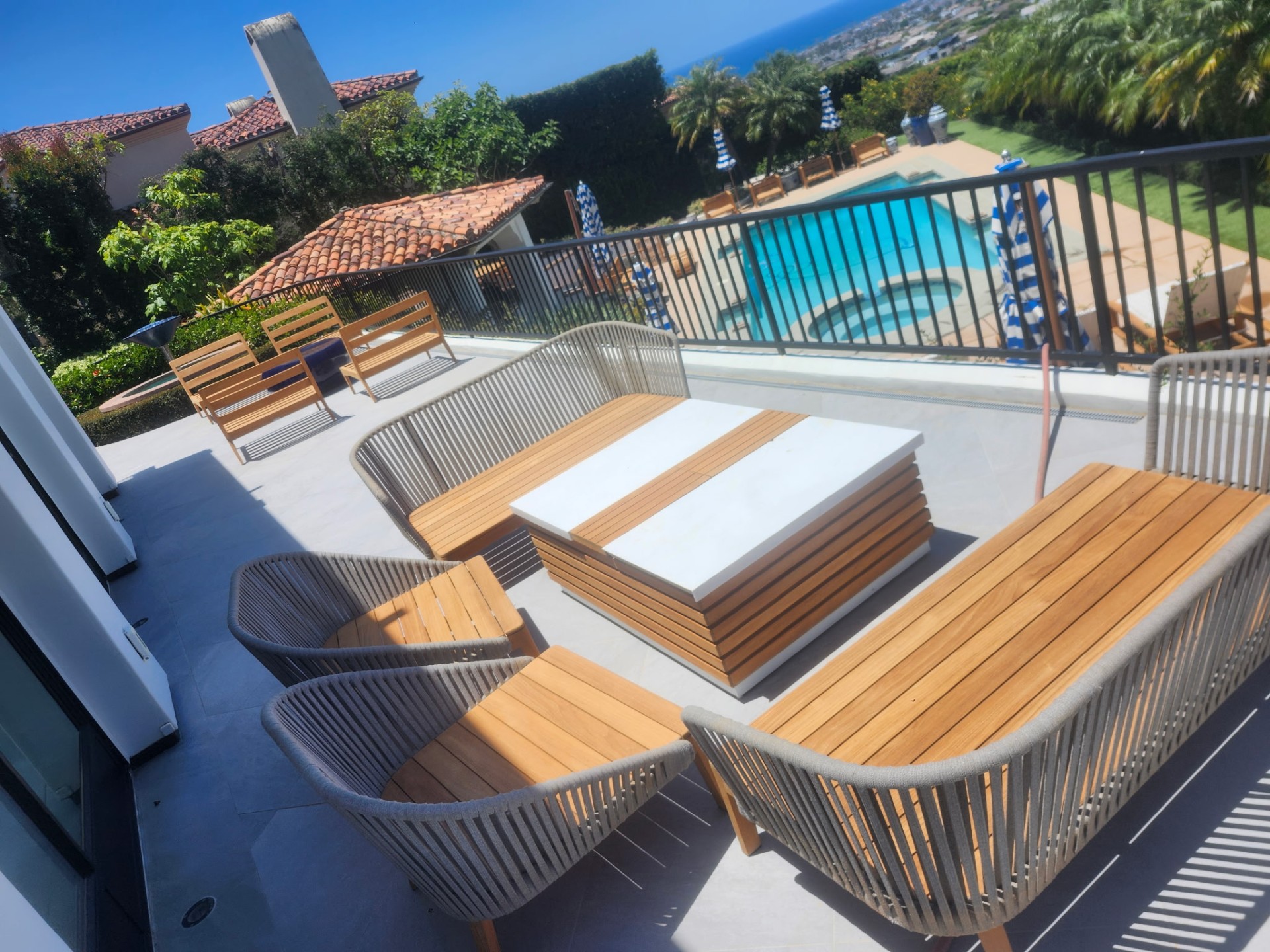
Point Loma Teak Furniture & Deck Restoration
Restoring teak dining sets, loungers, and boat teak for the peninsula's bluff homes, harbor slips, and Sunset Cliffs decks.
Teak Restoration for a Peninsula Between Two Bodies of Water
Point Loma is a narrow peninsula wedged between San Diego Bay and the open Pacific, and that geography means teak furniture here gets hit from two directions at once. Homes along Sunset Cliffs Boulevard face raw ocean wind and salt spray, while properties tucked closer to Shelter Island and the bay side deal with a calmer but still humid marine environment tied to the working harbor below.
Because so much of Point Loma's waterfront is tied to boating — Shelter Island Yacht Basin, the Southwestern Yacht Club, and countless private docks along Rosecrans — we spend a lot of time on boat teak here as well as patio furniture: cockpit tables, swim step treads, and companionway trim that see far more sun and saltwater cycling than a typical deck chair.
The bluff-top neighborhoods near Cabrillo National Monument and the older Loma Portal homes closer to the Naval base each have their own wind exposure, and we've noticed that furniture set on the exposed western bluffs grays noticeably faster than pieces just a few streets over on the bay side near Talbot Street.
Point Loma's older housing stock, much of it built mid-century with additions over the decades, often has narrow side-yard access or hillside stairs down to lower patios, so our on-site process is built around working within those constraints rather than requiring furniture be hauled up to street level.
Whether it's a teak dining set on a Sunset Cliffs bluff or the teak cockpit sole on a sailboat moored at Kona Kai, we adjust our sanding and finishing approach to how much direct salt exposure the wood actually sees.
We work with homeowners and boat owners throughout Point Loma, from Sunset Cliffs to Shelter Island, and coordinate marina gate access when restoring teak on docked vessels.
Neighborhoods we regularly service in Point Loma
- Loma Portal
- La Playa
- Point Loma Heights
- Sunset Cliffs
- Roseville
- Shelter Island
A year of teak care, month by month
Tying maintenance to the season rather than a date is what keeps a restored set permanently in easy condition.
Late winter
Wash off the accumulated damp-season grime and check for any mildew that established in the shade.
Spring
The best window for a maintenance coat: dry surfaces, moderate temperatures, and the whole season ahead of it.
Summer
Rinse more often, keep sunscreen and food oils off bare edges, and reposition anything sitting in constant sun.
Autumn
Clear leaf litter promptly — tannin staining from wet leaves is the most common autumn damage we see.
Wind, grit and coastal abrasion
Onshore wind carries fine sand and grit inland, and in exposed parts of Point Loma that grit lands on every horizontal surface daily. Left there, it acts like a slow abrasive under anything that moves across it — cushions, trays, feet, cloths.
Abrasion damage looks different from UV damage. It shows as localised dulling and fine scratching on the flattest surfaces, rather than the uniform silvering that sun produces. Owners often read it as a product failure when it is simply wear.
A plain water rinse before wiping is the whole solution. Wiping dry grit across a finished surface is the most common way a good restoration is prematurely worn down.
When restoration is the better call
Quality teak furniture is built to outlast several finishes. The grey surface that makes a set look finished is a fraction of a millimetre deep; below it the timber is usually sound and dense.
Restoration also preserves what replacement cannot: the joinery of well-made older pieces, dimensions that fit a specific space, and matching across a set that is no longer manufactured. In Point Loma that matters most on built-in benches and custom tables.
Replacement is genuinely right sometimes — widespread rot, failed structural joinery, or pieces that were low-grade to begin with. We say so rather than sell a finish onto wood that cannot hold it.
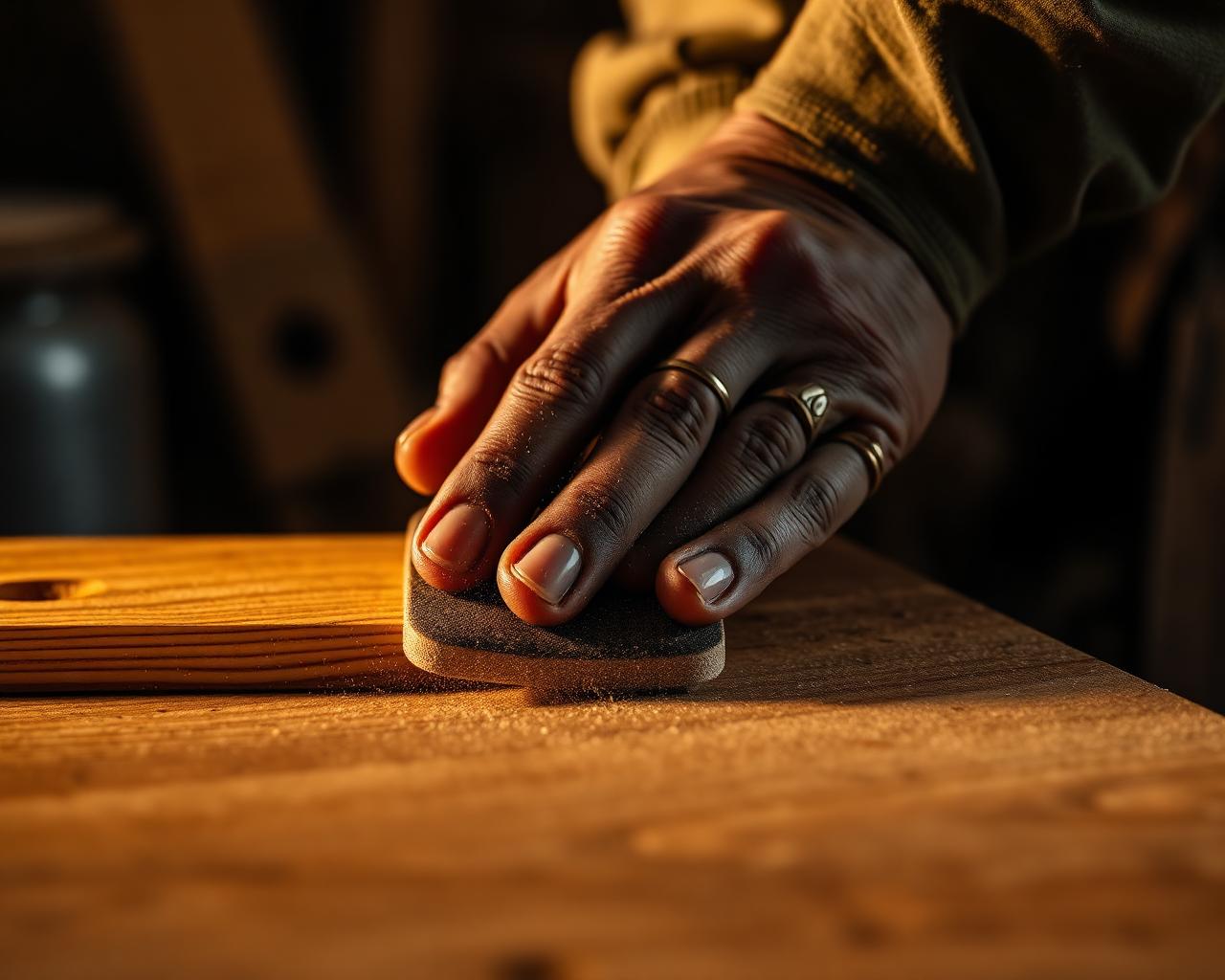
Hand-finished
Every grain inspected, sanded and sealed by a master craftsman.
From first call to finished patio.
- 01
The call
A few photos and a description usually tell us the likely scope and rough range before we ever visit.
- 02
Free estimate visit
Thirty minutes on site. Piece count, condition grade, finish options and a fixed written price.
- 03
Disassembly where needed
Slatted loungers and folding chairs are opened up so the hidden faces get the same treatment as the visible ones.
- 04
Clean, neutralise, dry
The wood has to be genuinely dry before finish goes on. Oil over trapped moisture clouds and lifts.
- 05
Build the protection
Thin coats, wiped back, repeated. Depth comes from the number of coats, never from the thickness of one.
- 06
Handover
Reassembly, a final wipe down, and a walkthrough of what to watch over the next twelve months.
Craft learned slowly. Standards set early.
Restoration rewards patience more than speed: the extra grit, the wiped-back coat, the hour spent on slat edges nobody photographs. Those are the decisions that decide how the work looks in year three, and they are the ones we refuse to rush.
Teak restoration in Point Loma — answers to the questions we hear most.
Teak restoration near Point Loma
Adjacent towns we service regularly — useful if your property sits on the Point Loma boundary.
More ways we serve Point Loma
Understanding what your wood needs
Can Severely Weathered Teak Be Restored?
Usually yes. The limiting factor is structure, not appearance.
Read guideHow UV Exposure Damages Outdoor Wood
Sun does not just fade colour. It breaks down the material that holds wood fibres together, and it degrades the finish protecting them.
Read guideRestoration vs. Replacement of Outdoor Wood Furniture
The decision is structural first and financial second. Appearance should not drive it at all.
Read guideBook a free Point Loma estimate
Tell us what you have and how it is used. We will tell you what it needs and what it will cost.
Tell us about your Point Loma teak project.
Tell us what you have, how it is used and roughly how long since it was last finished. That is enough for a realistic range.