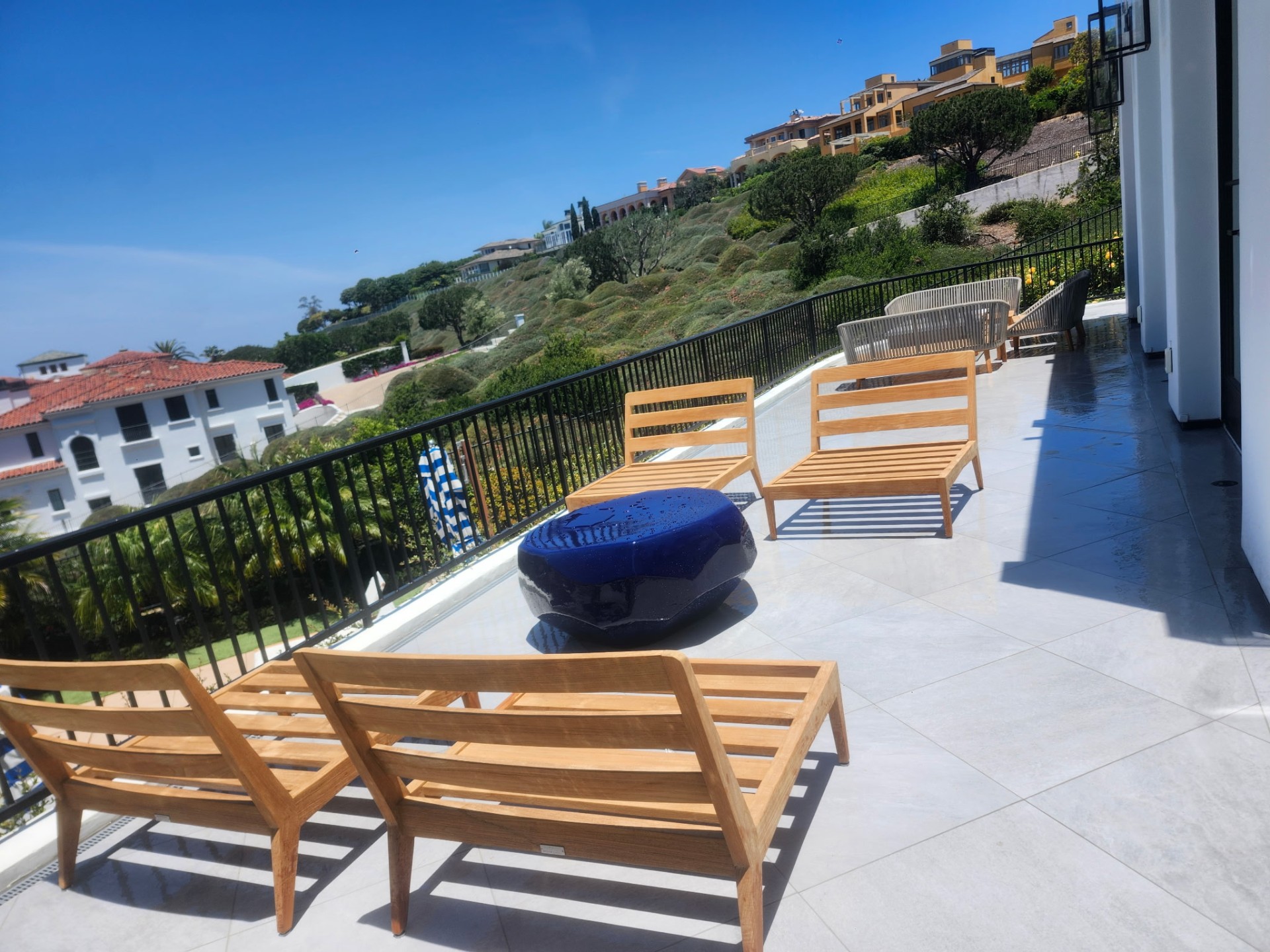
La Jolla Teak Restoration for Coastal Homes
Restoring teak furniture and decking for cliffside estates, village patios, and yacht club members across La Jolla.
Trusted across La Jolla by
Teak Care for La Jolla's Coastal Estates
La Jolla's coastline, from the Cove to Bird Rock, exposes outdoor teak furniture to some of the strongest salt-laden winds in San Diego County. Cliffside properties along La Jolla Farms and Muirlands catch onshore gusts that carry fine salt spray well beyond the immediate shoreline, aging teak faster than owners often expect.
Many of the homes we work on here are larger estate properties with expansive teak furnishings — outdoor dining sets seating a dozen, built-in teak bar areas, and extensive deck furniture around pools with ocean views. The scale of these installations means restoration is planned in stages, working section by section so outdoor entertaining areas stay usable.
La Jolla is also home to a strong boating and yacht club culture, and we regularly restore teak associated with that world — cockpit tables, companionway trim, and deck furniture for members of the La Jolla area's boating community, alongside more traditional patio furniture.
Village-area properties, tucked closer together than the cliffside estates, often have teak furniture positioned for privacy against townhouse walls or courtyards, which changes the sun and moisture exposure pattern compared to open oceanfront lots — something we account for in evaluating each piece.
Whether it's a single teak bench in a village courtyard or a full estate's worth of outdoor furniture along the cliffs, we handle the work entirely on-site so nothing needs to leave your property.
Cliffside properties along La Jolla Farms and Muirlands often see faster salt-driven graying than more sheltered Village courtyard settings.
Neighborhoods we regularly service in La Jolla
- The Village
- La Jolla Shores
- Bird Rock
- Muirlands
- Hidden Valley
- La Jolla Farms
Not all teak is the same wood
The label covers several very different materials, and which one you own changes both the method and the realistic outcome.
Old-growth Burmese teak
Dense, tight-ringed, very high oil content. Restores beautifully and holds finish longest.
Plantation teak
Faster grown, lighter, more sapwood. Perfectly good outdoors but needs a gentler hand and more frequent coats.
Grade A, B and C stock
Grading describes how much heartwood is present. Sapwood-heavy pieces stain and weather unevenly by nature.
Teak veneer and composites
A thin skin over a substrate. These cannot be sanded meaningfully and are cleaned and coated only.
Teak-look hardwoods
Eucalyptus and shorea are often sold as teak alternatives. They restore well but on a shorter cycle.
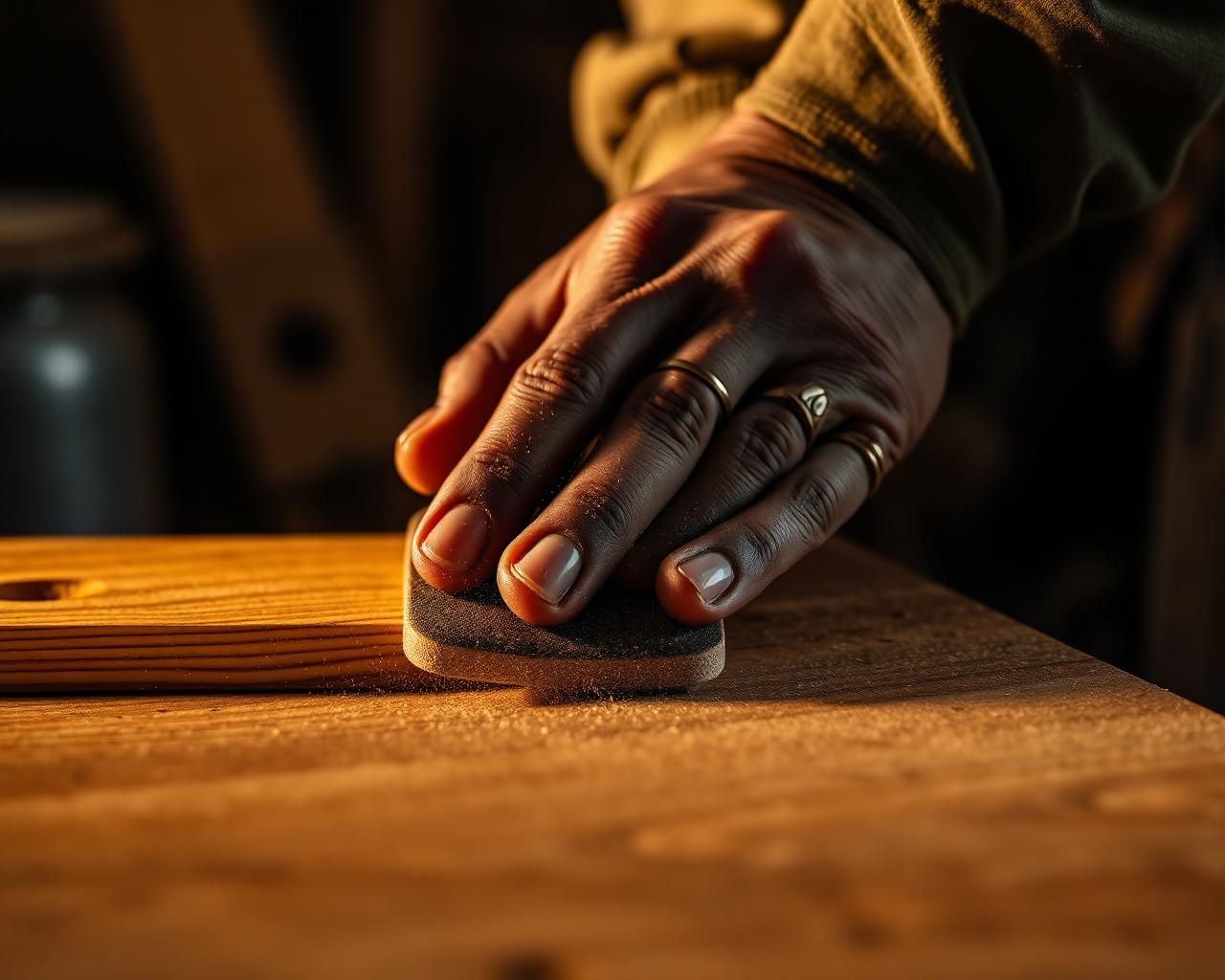
Hand-finished
Every grain inspected, sanded and sealed by a master craftsman.
What actually happens across the two days.
- 01
Scope and photograph
We record the condition of each piece before work starts, so the before-and-after is documented rather than described.
- 02
Mask and contain
Stone, glass, pool coping and planting are covered. Teak dust is fine and travels, so containment is set up before any abrasive runs.
- 03
Strip what is failing
Old varnish and film finishes come off chemically. Sanding through a failed film only drives it deeper into the grain.
- 04
Level and refine
Coarse work flattens eroded early-wood, then finer passes close the grain without burnishing it shut.
- 05
Feed the wood
Oil goes on until the wood stops taking it, then the excess is wiped off within the working window.
- 06
Cure and return
We leave the pieces to cure, then come back to buff any raised grain and reset your furniture layout.
Choosing the tone you actually want
Restored teak can be finished anywhere between a pale, matt honey and a deep, almost amber brown, and the difference is mostly product choice and coat count rather than stain.
We sample on your own wood before committing the set, because the same oil reads differently on old, dense teak than on newer plantation stock, and photographs of other projects are a poor guide.
Darker is not automatically better outdoors. Deep tones absorb more heat, which shortens the interval on pieces in full sun, and that trade-off is worth making deliberately.
Why harbour-side teak behaves differently
Sheltered water, boat traffic and dock structures create their own microclimate: less wind, more standing humidity and considerably more airborne diesel and exhaust residue than an open beach frontage.
On La Jolla properties near moorings and docks we routinely find a greasy grey film that ordinary washing smears rather than removes. It needs a degreasing step before any cleaning chemistry, or the stain simply gets driven into open grain.
Marine teak also sees far more foot traffic than furniture does, so the specification shifts towards durability. Swim platforms, cockpit tables and dock decking get a harder-wearing schedule than the dining set on the terrace above them.
Keeping restored teak looking right
Restoration resets the clock; maintenance decides how slowly it runs down. The routine takes minutes.
Rinse regularly
Plain water removes grit before it abrades the surface. No pressure washers, ever.
Mild soap only
Diluted dish soap and a soft brush along the grain handles almost everything.
Lift standing water
Move cushions, planters and trays occasionally so the surface underneath can dry.
Shade the worst piece
A cover over the hardest-hit item measurably extends the interval for the whole set.
Refresh, do not rescue
A maintenance coat on a sound surface costs a fraction of a full restoration later.
Proudly serving La Jolla & San Diego County.
On-site teak restoration, refinishing and outdoor furniture restoration throughout La Jolla and every neighboring San Diego coastal community.
- La Jolla
- Newport Beach
- Corona del Mar
- Newport Coast
- Laguna Beach
- Costa Mesa
- Huntington Beach
- Irvine
- Tustin
- Orange
- Villa Park
- Yorba Linda
- Aliso Viejo
- Lake Forest
Teak restoration in La Jolla — answers to the questions we hear most.
Teak restoration near La Jolla
Teak restoration is available across the neighbouring coastline and inland communities near La Jolla.
More ways we serve La Jolla
From our restoration library
How Coastal Weather Affects Teak Furniture
Near the ocean, three separate forces act on outdoor wood at once. Understanding which one is doing the damage changes how you maintain it.
Read guideHow to Restore Weathered Teak Furniture
Grey teak is almost always surface oxidation, not damage. Here is the full sequence used to bring it back, and the points where the job usually goes wrong.
Read guideTeak Oil vs. Teak Sealer
Oils look richer and want more attention. Sealers hold longer and read more uniform. The right answer depends on exposure and on how often you want to think about it.
Read guideFree on-site assessment in La Jolla
Send a few photos or book a visit. Either way you get a fixed price and an honest scope.
Tell us about your La Jolla teak project.
Tell us what you have, how it is used and roughly how long since it was last finished. That is enough for a realistic range.