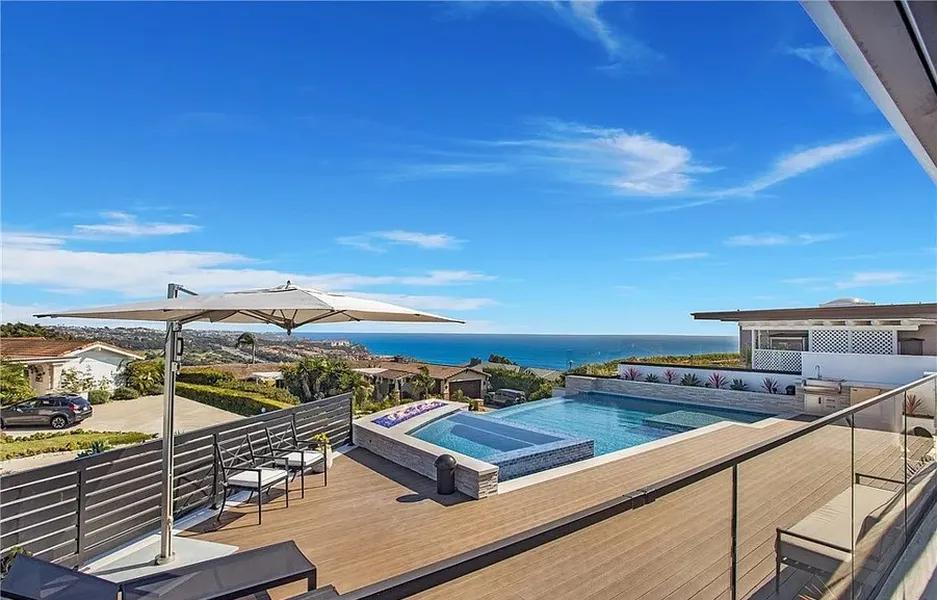
Ipe Deck Restoration for Malibu Homes
From Point Dume bluffs to the narrow lots along PCH, Malibu's salt-laden air pushes Ipe decking through weathering cycles faster than almost anywhere else in Southern California.
The Malibu details that decide your refinishing interval
Two decks in Malibu of the same age and the same wood can be five years apart in condition. What separates them is rarely the product used and almost always the site.
Distance to open water
Salt load falls sharply within the first few hundred metres. A bluff-top deck and one three streets back are different jobs.
Drainage under the boards
Ipe laid tight, or over a solid membrane, dries slowly from below. Ventilated substructures last noticeably longer.
Irrigation overspray
Sprinklers hitting the deck edge every morning cause more localised damage than the weather does.
Reflected heat
Glass rails and light stone bounce UV back onto the boards, effectively doubling exposure on some sections.
Planters and pots
Anything that sits still traps moisture and salt. Feet and saucers under them solve most of it.
The premier Ipe refinishing crew in Malibu, Los Angeles County.
Malibu properties split into two very different exposure profiles: oceanfront decks that take direct salt spray off the surf zone, and canyon or hillside homes further inland that deal with dry Santa Ana winds and intense unfiltered sun. Both conditions strip the natural oils out of Ipe decking, just through different mechanisms. We tailor our sanding and oil selection depending on which side of PCH your project sits on.
Homes directly on the sand in Malibu Colony or along Broad Beach see fine salt crystals settle into the wood grain after every high surf event, which is abrasive when foot traffic grinds it in. Further up in the canyons and along Latigo or Escondido, the bigger threat is UV bleaching combined with wind-driven dust.
We're the same veteran-owned crew behind Malibu teak restoration and outdoor furniture refinishing. Browse recent projects in our project gallery or request a free estimate for your Malibu Ipe deck.
Serving Malibu landmarks & communities
- Point Dume
- Zuma Beach
- Malibu Pier
- Carbon Beach
- El Matador State Beach
- Point Dume
- Broad Beach
- Malibu Colony
- Carbon Beach
- Malibu Park
- Serra Retreat
Ipe next to the other hardwoods we restore
Species behave differently under the same sun, and the method changes accordingly.
Ipe
Dense, tight-grained, takes finish sparingly. Prep-led work with careful grit sequencing.
Teak
Naturally oily and forgiving. Silvers gracefully and comes back with less effort than any other species.
Cumaru and garapa
Similar density to Ipe with more colour variation. Same method, more attention to blending tone.
Mahogany and sapele
Richer colour, less durable outdoors. These genuinely want a film-forming protective finish.
Cedar and redwood
Soft and easily over-sanded. Gentle abrasion only, and a very different product spec.
Preparation is ninety percent of an Ipe finish.
Read the deck
Ipe is dense enough that finish failure is almost always a preparation story. We find out what was on it before and why it let go.
Remove the biology
Mildew, algae and the black spotting under planters are living, not cosmetic. They get treated before any abrasive touches the wood.
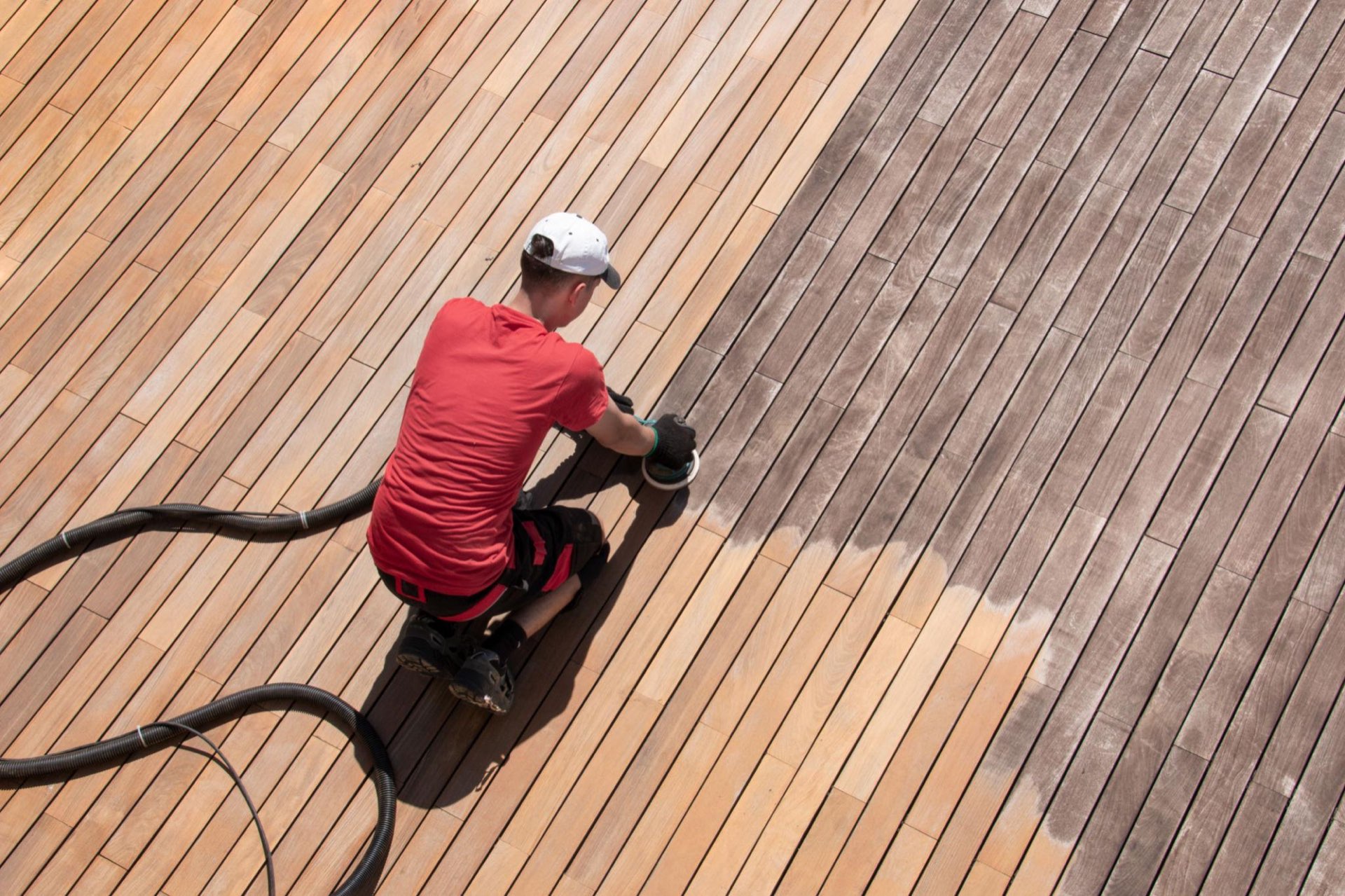
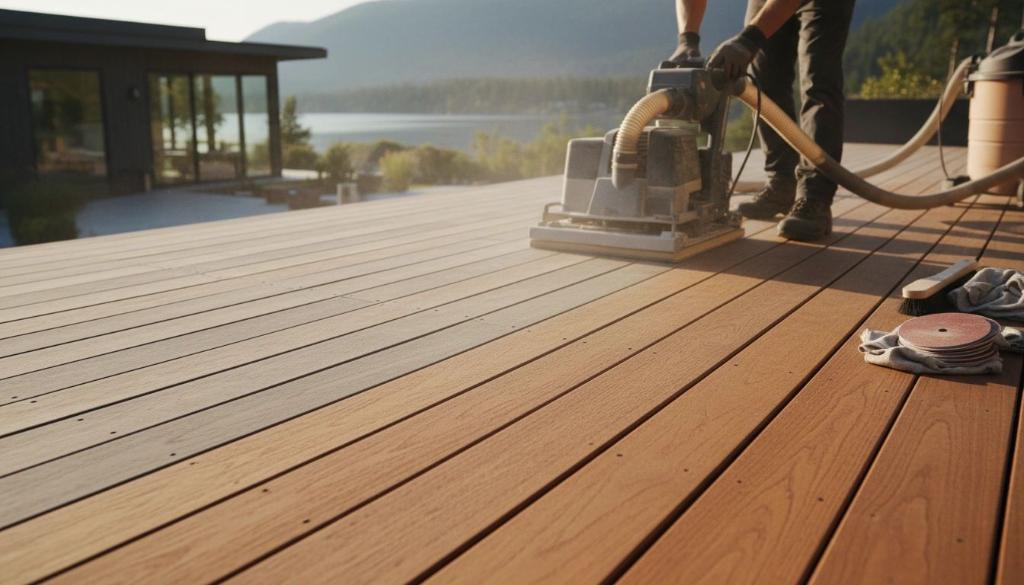
Open the grain
Ipe's tight pores close up under weathering. Correct grit sequencing opens them just enough to accept oil without leaving scratch marks.
Balance the tone
Brightener resets the pH and pulls the iron staining out from around screws so the whole deck reads one color, not a patchwork.
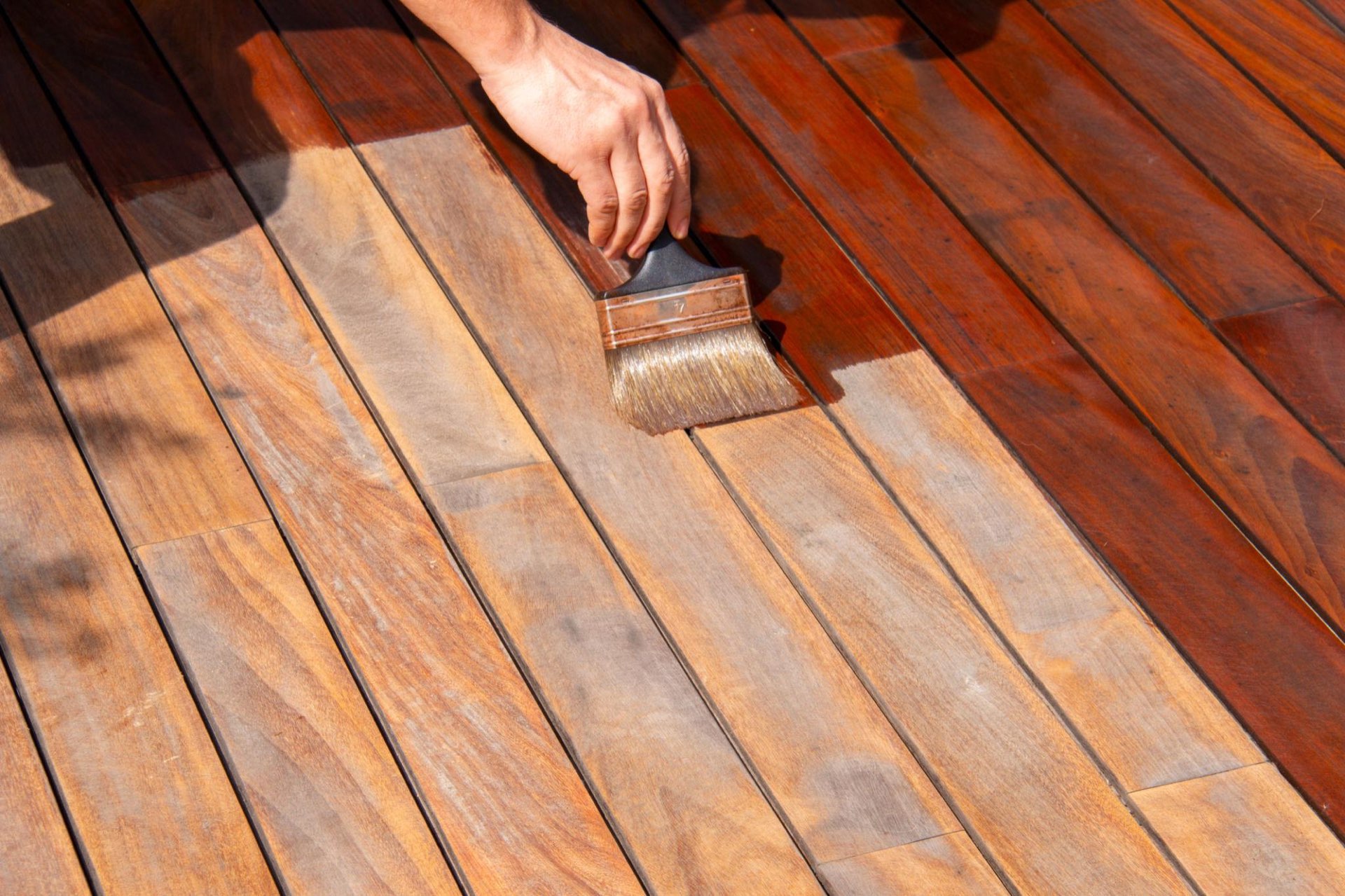
Feed the wood
Penetrating oil chosen for your exposure, applied in thin coats. Ipe takes far less product than pine — over-applying is the classic mistake.
Document the finish
We record the exact product and grit sequence used, so the next maintenance coat matches rather than fights what is already there.
Ipe Deck Care in Malibu
For oceanfront and Colony-area decks, we recommend rinsing salt residue with fresh water after big surf or storm events, since standing salt crystallizes and acts like sandpaper under foot traffic over time.
On canyon and hillside properties, wind-blown debris and dry brush dust settle into open grain between maintenance cycles; a light cleaning before reoiling gives the finish something clean to bond to.
Because Malibu combines high UV with either salt or dust, we generally suggest reoiling on a tighter interval than inland Southern California decks — closer to every 9 to 12 months for oceanfront sections that see full afternoon sun.
The things we will not cut corners on.
No pressure washing
It is fast and it permanently roughs Ipe. We clean chemically and abrade mechanically instead.
Grit sequence, every time
Skipping a grade saves an hour and shows up as scratch shadow the first time the sun hits it low.
Moisture tested before oiling
Oil on damp Ipe goes cloudy and fails early. We test rather than guess.
Excess oil wiped back
Anything the wood will not absorb gets removed the same day, so you never get a tacky surface.
Site protection first
Stone, glass, planting and pool water get masked before a tool comes out of the van.
Written aftercare
You leave the job knowing what to do at three months, twelve months and three years.
What Malibu homeowners say.
Read My Teak Pro reviews on Yelp →"Our Ipe deck had turned completely silver-gray from Malibu sun and marine air. My Teak Pro brought it back to a rich chocolate finish — it looks brand new."
"They sanded, brightened and oiled our entire back deck in three days. Professional, veteran-owned, and truly museum-grade workmanship."
"We manage several oceanfront properties in Malibu and My Teak Pro is the only crew we trust with Ipe. Consistent finish, on-time, spotless cleanup."
Ipe deck refinishing in Malibu.
Ipe deck refinishing near Malibu
Ipe behaves differently a few miles apart along this coast. These nearby pages cover the conditions specific to each community.
Worth reading before you book
How to Maintain Teak After Restoration
Freshly restored teak needs very little. What it needs, it needs consistently.
Read guideWhen Does an Ipe Deck Need Refinishing?
Colour loss alone is not a reason to refinish. These are the signals that are.
Read guideIpe Deck Maintenance Guide
Ipe is dense enough to survive almost anything. Keeping it brown rather than silver is the part that takes a routine.
Read guide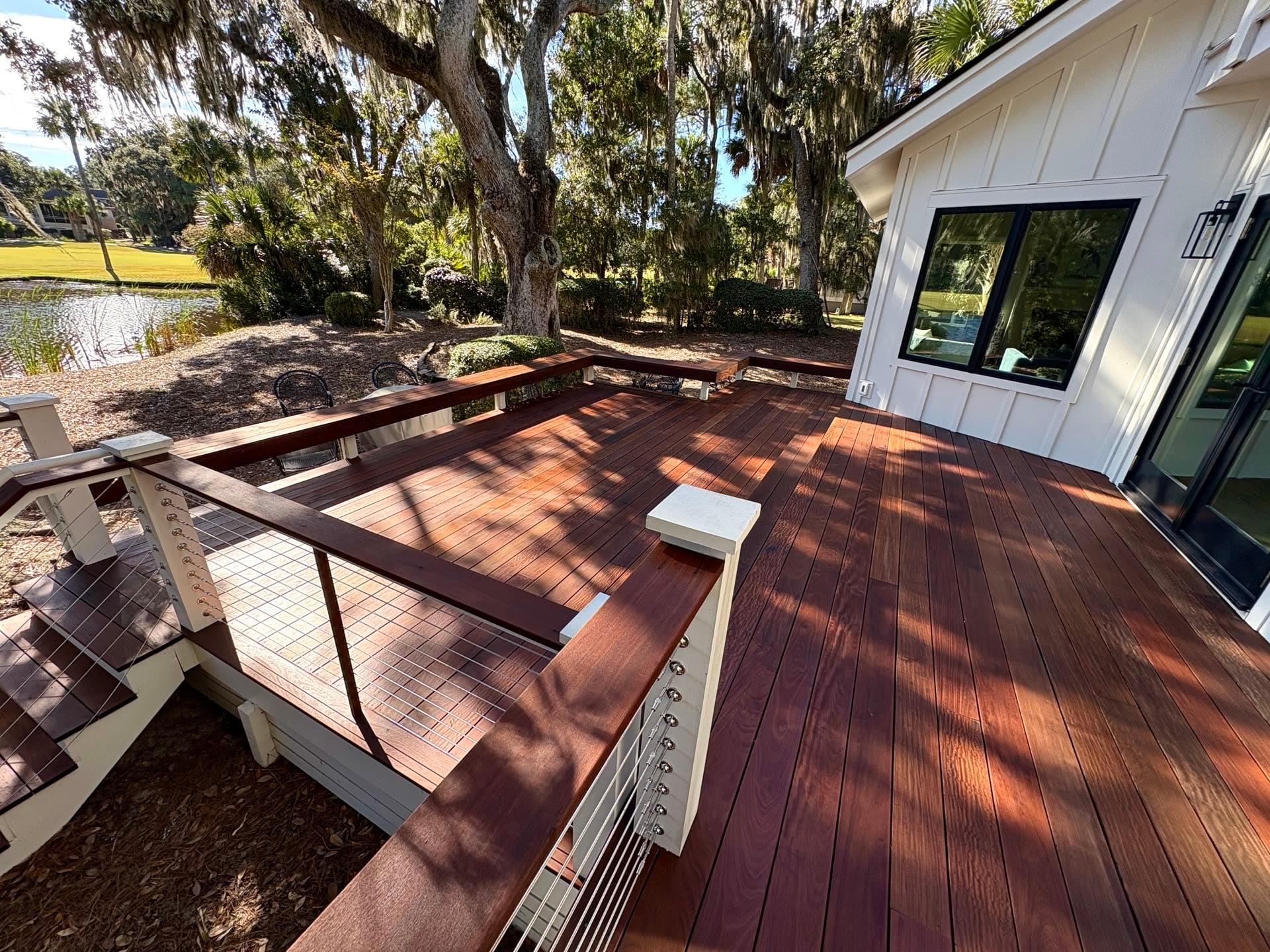
Get an honest read on your Malibu deck.
We will tell you whether it needs a recoat, a refinish or nothing at all yet. No charge for the visit.
Book your Malibu estimate.
Pick a time that suits, and the restorer who would run the job will walk the deck with you. There is no charge and no sales pitch.