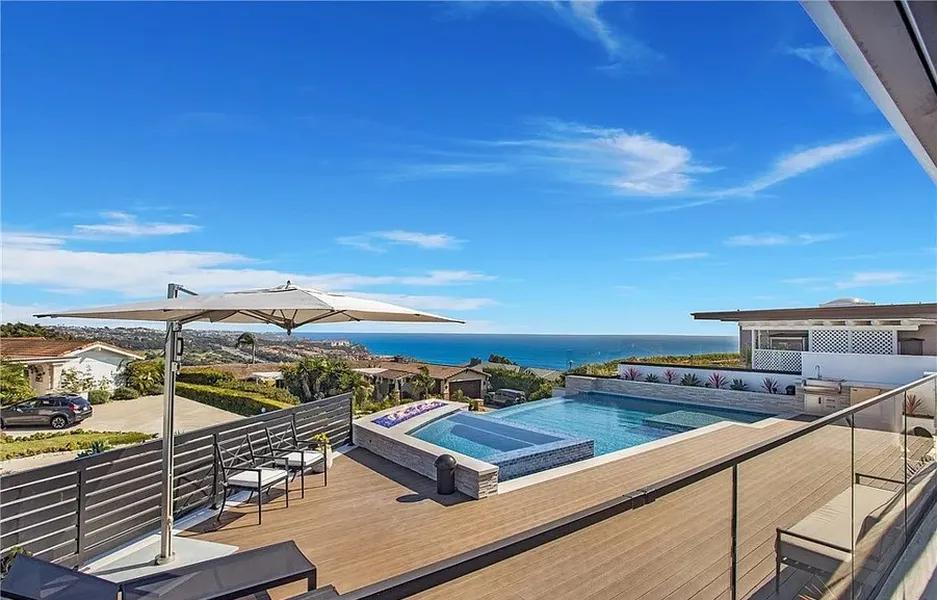
Ipe Deck Restoration in Seal Beach
From Old Town's tight beach cottages to the low-rise, HOA-managed homes of Leisure World, Seal Beach decks live in a near-constant bath of salt air off the pier.
Ipe & Teak Projects We Handle in Seal Beach
Old Town Front Porch Decks
Many beach cottages near Main Street have small elevated Ipe or teak porches exposed directly to onshore wind. We restore these compact spaces with careful attention to railing hardware and salt-etched grain.
Leisure World Patio Decks
Age-restricted community patios often feature smaller teak or Ipe decking sections. We work efficiently and coordinate access with residents and community staff.
Rear Alley-Access Decks
Seal Beach's alley-loaded lots frequently have rear decks that catch cross breezes and salt spray from two directions. We assess board spacing and drainage as part of every restoration.
Deck Railings and Hardware
Salt air corrodes screws and brackets faster near the pier, so railing restorations here often include hardware replacement alongside sanding and oiling.
The premier Ipe refinishing crew in Seal Beach, Orange County.
Seal Beach sits at the northern edge of Orange County's coastline, and its decks take a different kind of punishment than sun-baked inland towns: near-daily salt spray, marine humidity, and the corrosive effect that combination has on fasteners, railings, and exposed grain. Ipe holds up better than nearly any other decking material in this environment, but only when it's kept properly oiled. Left bare, salt-laden air accelerates graying and can leave a chalky, dry residue on the wood surface.
Old Town Seal Beach's narrow lots and alley-access homes mean many decks and front porches sit just blocks from the water, taking the brunt of onshore wind. Leisure World, by contrast, is an age-restricted, HOA-governed community with its own maintenance standards and mutual approval process for exterior work, which we're accustomed to navigating for residents there.
We're the same veteran-owned crew behind Seal Beach teak restoration and outdoor furniture refinishing. Browse recent projects in our project gallery or request a free estimate for your Seal Beach Ipe deck.
Serving Seal Beach landmarks & communities
- Seal Beach Pier
- Main Street
- Surfside Colony
- Seal Beach National Wildlife Refuge
- Eisenhower Park
- Old Town
- The Hill
- Bridgeport
- Surfside Colony
- College Park East
- Rossmoor-adjacent
Why the same Seal Beach deck weathers unevenly
Almost every Seal Beach deck we assess has three distinct zones. The ocean-facing edge takes salt spray and full UV and goes first. The middle field weathers at an average rate. The strip in the lee of the house, under an overhang or behind a glass rail, can still look nearly new when the rest is grey.
Refinishing the failed strip alone is tempting and almost always wrong: you end up with a two-tone deck that reads worse than the uniform grey did. The whole surface has to come to a common baseline before oil goes on.
Shade patterns are worth mapping before you commit to a schedule. If eighty percent of your deck is sheltered, you may only need spot maintenance on the exposed twenty percent between full refinishes.
Windward edge
Salt, spray and UV together. Shortest interval on the deck, sometimes half the rest.
Open field
UV-driven greying, even and predictable. This is what sets the overall schedule.
Sheltered lee
Slow to weather but slow to dry, so mildew rather than fading is the risk here.
Under furniture
Masked from UV and from rinse water. Salt concentrates underneath and stains.
From gray boards to a finished deck.
Estimate visit
Free, on-site, usually thirty minutes. You get square footage, condition notes and a fixed written price — no surprises later.
Protect the site
Glass, stone, planting, pool coping and cable rail all get masked. Dust containment matters as much on a deck as it does indoors.
Wash and dwell
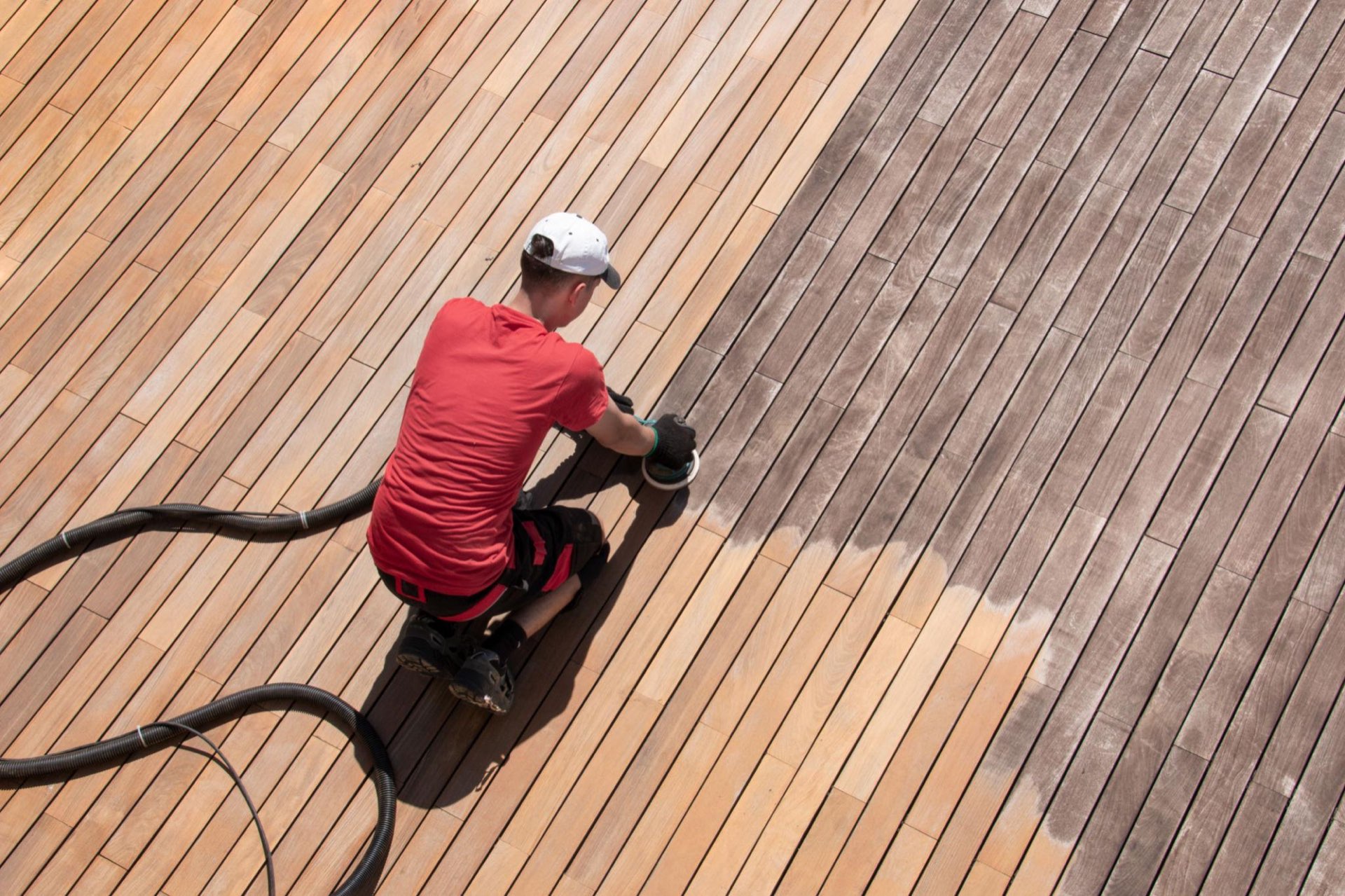
A dedicated hardwood cleaner is left to work rather than blasted off. Pressure washing shreds Ipe's soft early wood and we do not use it.
Sand flat and true
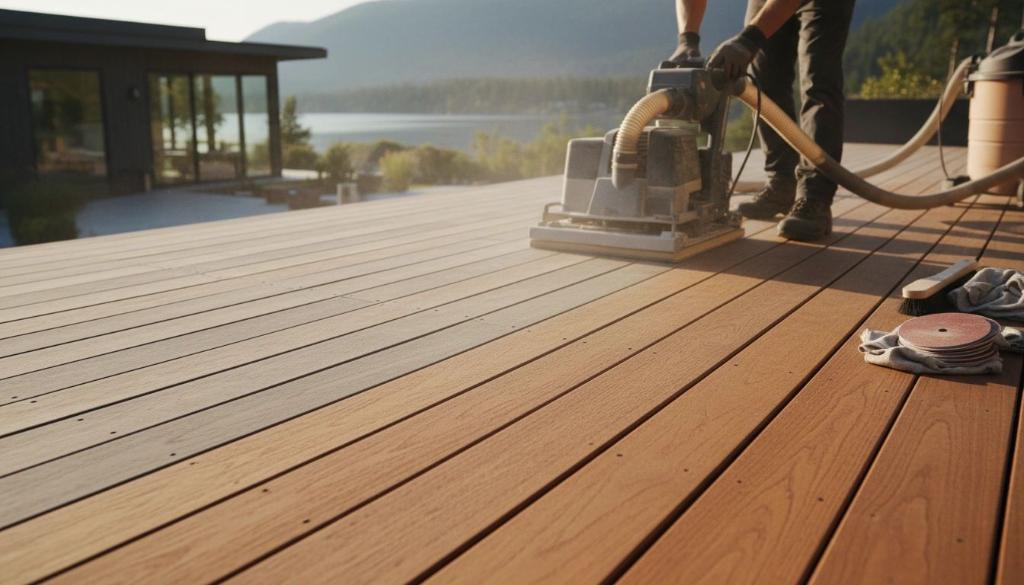
We chase out the fuzz, the checking and the traffic lanes until the surface is uniform under raking light.
Finish and detail
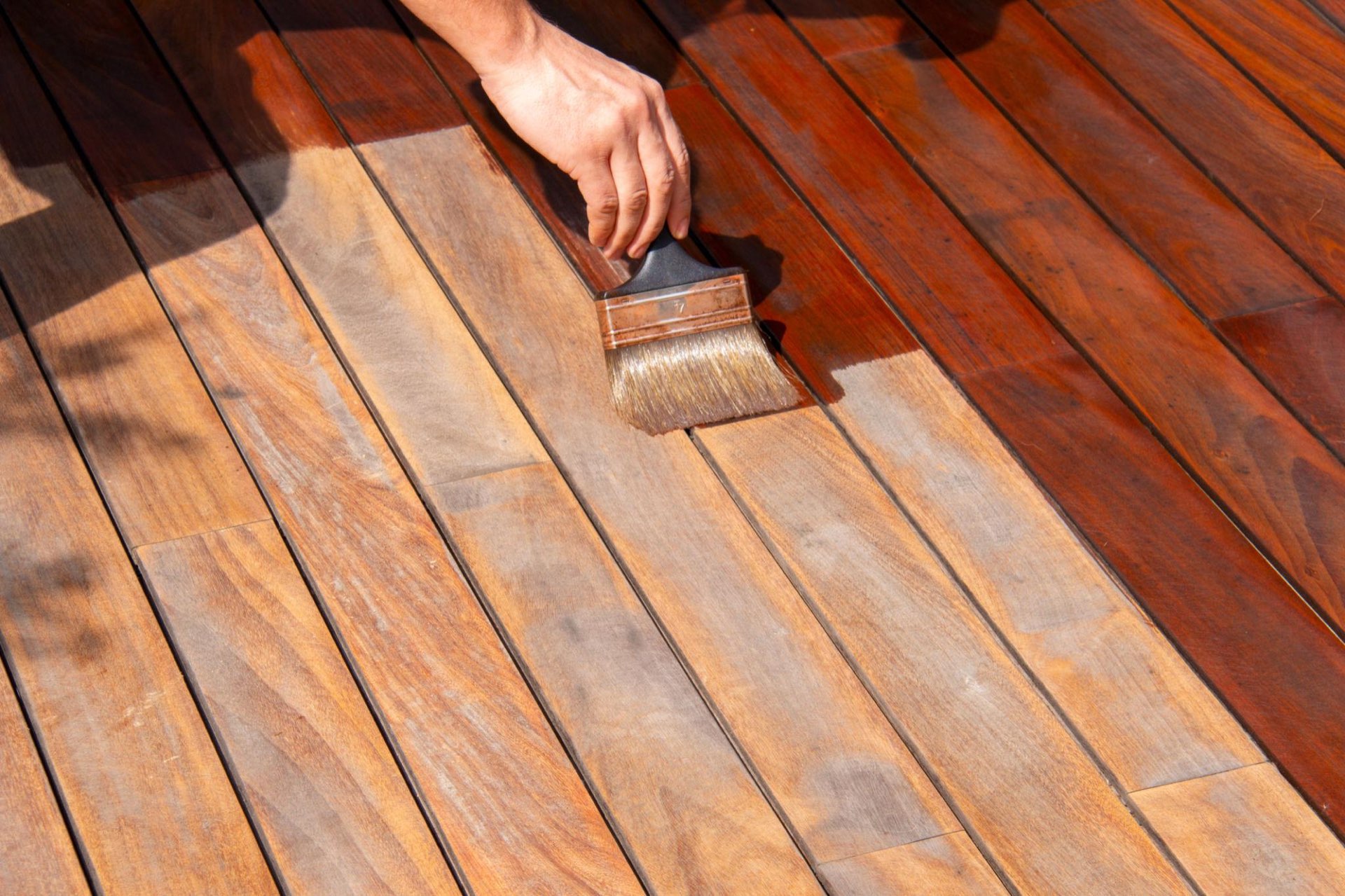
Oil on the field boards, hand-worked into fascia, stair risers and rail caps where the eye lands first.
Walk it with you
We hand the deck back in daylight, point out anything worth watching, and book the maintenance coat if you want one.
Benefits of Salt-Air-Rated Restoration
We use oils formulated to resist salt penetration and repel moisture at the surface, which slows the graying cycle considerably compared to standard sealers. Restoring a Seal Beach deck also means checking and, when needed, replacing corroded fasteners so the structure isn't undermined even as the surface finish holds up beautifully.
It reads as intentional
Silvered Ipe looks neglected next to modern glass and stone. A finished deck ties the whole elevation together.
It photographs
Listing and rental photography in Seal Beach lives or dies on the outdoor space. A refinished deck changes the first frame.
It protects the substructure
Water that stops at the surface never reaches joists, hangers and fasteners underneath.
It is safer underfoot
Splintering, raised grain and lifted fasteners all get resolved as part of the same visit.
Maintaining Ipe Decks in Seal Beach's Salt Air
We recommend rinsing decks with fresh water every few weeks to wash off accumulated salt film, especially for homes within a few blocks of the beach or pier.
Oiling every 9 to 12 months is typical for oceanfront and near-oceanfront properties in Seal Beach, compared to 12 to 18 months for more sheltered inland Orange County homes.
In Leisure World, where many decks are smaller patios and porches shared with common landscaping, we coordinate timing with community guidelines and keep work tidy and contained.
Built for the Seal Beach coastline.
Salt air, marine sun and coastal humidity break down every Ipe deck eventually. Our marine-grade oils and hand-sanded finishes are engineered for oceanfront homes in Seal Beach — protecting your investment year after year.
Ipe deck refinishing in Seal Beach.
Ipe deck refinishing near Seal Beach
If you are comparing quotes across the area, these nearby Seal Beach service pages cover the same work in neighbouring towns.
Worth reading before you book
When Does an Ipe Deck Need Refinishing?
Colour loss alone is not a reason to refinish. These are the signals that are.
Read guideHow UV Exposure Damages Outdoor Wood
Sun does not just fade colour. It breaks down the material that holds wood fibres together, and it degrades the finish protecting them.
Read guideHow to Maintain Teak After Restoration
Freshly restored teak needs very little. What it needs, it needs consistently.
Read guide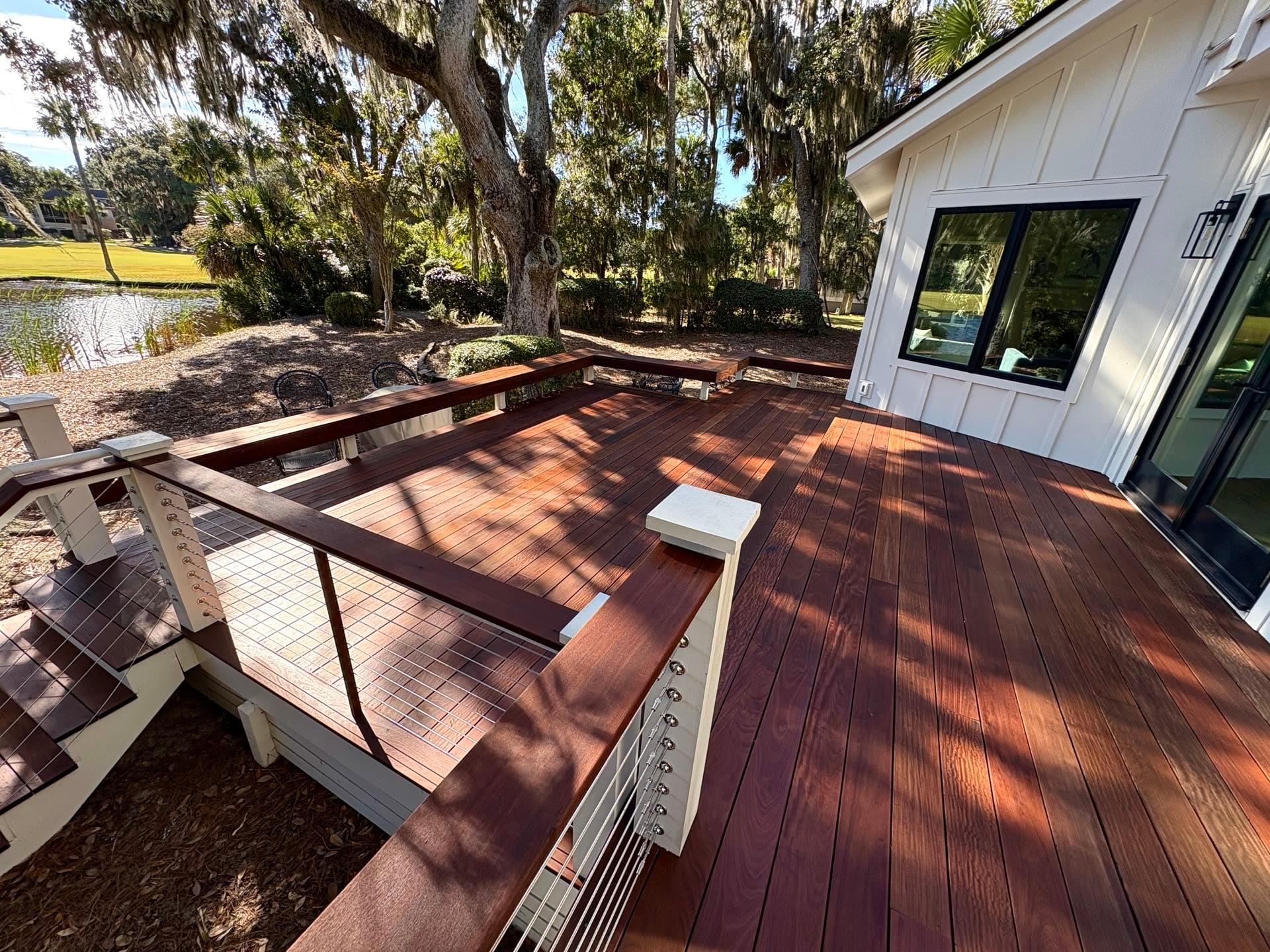
Book your Seal Beach Ipe deck before the season turns.
Spring and early autumn book out first. A short call now usually means a better slot.
Get a written quote for your Seal Beach deck.
Square footage, condition notes and a fixed price — sent in writing, usually the day after we visit.