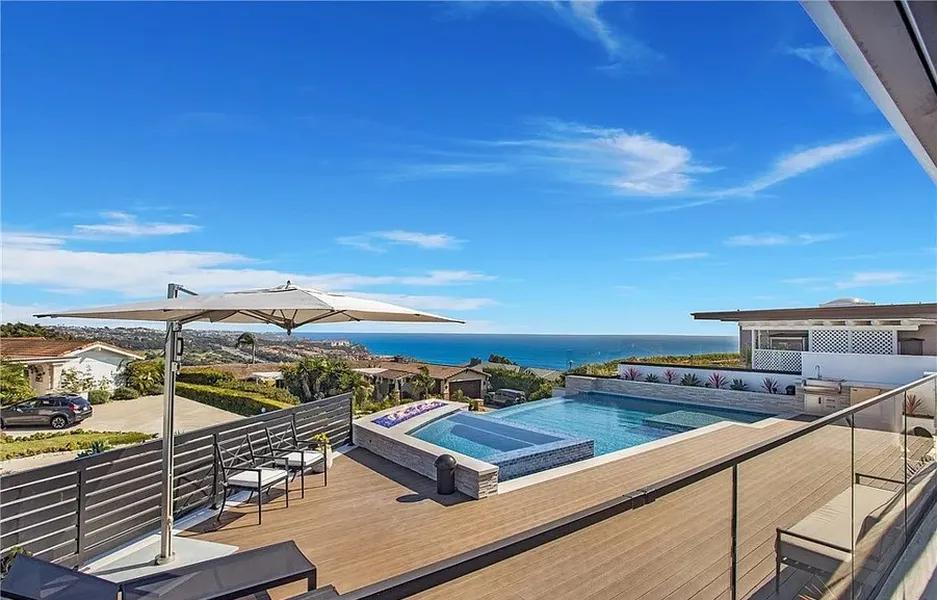
Ipe Deck & Dock Restoration for Marina del Rey
Between the boat slips and the salt-laden marina breeze, Marina del Rey's Ipe takes a beating unlike almost anywhere else in the region.
Why Marina Air Grays Ipe Faster Than the Open Coast
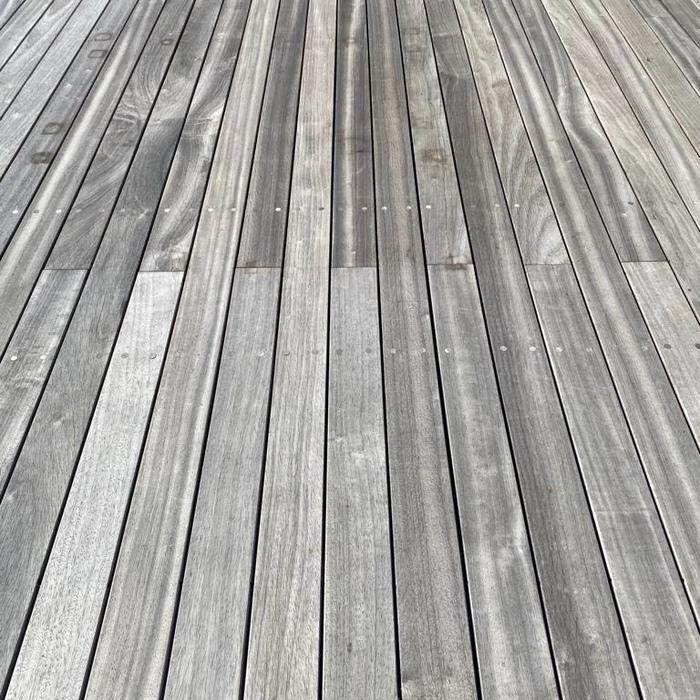
The marina's enclosed basin holds humidity against the shoreline longer than open beaches do, so salt particles never fully evaporate off the wood between tides. That trapped moisture pulls oils out of Ipe boards continuously rather than in cycles, leaving dock decking and low balconies silvery gray within a shorter window than typical oceanfront homes see.
Salt air and the Marina del Rey deck surface
Airborne salt is the variable that separates a Marina del Rey deck from an identical one a few miles inland. Salt is hygroscopic: it pulls water out of the air and holds it against the boards long after the morning marine layer has cleared. The top of each board stays damp for hours, and that slow wet-dry cycling is what tears a finish apart from underneath.
Ipe survives it better than almost any other decking because of its density — around 1,100 kg per cubic metre, tight enough that water struggles to get in at all. What fails is the oil sitting in the outer fibres, not the timber. That distinction matters, because it means a Marina del Rey deck that looks ruined is usually a refinishing job rather than a replacement.
Practically, oceanfront decks here want a maintenance coat roughly twice as often as sheltered ones. Rinsing salt off with fresh water once a week does more for the finish than any product upgrade.
What undoes a good Ipe finish
Most of the damage we are called to correct came from maintenance, not neglect.
Deck stain from the hardware store
Film-forming products cannot key into Ipe's density. They sit on top, peel in sheets and have to be stripped.
Bleach
It lightens the grey but breaks down fibres and strips the extractives that give Ipe its rot resistance.
Sealing wet wood
Oil over trapped moisture goes cloudy and lifts. Ipe needs to be genuinely dry before anything goes on.
Plastic covers
They trap condensation against the boards through winter and cause more damage than the weather would have.
Too much oil
Ipe accepts very little. Excess left to cure on the surface stays tacky and collects dirt all season.
Six-step process, hand-finished on-site.
Inspection
On-site assessment of every board — condition, exposure, prior finish and any repairs needed.
Deep Cleaning
Professional cleaning removes mildew, salt residue, sunscreen, oils and years of environmental buildup.
Sanding
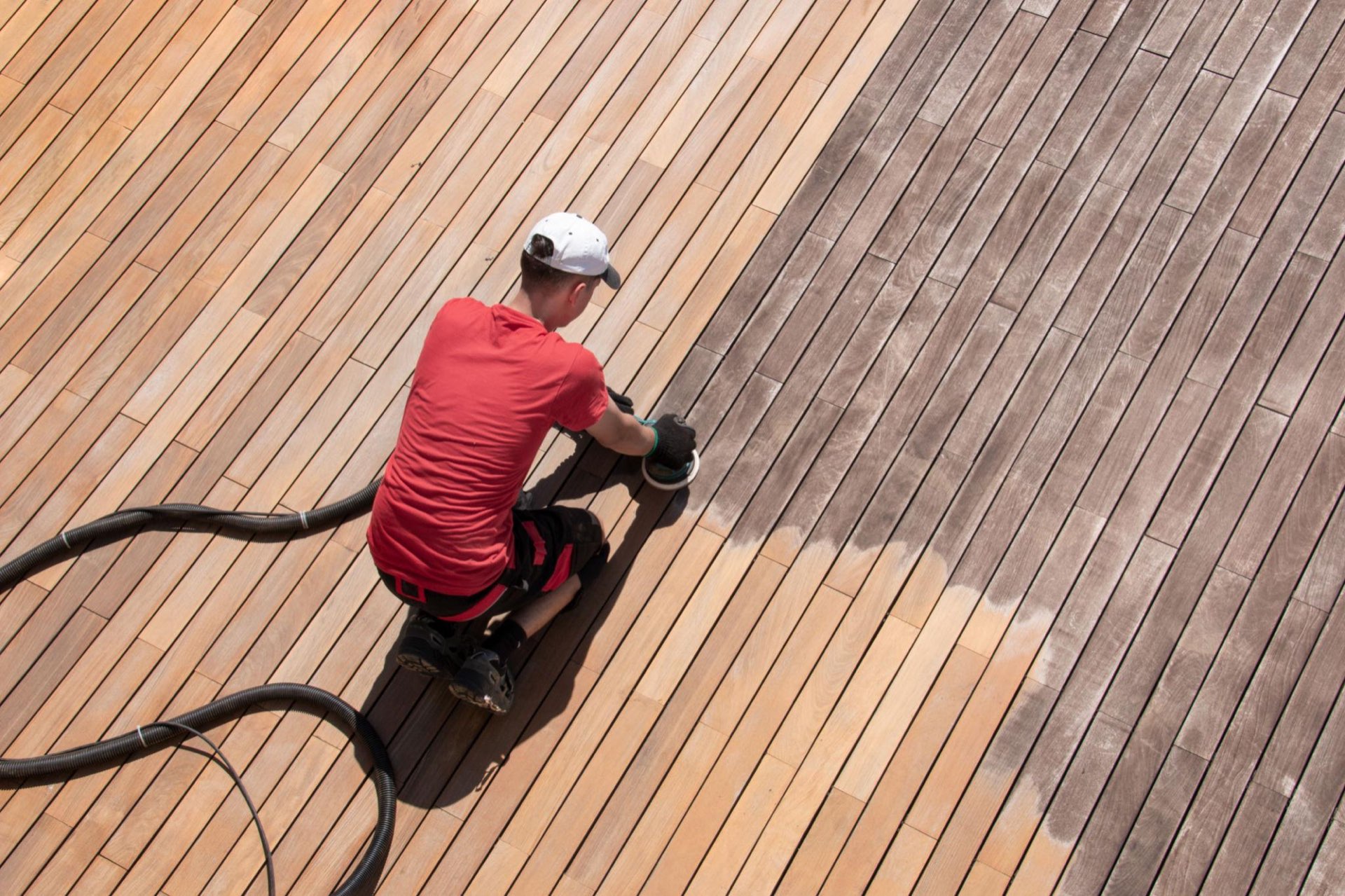
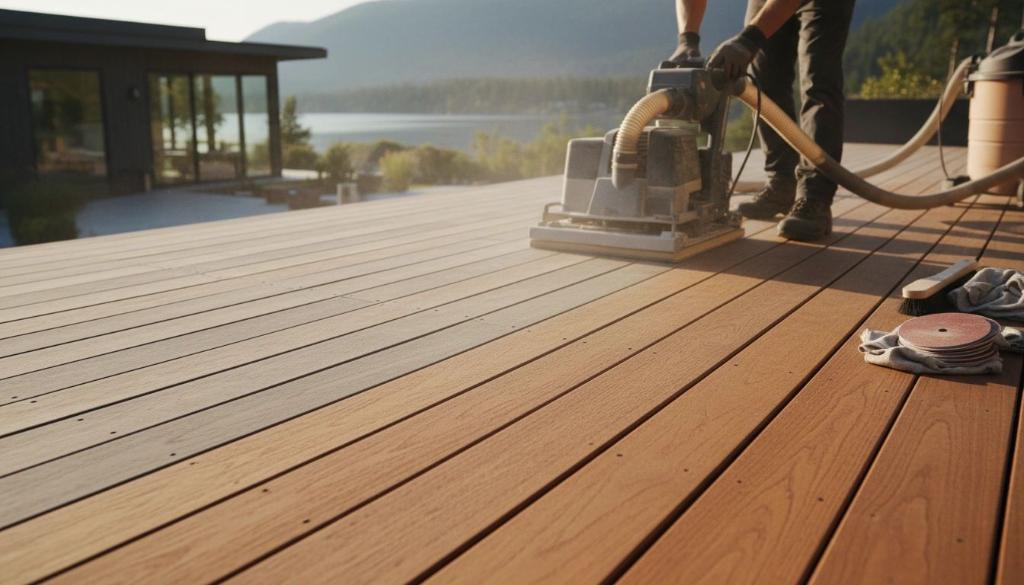
Multi-grit sanding down to fresh wood — the oxidized gray layer is removed, exposing rich color below.
Brightening
A wood brightener neutralizes tannins and evens the tone across every board for a uniform finish.
Premium Oil Finish
Marine-grade Ipe oil is hand-applied in multiple coats, penetrating deep to seal against sun and salt.
Final Inspection
Every square foot is inspected, edges detailed, and the site left cleaner than we found it.
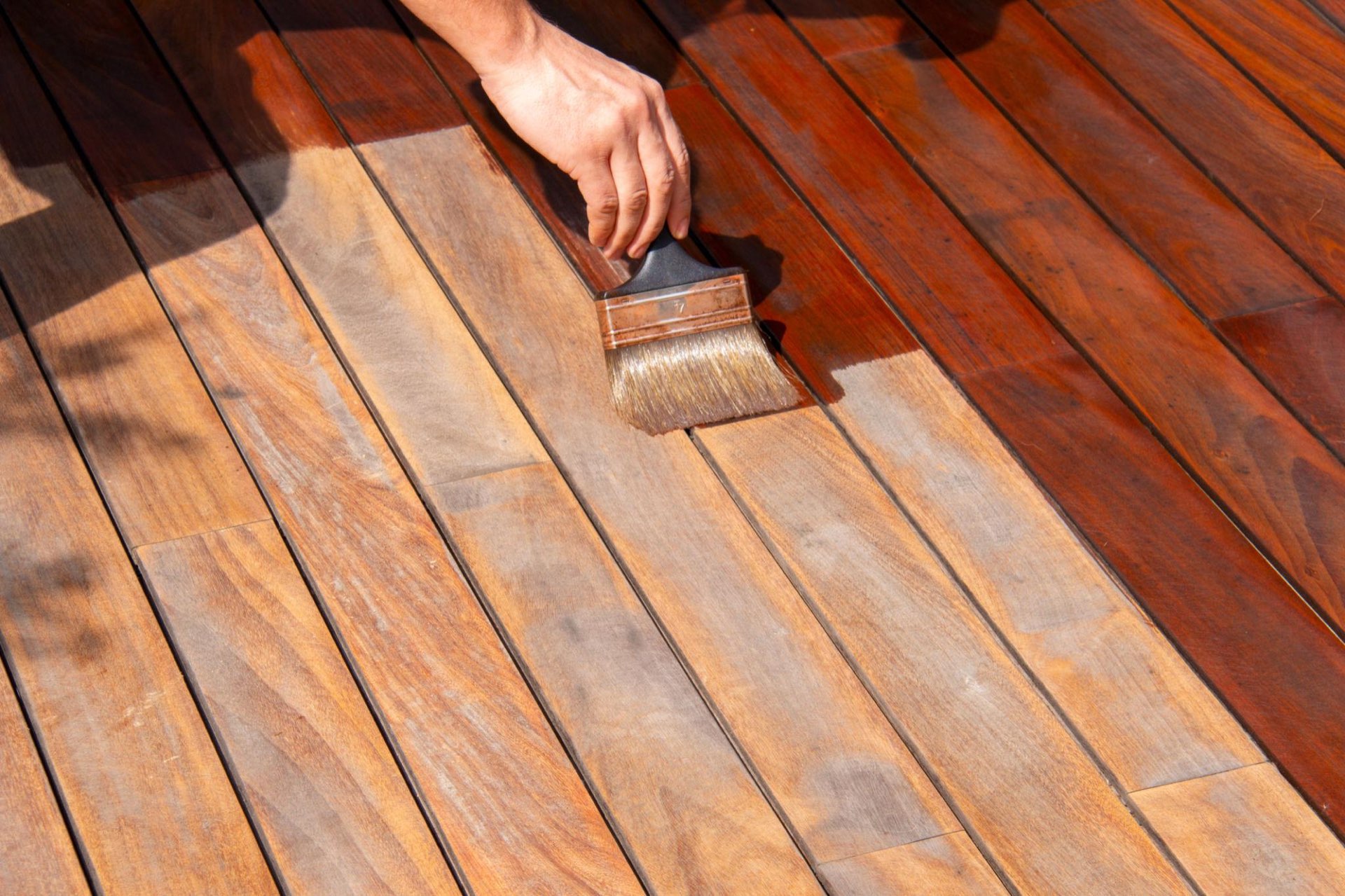
Pick the level of work your deck needs.
Level 1 — Clean & recoat
For decks still shedding water. Wash, spot-sand and one maintenance coat. The cheapest way to stay ahead of weathering.
Level 2 — Sand & refinish
Silvered but sound. Full abrasion back to clean wood, brighten, then two coats of penetrating oil.
Level 3 — Full restoration
Years of neglect, rough grain, checking and staining. Carpentry, stripping, full sand and a rebuilt finish system.
Add-on — Marine spec
Upgraded UV package for oceanfront and unshaded decks that see hard exposure all year.
Add-on — Maintenance plan
We come back on schedule so your deck never falls back to a Level 3 job.
Commercial & HOA contracts
Multi-building programs scheduled around guests, residents and trading hours.
What the finish looks like in daylight.
Photographed outdoors rather than under studio lighting, so what you see is the tone you can expect on your own deck. See more on our full project gallery.
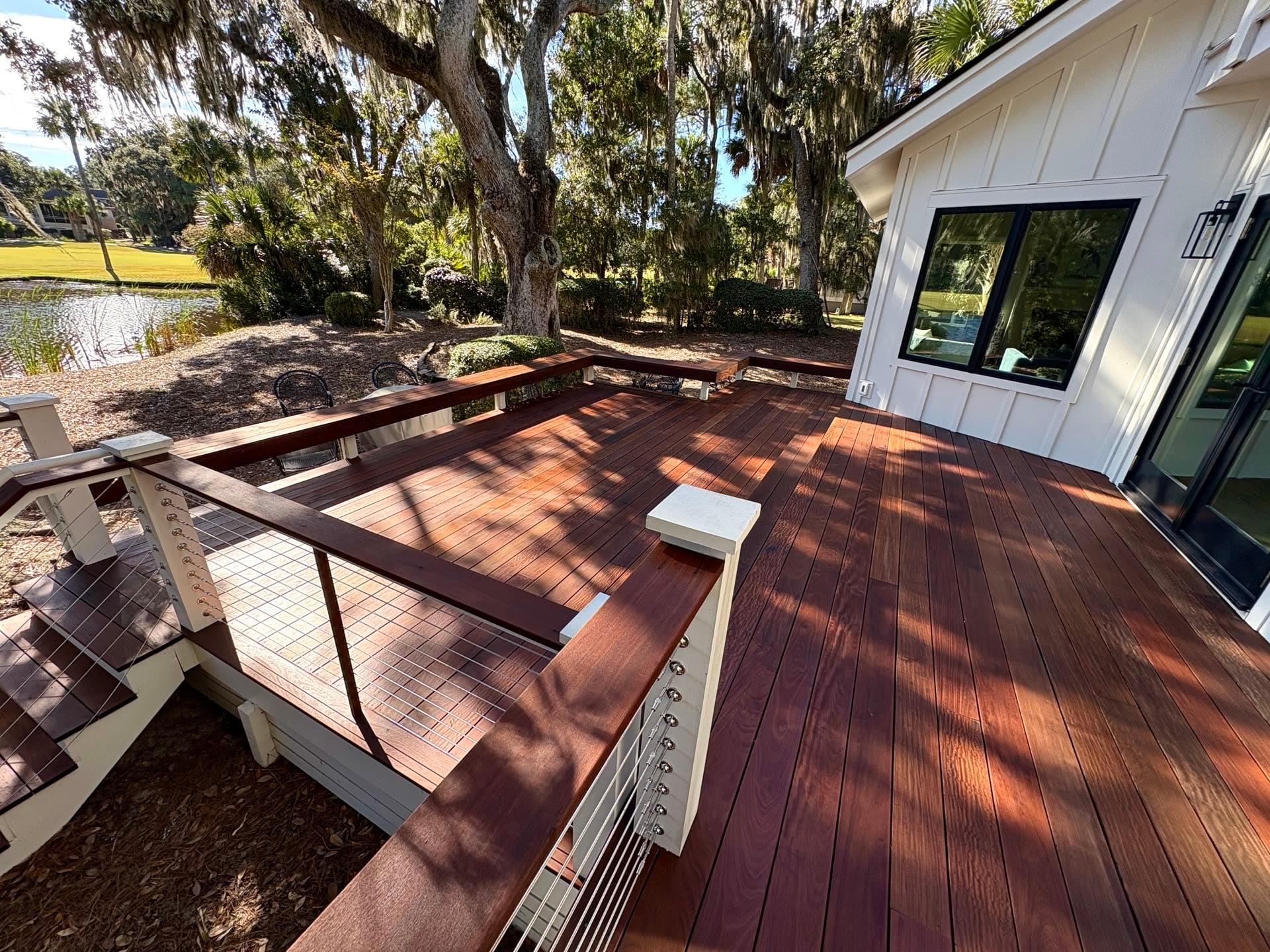
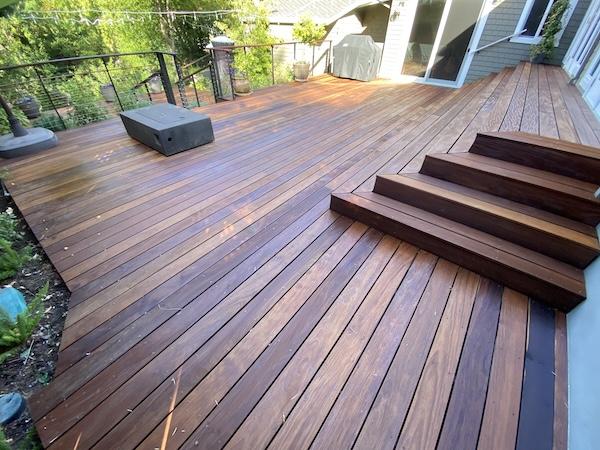
Ipe deck refinishing in Marina del Rey.
Ipe deck refinishing near Marina del Rey
We also provide professional Ipe deck refinishing throughout nearby Southern California communities.
Worth reading before you book
Ipe Deck Maintenance Guide
Ipe is dense enough to survive almost anything. Keeping it brown rather than silver is the part that takes a routine.
Read guideHow Coastal Weather Affects Teak Furniture
Near the ocean, three separate forces act on outdoor wood at once. Understanding which one is doing the damage changes how you maintain it.
Read guideHow to Restore Weathered Teak Furniture
Grey teak is almost always surface oxidation, not damage. Here is the full sequence used to bring it back, and the points where the job usually goes wrong.
Read guideReady to bring your Marina del Rey Ipe deck back to life?
Free on-site estimates. Most quotes returned within 24 hours.
Get a written quote for your Marina del Rey deck.
Square footage, condition notes and a fixed price — sent in writing, usually the day after we visit.