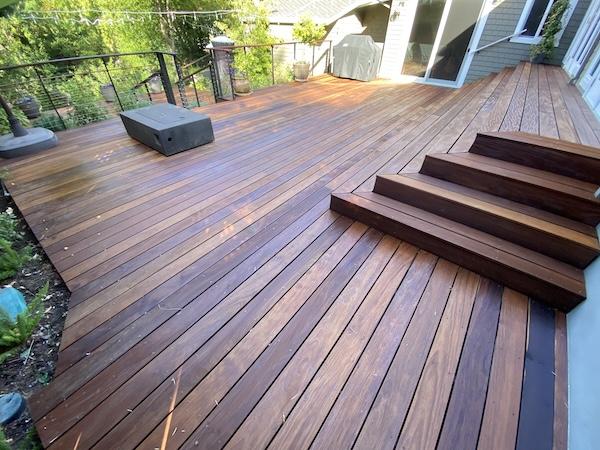
Ipe Deck & Rooftop Restoration in Manhattan Beach
Manhattan Beach's walk-street homes and rooftop decks put Ipe decking under a mix of blowing sand, marine moisture, and heavy entertaining traffic.
The premier Ipe refinishing crew in Manhattan Beach, Los Angeles County.
Manhattan Beach is unusual in Southern California for how many Ipe installations sit on rooftop decks rather than at ground level, since walk-street and Strand-adjacent lots are built vertically with limited yard space. That means our crews spend as much time on third-story rooftop entertaining decks as we do on ground-floor patios, and each has its own wear pattern.
Blowing sand from the Strand works its way onto walk-street decks and acts as a mild abrasive on foot traffic paths, while rooftop decks a few blocks inland deal more with marine layer moisture that keeps wood damp through the morning hours before it burns off.
We're the same veteran-owned crew behind Manhattan Beach teak restoration and outdoor furniture refinishing. Browse recent projects in our project gallery or request a free estimate for your Manhattan Beach Ipe deck.
Serving Manhattan Beach landmarks & communities
- Manhattan Beach Pier
- The Strand
- Downtown Manhattan Beach
- Polliwog Park
- Bruce's Beach
- Sand Section
- Hill Section
- Tree Section
- The Strand
- Manhattan Village
- El Porto
Why Refinish Rooftop and Walk-Street Ipe
Rooftop Ipe decks in Manhattan Beach are often installed over waterproof membrane systems that are expensive to disturb, so refinishing in place rather than replacing boards avoids reopening that substrate. On walk-street homes, matching original board sizing also keeps the deck consistent with tight-lot HOA or architectural review expectations.
A deck you can walk barefoot on
Eroded early wood leaves a fibrous surface that catches skin. Abrading it flat is the single biggest comfort change.
Surface water that runs off
A saturated finish keeps Manhattan Beach rain and irrigation spray sitting on top of the boards instead of soaking into end grain.
Even color across every board
Brightening pulls the tannin and iron staining out so replacement boards and originals read as one deck.
A shorter next job
Once the surface is sound, staying ahead of it is a maintenance coat rather than a full restoration.
Three tests you can do this afternoon
Before calling anyone, these three checks will tell you most of what a Manhattan Beach estimator would.
The cup of water
Pour it on the most exposed board. Beads and sits: fine. Soaks and darkens: book.
The palm test
Run a hand along the grain. Chalky residue on your palm is oxidised fibre coming away.
The hidden edge
Compare an exposed face to a board end under the rail. That colour gap is exactly what you have lost.
What a restoration week actually looks like.
Day zero — walkthrough
We measure the deck, photograph problem areas, test moisture in a few boards and agree the scope in writing before anyone starts.
Board triage and carpentry
Cupped, split or fastener-damaged boards get flipped, re-fixed or swapped first. Sanding a deck with loose boards only hides the issue.
Strip and neutralize
Old film finishes and mill glaze come off chemically where sanding alone would gouge the surface, then the wood is neutralized and rinsed.
Progressive abrasion
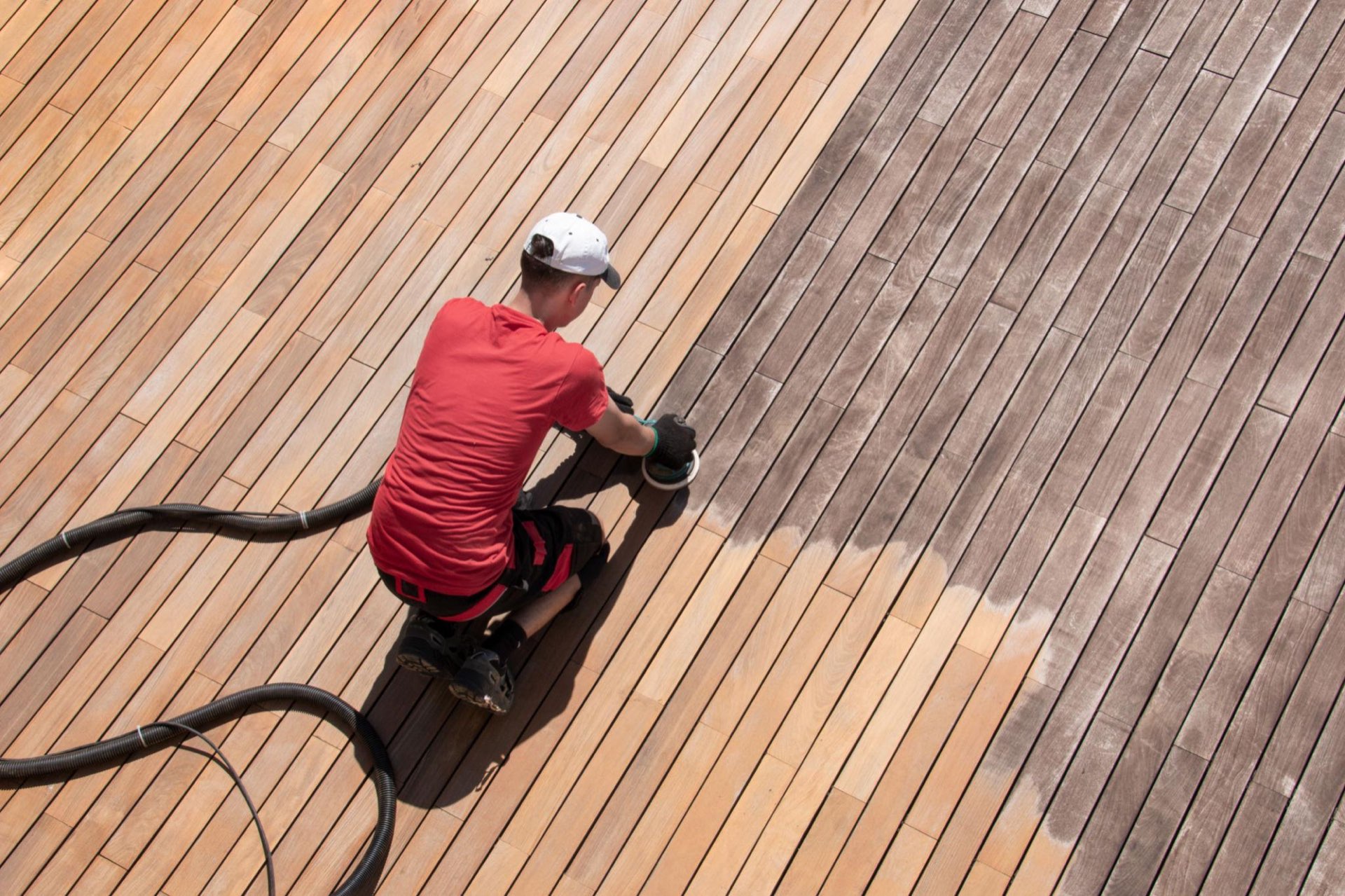
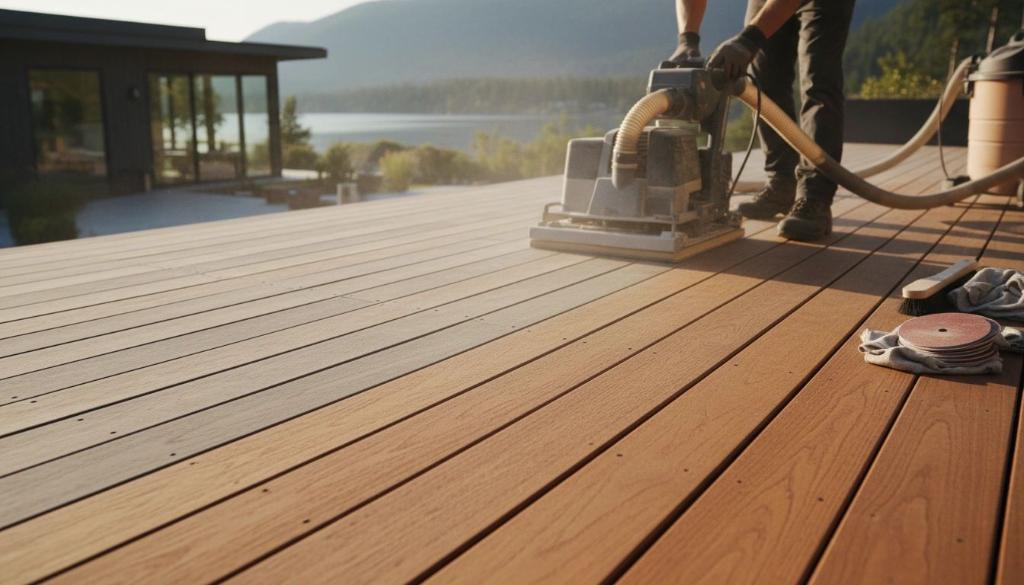
Coarse to fine in stages, with hand work along railings, stair noses and anywhere a machine cannot reach flat.
Saturation coats
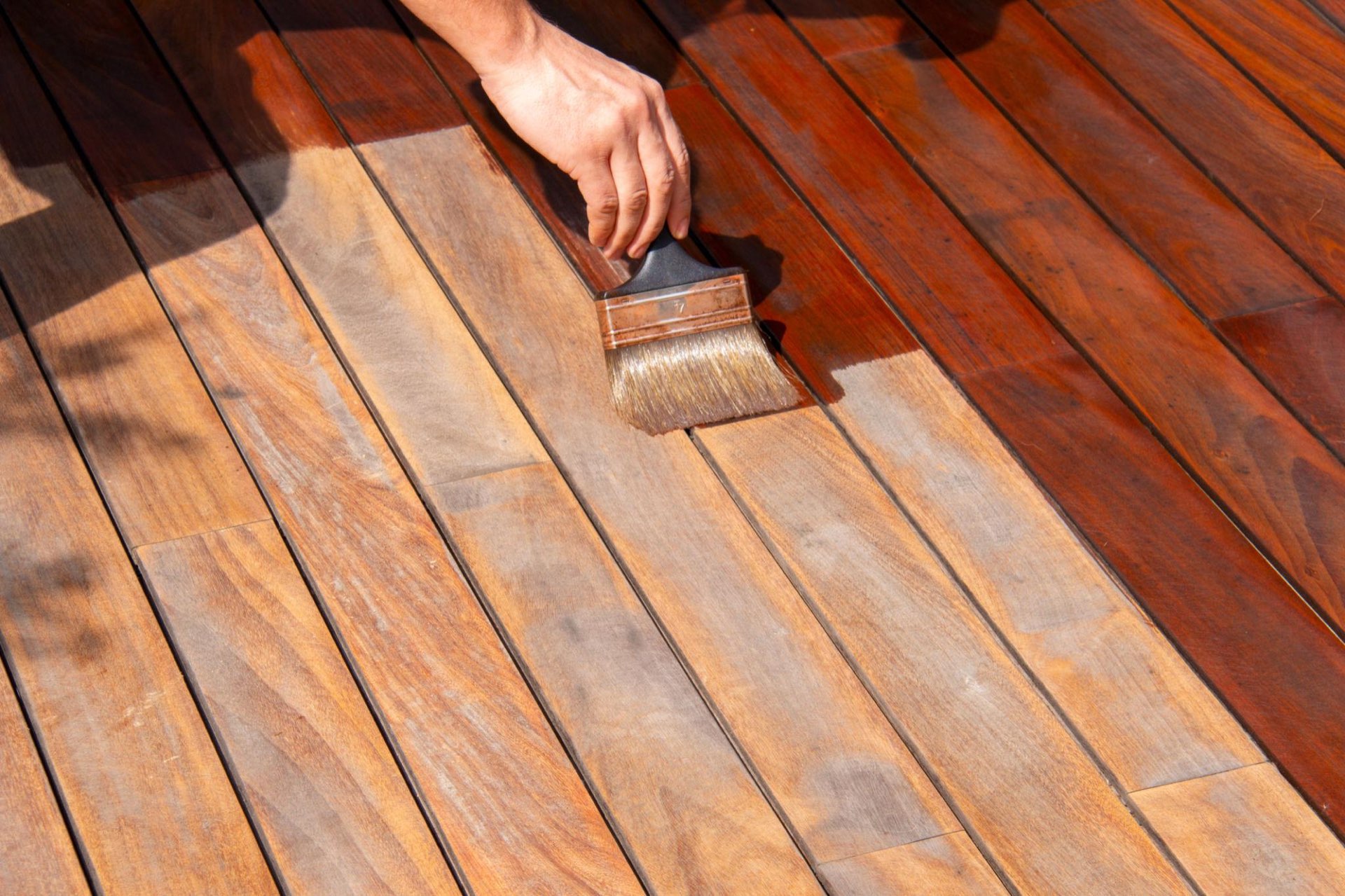
Oil goes on wet-on-wet until the boards stop drinking, then the excess is wiped back so nothing sits on the surface to go sticky.
Cure and handover
We stay off the deck through the cure window, return to buff any raised spots, and leave you a written care schedule.
What each finish costs you in upkeep
Richer colour always means a shorter interval. Natural-tone oils show the wood at its best and want refreshing soonest. Pigmented and UV-fortified versions hold longer but read slightly more uniform and less lively.
Leaving Ipe bare is the cheapest ongoing option and entirely valid, provided the surface has been sanded smooth so it silvers evenly rather than patchily and never splinters underfoot.
Ipe Project Types We Handle in Manhattan Beach
Rooftop Entertaining Deck Refinish
A rooftop Ipe deck used regularly for gatherings was sanded to remove furniture wear patterns and refinished with an oil suited to high foot traffic areas.
Walk-Street Ipe Stair Restoration
Exterior stairs connecting a walk-street home to its rooftop deck were sanded and oiled, with extra attention to sand buildup in the tread grooves.
Sand-Adjacent Patio Sanding
A ground-level Ipe patio a block from the Strand was cleaned of embedded sand and mildew before refinishing to restore even coloring.
Rooftop Railing and Bench Detail
Built-in Ipe benches and railings on a rooftop deck were hand-sanded around joints where moisture tends to collect longer than on open board surfaces.
Beyond the deck boards.
Board replacement & repair
Sourcing, milling and swapping damaged Ipe so the repair disappears into the run instead of announcing itself.
Railing & stair refinishing
Handrails, cable rail posts and stair treads take the most contact and weather differently from the field boards.
Stain & tannin removal
Rust halos around fasteners, planter rings, barbecue grease and sunscreen shadow all come out with the right chemistry.
Pool & spa surrounds
Chlorine splash-out and constant wet traffic need a finish specified differently from a dry upper terrace.
Pre-sale refresh
A fast turnaround package for listings — clean, light sand and a single saturating coat before photography.
Rooftop & balcony decks
Access-limited work with hand tools and containment, common on multi-level and HOA properties.
Ipe deck refinishing in Manhattan Beach.
Ipe deck refinishing near Manhattan Beach
Our crews run out to the neighbouring towns around Manhattan Beach on the same schedule, so a shared crew day often means a better slot for you.
Worth reading before you book
Ipe Deck Maintenance Guide
Ipe is dense enough to survive almost anything. Keeping it brown rather than silver is the part that takes a routine.
Read guideHow UV Exposure Damages Outdoor Wood
Sun does not just fade colour. It breaks down the material that holds wood fibres together, and it degrades the finish protecting them.
Read guideSanding vs. Stripping Exterior Wood
Both are preparation methods with different jobs. Choosing wrong either wastes wood or leaves contamination behind.
Read guide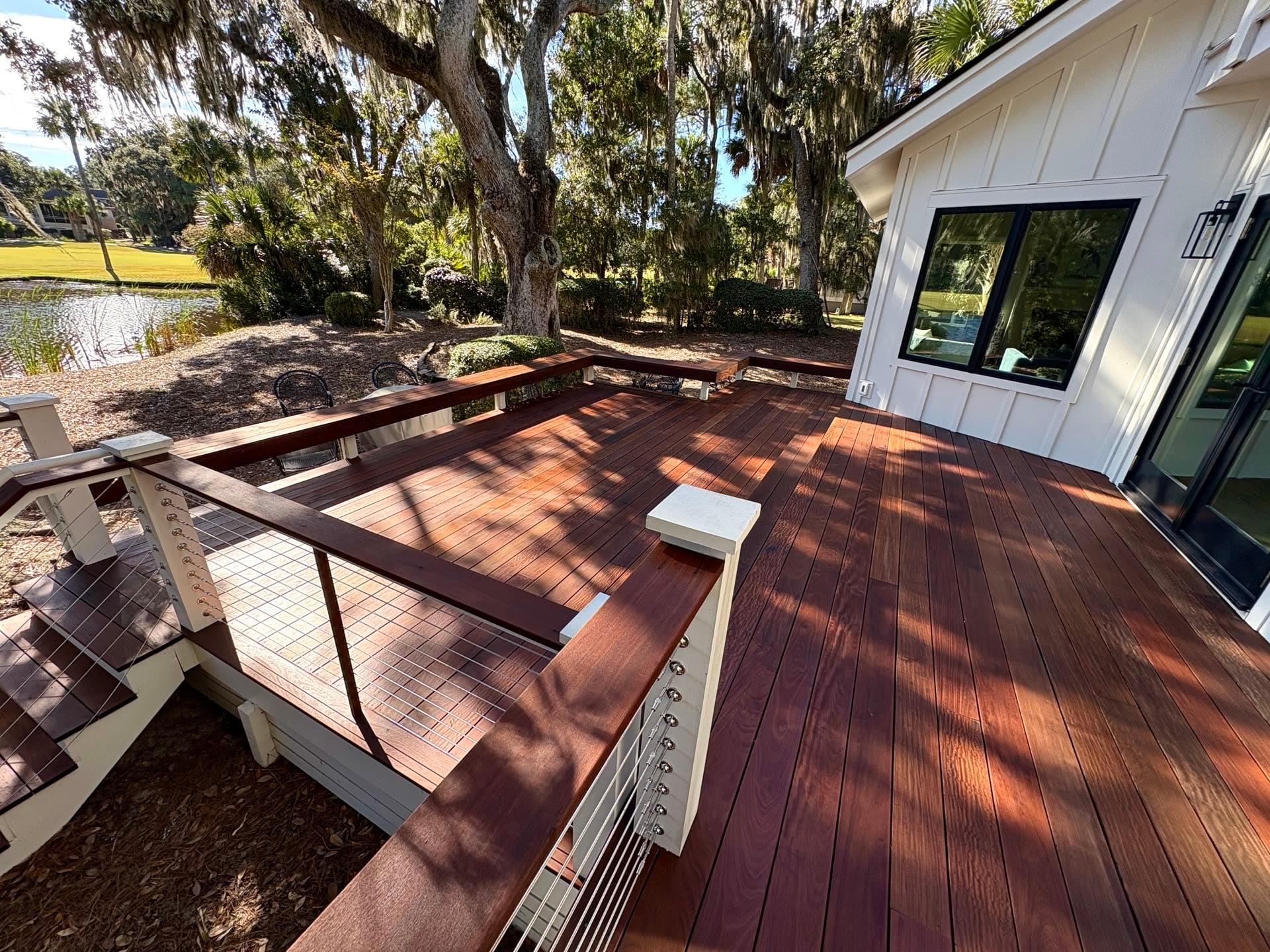
See what is under the grey on your Manhattan Beach deck.
We can sand a test patch during the estimate so you can see the color before committing to anything.
Not sure what your Manhattan Beach deck needs?
Send a photo with your details. We can usually tell you whether it is a recoat or a full refinish before we visit.