Coto de Caza Teak Restoration for Estate Properties
Restoring teak furniture, decking and outdoor living spaces on Coto de Caza's gated estate and equestrian properties.
Teak Restoration for Coto de Caza's Estate Living
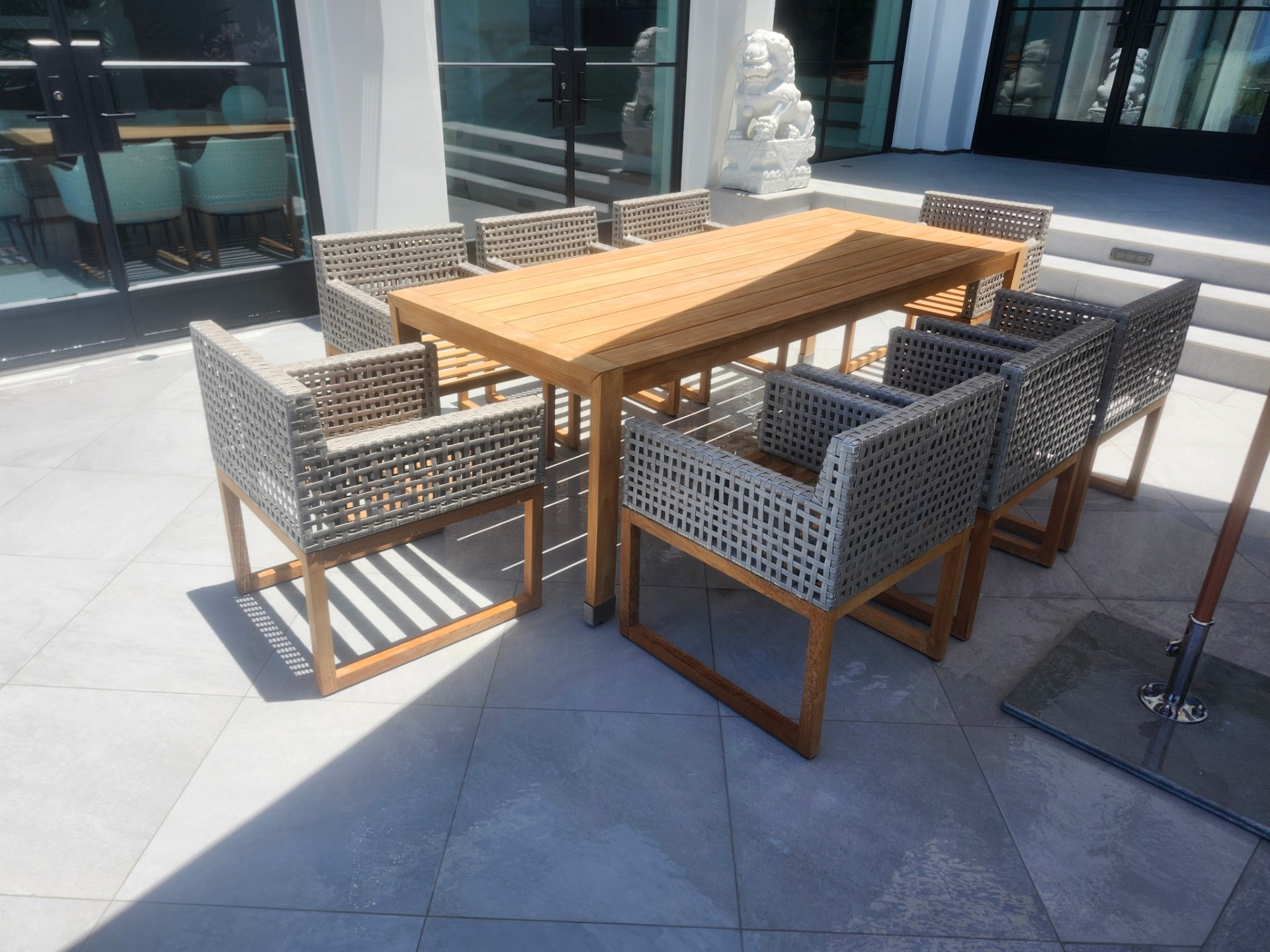
Coto de Caza is defined by large, gated estate lots, and the teak furniture we restore here tends to be substantial: extended dining sets for outdoor entertaining, deep-seated lounge groupings around pools, and occasionally teak elements built into equestrian property structures near the community's riding trails.
Because many Coto properties sit on generous acreage with minimal shade coverage compared to denser coastal neighborhoods, teak furniture here often gets fuller, more direct sun exposure throughout the day, which can accelerate surface graying on large tabletops and armrests faster than on shaded patio furniture elsewhere in South County.
The community's canyon and hillside terrain also means some properties experience stronger wind exposure than flatter inland cities, and we've seen this contribute to dust accumulation in teak grain on furniture near open equestrian areas or unlandscaped lot perimeters.
Given the scale of many outdoor living spaces in Coto de Caza, from expansive pool decks to multi-piece patio dining arrangements, our on-site restoration process is built to handle larger sets efficiently without requiring homeowners to disassemble or relocate furniture off the property.
Whether it's a long teak dining table used for hosting or a set of loungers around a private pool, we approach each estate property's furniture based on its actual sun exposure and use patterns rather than a one-size-fits-all process.
We regularly work on estate and equestrian properties throughout gated Coto de Caza, restoring large-scale teak dining and lounge sets on pool decks and patios.
Neighborhoods we regularly service in Coto de Caza
- The Estates
- The Village
- Weatherly
- Trabuco Hills
- Los Ranchos Estates
Santa Ana winds and seasonal dust
Dry offshore wind events do two things to Coto de Caza teak at once: they drop humidity sharply for days, and they coat everything in fine dust that holds in open grain.
The humidity swing is the more damaging half. Rapid drying after a wet spell is when checking appears, because the surface shrinks faster than the core of the timber can follow.
Dust matters mainly at finishing time. It is the reason we watch the forecast before scheduling a coat: oil that is curing in wind picks up grit that then has to be cut back and recoated.
Not all teak is the same wood
The label covers several very different materials, and which one you own changes both the method and the realistic outcome.
Old-growth Burmese teak
Dense, tight-ringed, very high oil content. Restores beautifully and holds finish longest.
Plantation teak
Faster grown, lighter, more sapwood. Perfectly good outdoors but needs a gentler hand and more frequent coats.
Grade A, B and C stock
Grading describes how much heartwood is present. Sapwood-heavy pieces stain and weather unevenly by nature.
Teak veneer and composites
A thin skin over a substrate. These cannot be sanded meaningfully and are cleaned and coated only.
Teak-look hardwoods
Eucalyptus and shorea are often sold as teak alternatives. They restore well but on a shorter cycle.
Hand-finished
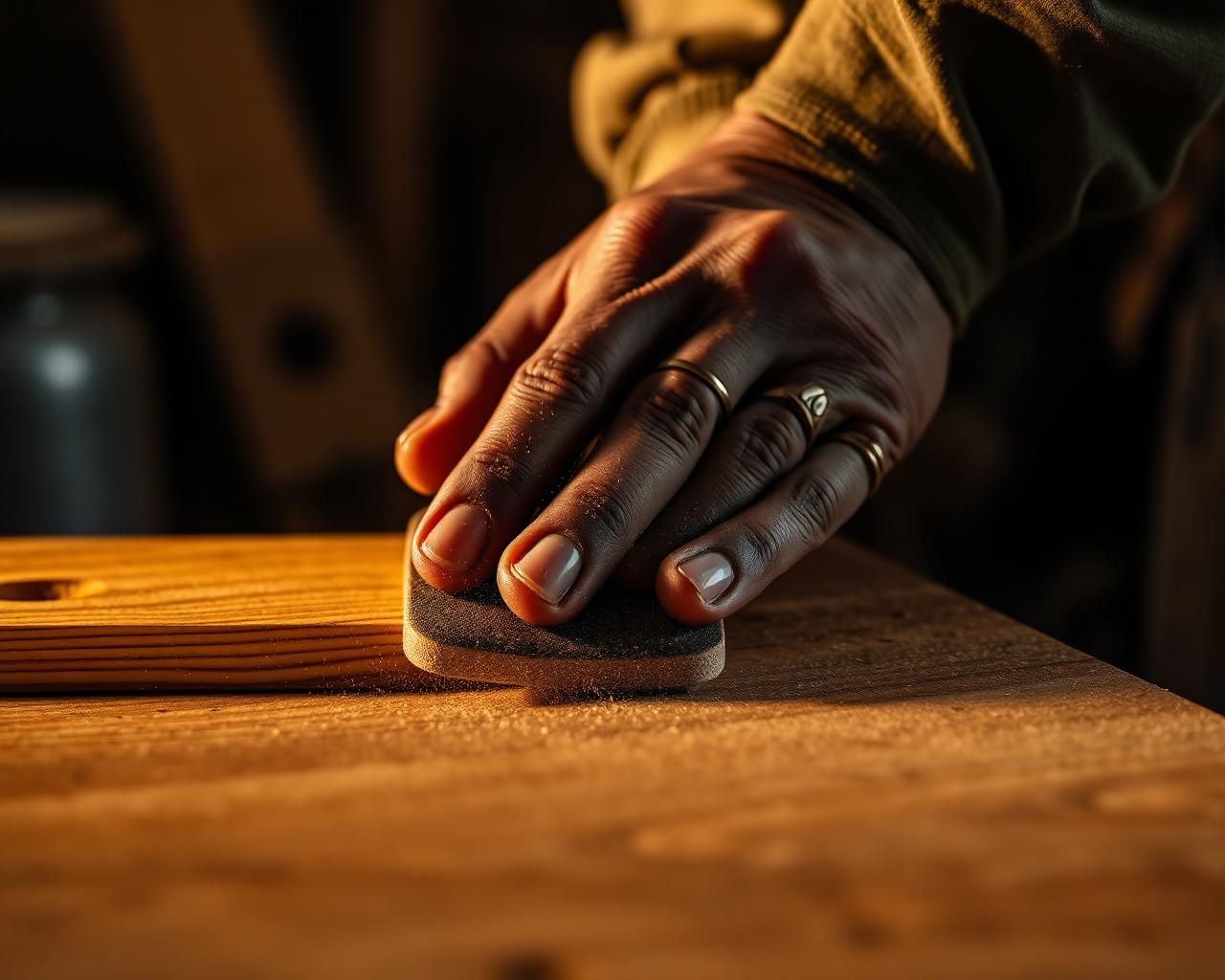
Every grain inspected, sanded and sealed by a master craftsman.
What actually happens across the two days.
- 01
Scope and photograph
We record the condition of each piece before work starts, so the before-and-after is documented rather than described.
- 02
Mask and contain
Stone, glass, pool coping and planting are covered. Teak dust is fine and travels, so containment is set up before any abrasive runs.
- 03
Strip what is failing
Old varnish and film finishes come off chemically. Sanding through a failed film only drives it deeper into the grain.
- 04
Level and refine
Coarse work flattens eroded early-wood, then finer passes close the grain without burnishing it shut.
- 05
Feed the wood
Oil goes on until the wood stops taking it, then the excess is wiped off within the working window.
- 06
Cure and return
We leave the pieces to cure, then come back to buff any raised grain and reset your furniture layout.
Choosing the tone you actually want
Restored teak can be finished anywhere between a pale, matt honey and a deep, almost amber brown, and the difference is mostly product choice and coat count rather than stain.
We sample on your own wood before committing the set, because the same oil reads differently on old, dense teak than on newer plantation stock, and photographs of other projects are a poor guide.
Darker is not automatically better outdoors. Deep tones absorb more heat, which shortens the interval on pieces in full sun, and that trade-off is worth making deliberately.
A realistic upkeep schedule for Coto de Caza
Exposure sets the interval far more than the calendar does, but this rhythm works for most properties here.
Monthly
Rinse, and clear anything sitting on horizontal surfaces long enough to hold moisture.
Seasonally
Wash with mild soap, check joints and fasteners, inspect undersides for trapped damp.
Annually
Run the water test. If exposed faces no longer bead, book a maintenance coat.
Every few years
A full sand and refinish on the most exposed pieces; sheltered items go considerably longer.
When restoration is the better call
Quality teak furniture is built to outlast several finishes. The grey surface that makes a set look finished is a fraction of a millimetre deep; below it the timber is usually sound and dense.
Restoration also preserves what replacement cannot: the joinery of well-made older pieces, dimensions that fit a specific space, and matching across a set that is no longer manufactured. In Coto de Caza that matters most on built-in benches and custom tables.
Replacement is genuinely right sometimes — widespread rot, failed structural joinery, or pieces that were low-grade to begin with. We say so rather than sell a finish onto wood that cannot hold it.
The part most people notice second.
Consistency across a set
Sun-facing and shaded pieces are finished to match, so a restored group reads as one set rather than a repair.
Detail at the edges
Arm ends, slat gaps, underside rails and stretcher bars are the first places shortcuts show. They get hand time.
Finish matched to the coast
Sealers and marine-grade oils engineered to protect Coto de Caza teak from long full-sun days and cool canyon nights.
Veteran-run scheduling
Arrival windows kept, days finished when promised, and a single point of contact for the whole Coto de Caza project.
Restored teak across Coto de Caza's finest properties.
Recent work, photographed on handover day in natural light. No staging, no filters, no replacement pieces.
Poolside Daybed & Lounger
Newport Beach, CA
Veranda Lounge Suite
Newport Coast, CA
Other projects from this season
Teak restoration in Coto de Caza — answers to the questions we hear most.
Proudly serving Coto de Caza & Orange County.
On-site teak restoration, refinishing and outdoor furniture restoration throughout Coto de Caza and every neighboring Orange County community.
- Coto de Caza
- Newport Beach
- Corona del Mar
- Newport Coast
- Laguna Beach
- Costa Mesa
- Huntington Beach
- Irvine
- Tustin
- Orange
- Villa Park
- Yorba Linda
- Aliso Viejo
- Lake Forest
Teak restoration near Coto de Caza
Teak restoration is available across the neighbouring coastline and inland communities near Coto de Caza.
More ways we serve Coto de Caza
From our restoration library
Sanding vs. Stripping Exterior Wood
Both are preparation methods with different jobs. Choosing wrong either wastes wood or leaves contamination behind.
Read guideCan Severely Weathered Teak Be Restored?
Usually yes. The limiting factor is structure, not appearance.
Read guideHow UV Exposure Damages Outdoor Wood
Sun does not just fade colour. It breaks down the material that holds wood fibres together, and it degrades the finish protecting them.
Read guideFree on-site assessment in Coto de Caza
Send a few photos or book a visit. Either way you get a fixed price and an honest scope.
Tell us about your Coto de Caza teak project.
We reply to every enquiry personally, usually the same day, and will tell you honestly if the work can wait a season.