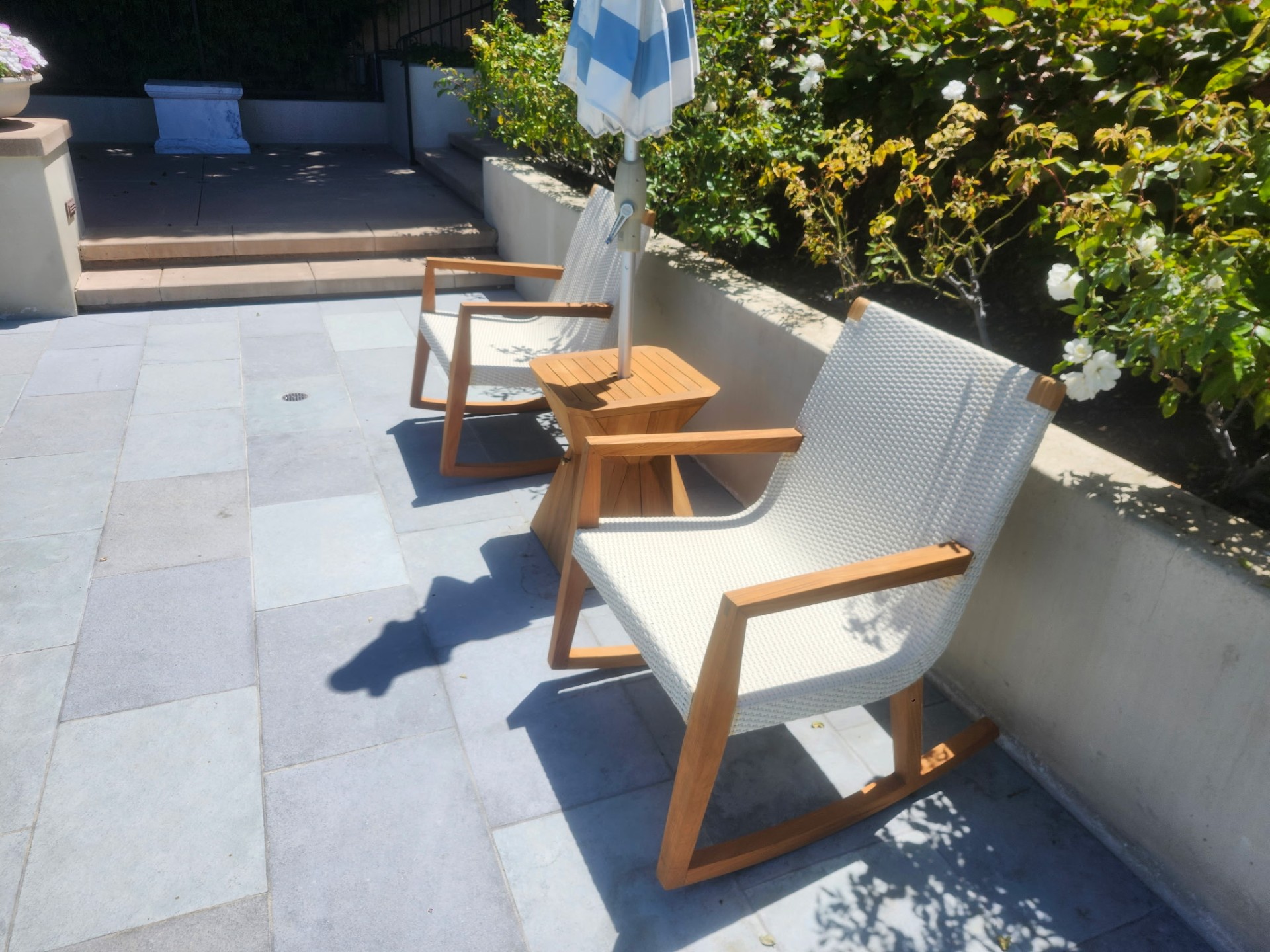
Manhattan Beach Teak Restoration & Refinishing
Reviving weathered teak patio furniture and decking for Sand Section and Hill Section homes alike, right where you live.
Teak Care Built for the Sand Section
Manhattan Beach living means a lot of time outdoors — on the Strand, at rooftop decks overlooking the pier, or in a Hill Section backyard shielded from the wind. Teak furniture here takes a beating from salt-laden air blowing in off the water, and homeowners often notice their once-honey-toned dining sets and loungers turning a dull, blotchy gray within a couple of seasons.
We work directly at your property, whether that's a tight Sand Section lot with a rooftop entertaining space accessed by a narrow staircase, or a larger Hill Section home with a view deck. Our process is fully on-site: no furniture leaves your home, and we protect surrounding landscaping and hardscape while we work.
Because so many Manhattan Beach properties sit close to the water, we see accelerated salt crystallization in the wood grain, especially on teak dining tables and chaise lounges left uncovered near open-air patios. Left untreated, this speeds up surface checking and can make refinishing more labor-intensive later.
We also handle teak that's seen years of DIY oil treatments gone wrong — over-oiled surfaces that have gone sticky or blackened from mildew trapped under a film. Stripping that buildup properly, then sanding to bare wood, is where our restoration work really shows its value before any finish goes back on.
Whether it's a single teak bench on a Manhattan Beach balcony or a full outdoor dining set for a backyard used for weekend gatherings, we tailor the restoration to how the piece is actually used and how much direct sun and salt exposure it gets.
Homes closest to the Strand and pier see the fastest teak graying due to direct marine layer exposure; Hill Section pieces tend to hold their finish longer.
Neighborhoods we regularly service in Manhattan Beach
- Sand Section
- Hill Section
- Tree Section
- El Porto
- Manhattan Village
- The Strand
Why harbour-side teak behaves differently
Sheltered water, boat traffic and dock structures create their own microclimate: less wind, more standing humidity and considerably more airborne diesel and exhaust residue than an open beach frontage.
On Manhattan Beach properties near moorings and docks we routinely find a greasy grey film that ordinary washing smears rather than removes. It needs a degreasing step before any cleaning chemistry, or the stain simply gets driven into open grain.
Marine teak also sees far more foot traffic than furniture does, so the specification shifts towards durability. Swim platforms, cockpit tables and dock decking get a harder-wearing schedule than the dining set on the terrace above them.
Not all teak is the same wood
The label covers several very different materials, and which one you own changes both the method and the realistic outcome.
Old-growth Burmese teak
Dense, tight-ringed, very high oil content. Restores beautifully and holds finish longest.
Plantation teak
Faster grown, lighter, more sapwood. Perfectly good outdoors but needs a gentler hand and more frequent coats.
Grade A, B and C stock
Grading describes how much heartwood is present. Sapwood-heavy pieces stain and weather unevenly by nature.
Teak veneer and composites
A thin skin over a substrate. These cannot be sanded meaningfully and are cleaned and coated only.
Teak-look hardwoods
Eucalyptus and shorea are often sold as teak alternatives. They restore well but on a shorter cycle.
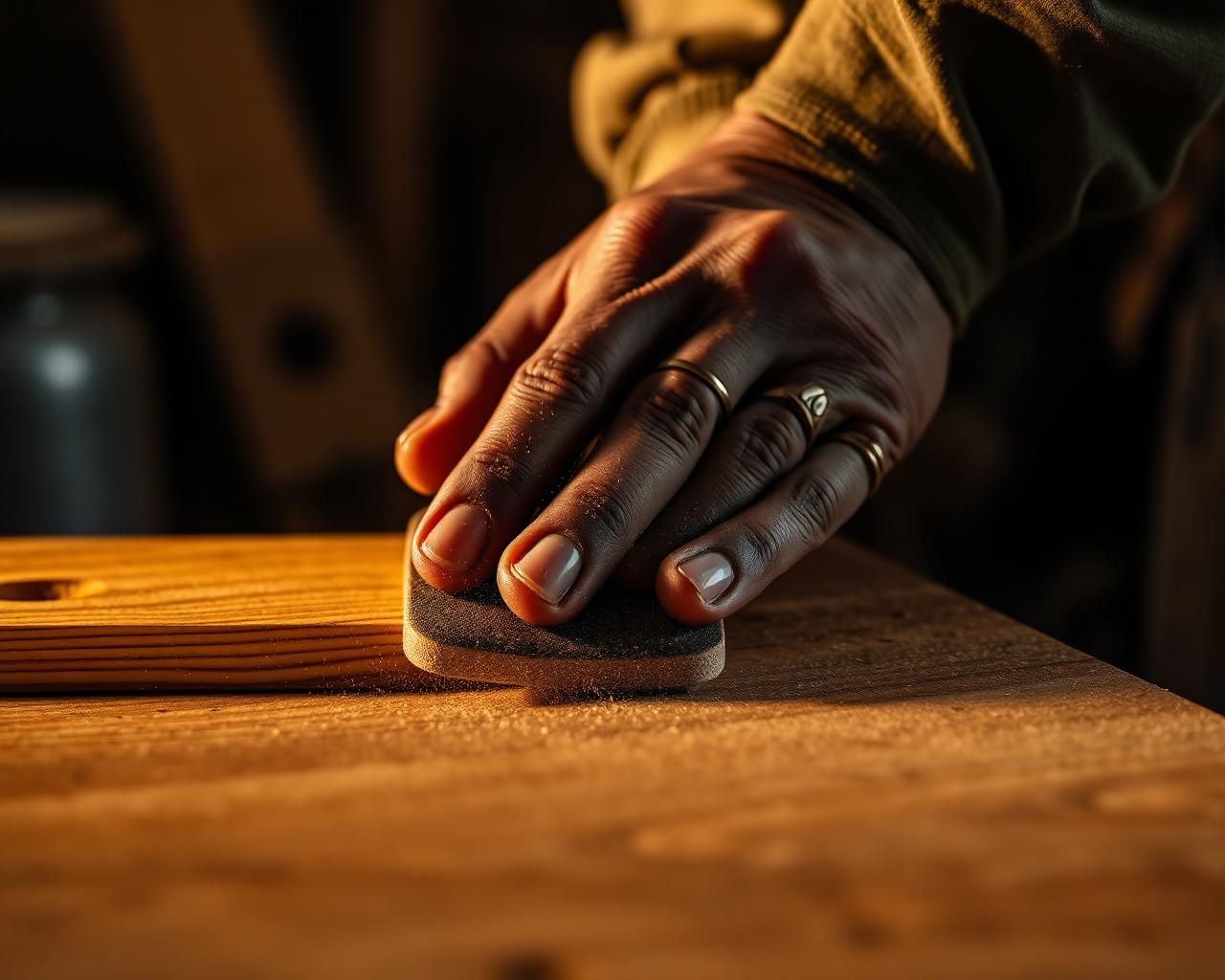
Hand-finished
Every grain inspected, sanded and sealed by a master craftsman.
Six stages, hand-finished on site.
- 01
On-Site Inspection
A free walk-through where we assess every piece, test the surface and quote in writing before anything begins.
- 02
Deep Cleaning
Two-part marine cleaning lifts oxidation, salt film, mildew and the grime held in open grain.
- 03
Precision Sanding
Hand-sanded through progressive grits until fresh, even grain is exposed across every face.
- 04
Joinery Repairs
Loose mortices, split slats and tired fasteners are corrected while the piece is stripped back.
- 05
Premium Finish
Marine-grade oil or sealer applied in thin coats and wiped back so nothing sits on the surface.
- 06
Final Inspection
We walk every piece with you in daylight and leave a written care schedule behind.
Oil, sealer or natural silver
There is no single best finish for teak, only the best finish for a piece, an exposure and an appetite for maintenance.
Penetrating oil
Richest colour, sits in the wood rather than on it, so it can never peel. Shortest refresh interval.
Protective sealer
A light protective layer with UV inhibitors. Longer service life, slightly less depth of grain.
Natural weathering
Cleaned, sanded, left bare to silver evenly and deliberately. Lowest maintenance and architecturally valid.
The maintenance mistakes that undo good work
Most avoidable damage we are called out to fix came from well-intentioned care rather than neglect.
Pressure washing
Carves out soft grain and leaves a furrowed texture that sanding then has to chase flat.
Bleach-heavy cleaners
They lighten staining but break down fibre and lift protective finishes unevenly.
Non-breathable covers
Plastic traps condensation against the wood and often causes more harm than the weather it blocks.
Steel wool and wire brushes
Fragments left in the grain rust and produce permanent black spotting within weeks.
Waiting too long
Refinishing a sound surface is straightforward. Recovering an eroded one is a different job at a different price.
When restoration is the better call
Quality teak furniture is built to outlast several finishes. The grey surface that makes a set look finished is a fraction of a millimetre deep; below it the timber is usually sound and dense.
Restoration also preserves what replacement cannot: the joinery of well-made older pieces, dimensions that fit a specific space, and matching across a set that is no longer manufactured. In Manhattan Beach that matters most on built-in benches and custom tables.
Replacement is genuinely right sometimes — widespread rot, failed structural joinery, or pieces that were low-grade to begin with. We say so rather than sell a finish onto wood that cannot hold it.
What you are actually buying.
Master craftsmanship
Two decades of hardwood finishing. Every face hand-worked rather than machine-blitzed to a deadline.
Materials chosen for exposure
We finish Manhattan Beach teak with marine-grade sealers built to survive constant Pacific salt spray, blowing sand and full west-facing sun.
On-site, white-glove
Most Manhattan Beach restorations happen at your property, with full masking and no furniture leaving the address.
Guaranteed in writing
A written workmanship guarantee, and a fixed price agreed before work starts.
Restored teak across Manhattan Beach's finest properties.
A look at recent commissions — every piece hand-finished on site. Tap any image to view it full resolution.
Oceanview Terrace Lounge
Newport Coast, CA
Round Teak Dining Set
Newport Beach, CA
Additional restorations nearby
Teak restoration in Manhattan Beach — answers to the questions we hear most.
Proudly serving Manhattan Beach & the South Bay.
On-site teak restoration, refinishing and outdoor furniture restoration throughout Manhattan Beach and every neighboring South Bay community.
- Manhattan Beach
- Newport Beach
- Corona del Mar
- Newport Coast
- Laguna Beach
- Costa Mesa
- Huntington Beach
- Irvine
- Tustin
- Orange
- Villa Park
- Yorba Linda
- Aliso Viejo
- Lake Forest
Teak restoration near Manhattan Beach
If you are just outside Manhattan Beach, these are the nearby areas we cover with the same crew and schedule.
More ways we serve Manhattan Beach
Worth reading before you book
Ipe Deck Maintenance Guide
Ipe is dense enough to survive almost anything. Keeping it brown rather than silver is the part that takes a routine.
Read guideHow UV Exposure Damages Outdoor Wood
Sun does not just fade colour. It breaks down the material that holds wood fibres together, and it degrades the finish protecting them.
Read guideSanding vs. Stripping Exterior Wood
Both are preparation methods with different jobs. Choosing wrong either wastes wood or leaves contamination behind.
Read guideSee what your Manhattan Beach furniture can look like again
Book a complimentary on-site estimate. Most quotes are returned in writing within 24 hours.
Tell us about your Manhattan Beach teak project.
Every estimate is free and written. There is no obligation and no follow-up sales calls if you decide to wait.