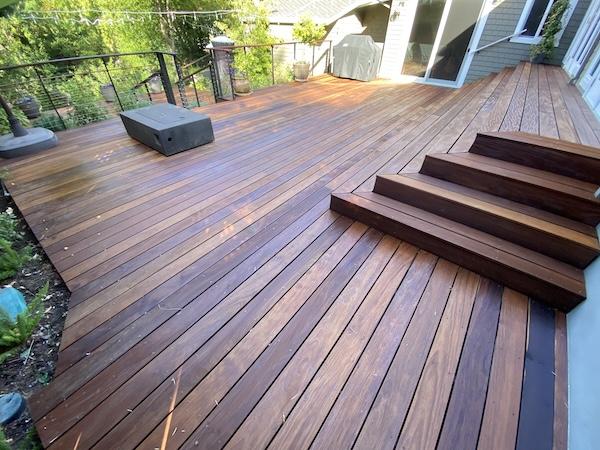
Ipe Deck Restoration for Rancho Palos Verdes Estates
High above the Pacific along Palos Verdes Drive, Rancho Palos Verdes decks face bluff wind and salt exposure most inland homes never encounter.
The premier Ipe refinishing crew in Rancho Palos Verdes, Los Angeles County.
Rancho Palos Verdes sits along dramatic ocean bluffs stretching from Portuguese Bend to Point Vicente, and many of its larger estate properties feature expansive Ipe decking built to take advantage of unobstructed ocean views. That elevation comes with a tradeoff: near-constant onshore wind pushes salt spray up the bluff faces and onto exposed decking, while the area's marine layer keeps some surfaces damp far longer than sunnier inland neighborhoods. My Teak Pro restores these decks to withstand both extremes.
Because parts of Rancho Palos Verdes sit within the Portuguese Bend landslide area and other geologically active zones, homes here are often built with substantial outdoor Ipe decking and stairways designed for uneven terrain, which we account for when planning access and equipment for a restoration job.
We're the same veteran-owned crew behind Rancho Palos Verdes teak restoration and outdoor furniture refinishing. Browse recent projects in our project gallery or request a free estimate for your Rancho Palos Verdes Ipe deck.
Serving Rancho Palos Verdes landmarks & communities
- Terranea Resort
- Point Vicente Lighthouse
- Trump National Golf Club
- Wayfarers Chapel
- Abalone Cove
- Portuguese Bend
- Miraleste
- Rolling Hills Riviera
- Seaview
- Mediterrania
- Monaco
Why Bluff Wind Accelerates Graying Here
Rancho Palos Verdes' elevation exposes decks to stronger, more sustained wind than beach-level properties, and that wind drives fine salt particles deep into the wood grain. Add persistent morning marine layer that keeps some boards damp well past sunrise, and the wood cycles between saturation and drying more often than in drier inland cities, speeding up the graying and surface checking.
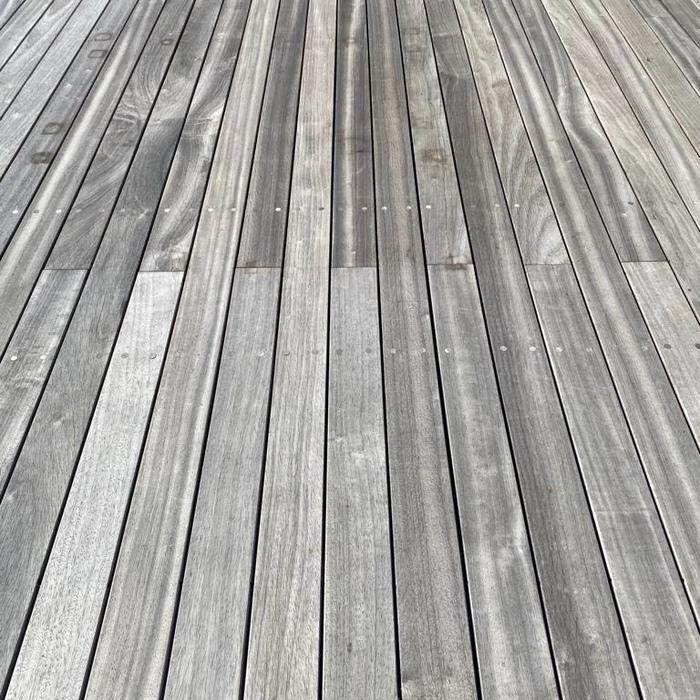
Preparation is ninety percent of an Ipe finish.
Read the deck
Ipe is dense enough that finish failure is almost always a preparation story. We find out what was on it before and why it let go.
Remove the biology
Mildew, algae and the black spotting under planters are living, not cosmetic. They get treated before any abrasive touches the wood.
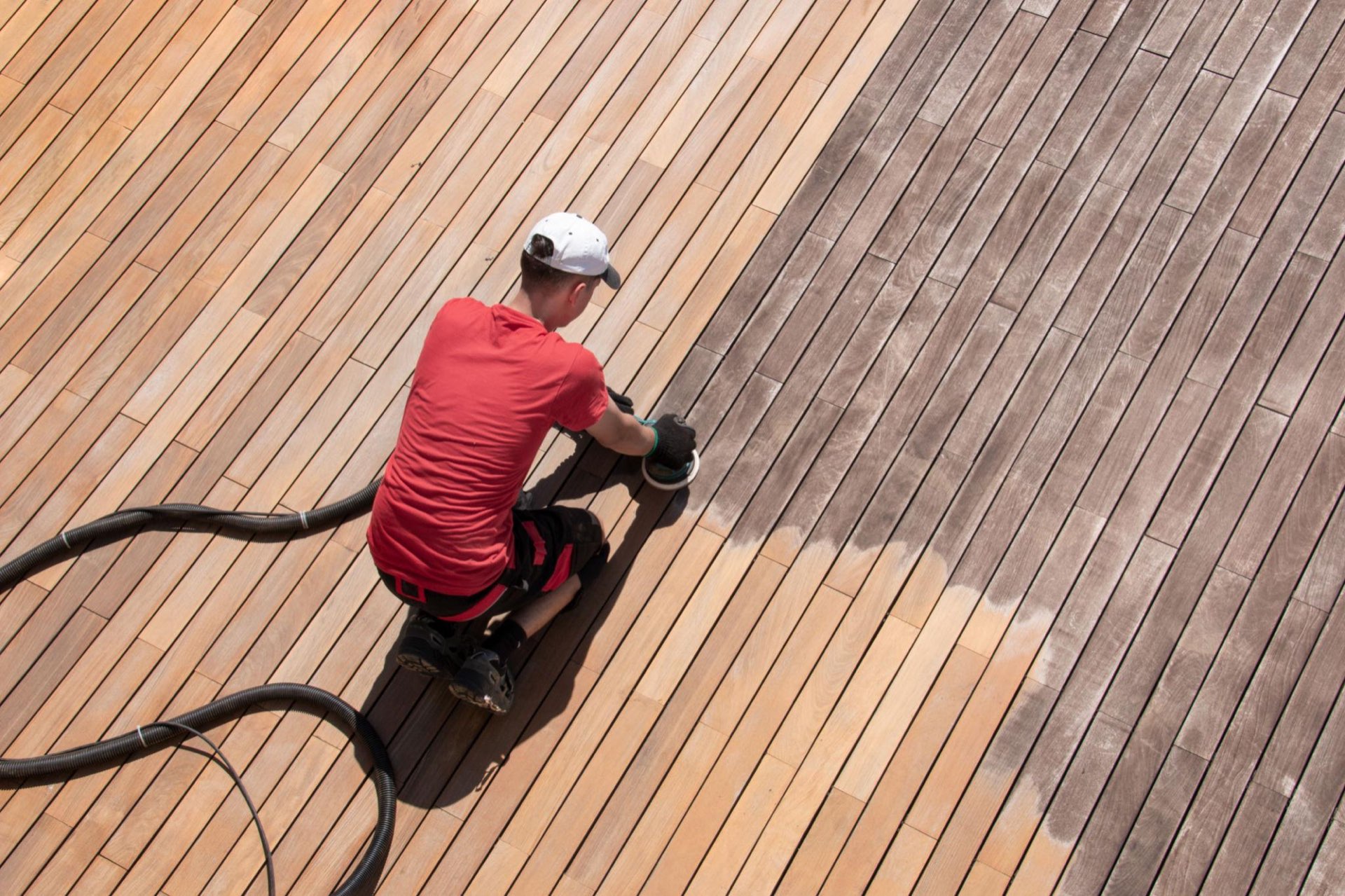
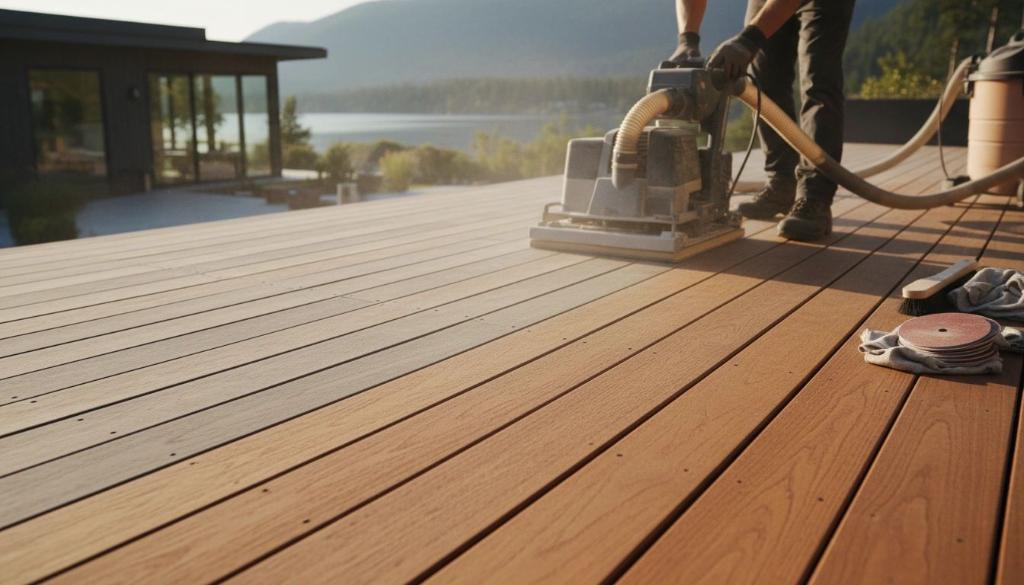
Open the grain
Ipe's tight pores close up under weathering. Correct grit sequencing opens them just enough to accept oil without leaving scratch marks.
Balance the tone
Brightener resets the pH and pulls the iron staining out from around screws so the whole deck reads one color, not a patchwork.
Feed the wood
Penetrating oil chosen for your exposure, applied in thin coats. Ipe takes far less product than pine — over-applying is the classic mistake.
Document the finish
We record the exact product and grit sequence used, so the next maintenance coat matches rather than fights what is already there.
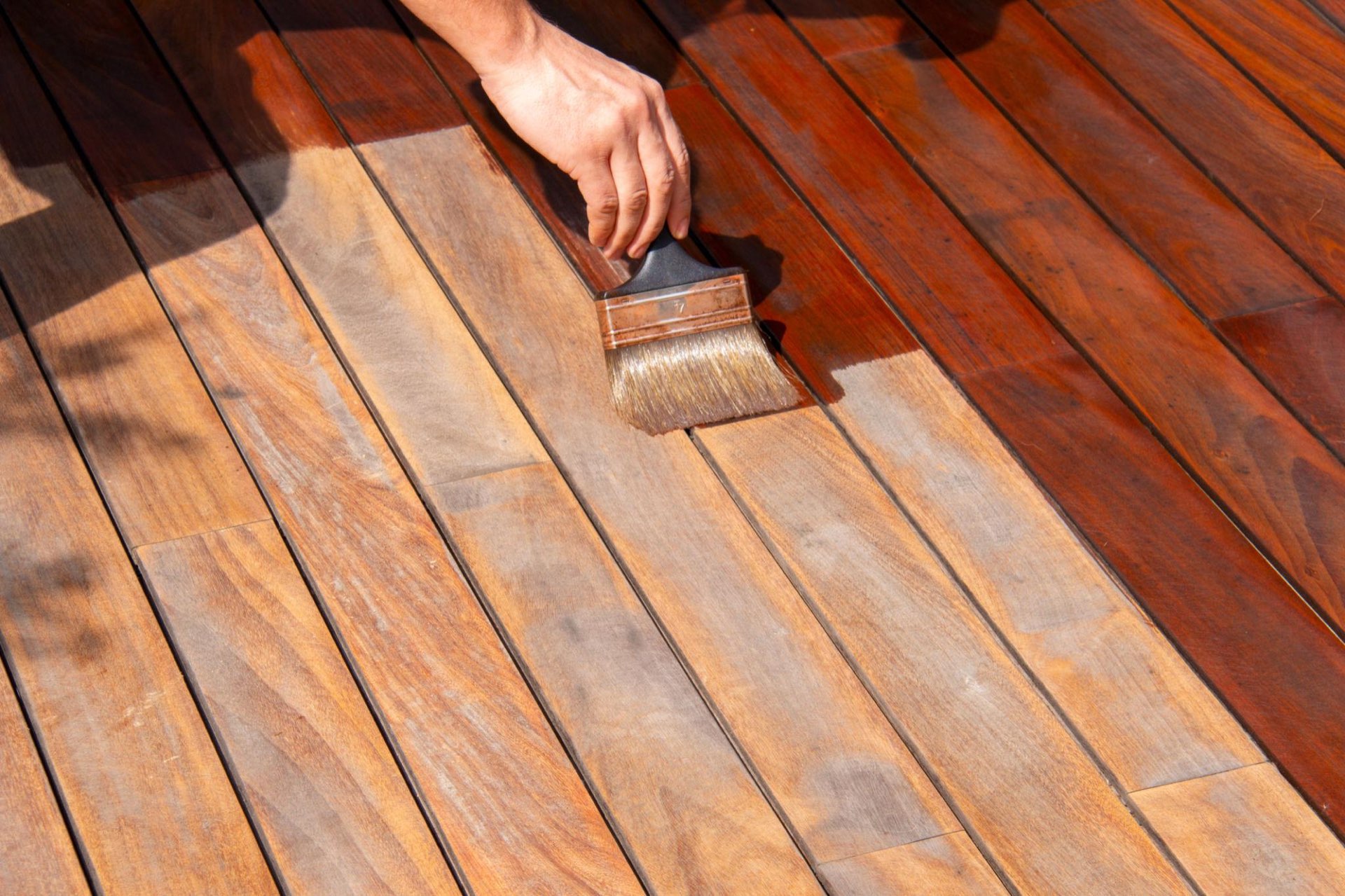
What tone your deck will actually come back to
Ipe is not one colour. Depending on the log it can run from a warm reddish brown through chocolate to a distinctly olive-green cast, and a single deck usually has all of it.
Sanding reveals whatever is there — we cannot add colour that the boards do not have, and we will not use a stain to fake uniformity that would then peel. Brightening evens the tone as far as chemistry honestly allows.
Oil deepens what is revealed by roughly one shade and brings the figure up. The first week after finishing is the darkest the deck will look; it settles slightly as the oil cures.
What undoes a good Ipe finish
Most of the damage we are called to correct came from maintenance, not neglect.
Deck stain from the hardware store
Film-forming products cannot key into Ipe's density. They sit on top, peel in sheets and have to be stripped.
Bleach
It lightens the grey but breaks down fibres and strips the extractives that give Ipe its rot resistance.
Sealing wet wood
Oil over trapped moisture goes cloudy and lifts. Ipe needs to be genuinely dry before anything goes on.
Plastic covers
They trap condensation against the boards through winter and cause more damage than the weather would have.
Too much oil
Ipe accepts very little. Excess left to cure on the surface stays tacky and collects dirt all season.
What Rancho Palos Verdes homeowners say.
Read My Teak Pro reviews on Yelp →"Our Ipe deck had turned completely silver-gray from Rancho Palos Verdes sun and marine air. My Teak Pro brought it back to a rich chocolate finish — it looks brand new."
"They sanded, brightened and oiled our entire back deck in three days. Professional, veteran-owned, and truly museum-grade workmanship."
"We manage several oceanfront properties in Rancho Palos Verdes and My Teak Pro is the only crew we trust with Ipe. Consistent finish, on-time, spotless cleanup."
Ipe deck refinishing in Rancho Palos Verdes.
Ipe deck refinishing near Rancho Palos Verdes
Ipe behaves differently a few miles apart along this coast. These nearby pages cover the conditions specific to each community.
Worth reading before you book
Teak Oil vs. Teak Sealer
Oils look richer and want more attention. Sealers hold longer and read more uniform. The right answer depends on exposure and on how often you want to think about it.
Read guideWhen Does an Ipe Deck Need Refinishing?
Colour loss alone is not a reason to refinish. These are the signals that are.
Read guideIpe Deck Maintenance Guide
Ipe is dense enough to survive almost anything. Keeping it brown rather than silver is the part that takes a routine.
Read guide
Ready to bring your Rancho Palos Verdes Ipe deck back to life?
Free on-site estimates. Most quotes returned within 24 hours.
Book your Rancho Palos Verdes estimate.
Pick a time that suits, and the restorer who would run the job will walk the deck with you. There is no charge and no sales pitch.